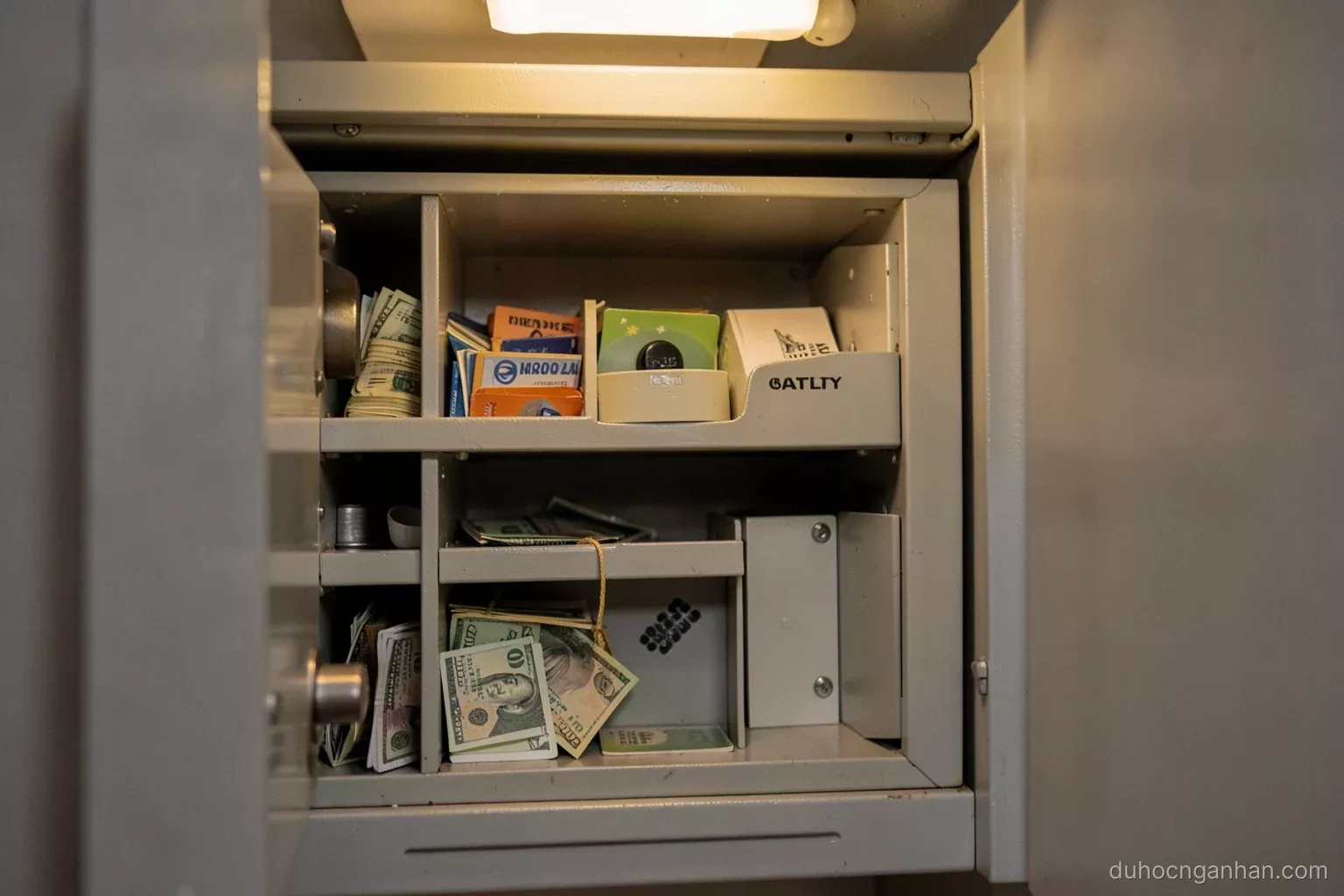
For camp abroad, your child should carry a little cash in the destination's currency for the first few days, keep the rest in the safe or with boarding staff, and, if old enough, add a debit or prepaid card that parents can monitor and block remotely; money should be split between at least two places, never all in one wallet. The exact amount depends on what the programme includes; the article on pocket money in the language study guide covers how much to give, while this one covers how to keep it.
Losing money at camp is rarely down to major theft. Much more often it is a wallet left on a coach, money left in a trouser pocket that goes into the wash, a card left in a machine, or money lent to a friend that your child is too shy to ask for back. These small things can be prevented with a few habits and a sensible way of splitting money.
First: ask what the programme includes
Without knowing which costs the programme already covers, you cannot know how much money your child needs to keep. Some camps cover all board, laundry and weekend excursions; others only cover board and lessons, with weekend outings optional and paid separately. Some charge extra for electricity if air conditioning use exceeds a limit, a room deposit or books. The list of "not included" items in the contract is the part parents most need to read carefully before working out money for their child.
Once you know the compulsory costs, what remains is money your child spends themselves: snacks, gifts, entrance tickets not included, extra personal items. For a long programme, divide this by week rather than handing it over all at once, so your child does not run out completely in the last week while friends are still buying gifts. Many parents give their child a general sum "just in case", and the child spends it all on sweets in the first week. Separating money for compulsory costs from money your child can decide about helps them know their limits.
Also ask the organiser about costs that might arise, such as medical fees paid before the insurer reimburses, compensation for damage in the room, or ticket change fees. These should be paid directly by the group leader or the parents, not kept in your child's wallet.
Cash, debit card or prepaid card
Each form has its own use. For children under fourteen, cash held by boarding staff is usually simplest; older students can add a card.
| Form of money | Convenient because | Risks | Suits |
|---|---|---|---|
| Cash in the local currency | Accepted at every counter, canteen and market | Lost means gone for good; easily spent quickly | All ages, in small amounts |
| Debit card, supplementary card on a parent's account | Parents top up, see transactions and block the card remotely | Foreign transaction and withdrawal fees; forgotten PIN | Older students, long programmes |
| Prepaid card | Caps the maximum amount, losing it does not affect the main account | Not accepted everywhere; top-up and conversion fees | Secondary and high school students |
| E-wallet, paying by phone | Fast, easy to track | Vietnamese e-wallets do not work in every country; phones are collected at set times at camp | Only as a back-up option |
Fees and conditions for each type of card are set by the issuing bank; families should ask their bank about fees for transactions abroad, limits, how to block the card in the app and the support line when abroad before giving the card to their child.
A small thing worth doing before the flight: let your child try the card a few times in Vietnam, withdrawing cash from an ATM, paying at a supermarket and seeing the transaction appear in the parent's app. Your child gets used to the steps, memorises the PIN and learns to put the card back in the right place each time. Also tell the bank about the trip if it requires this, so the card is not blocked for unusual transactions abroad just when your child needs it. Write the bank's international support number in the group leader's notebook and the parents' notes.
Split money between three places
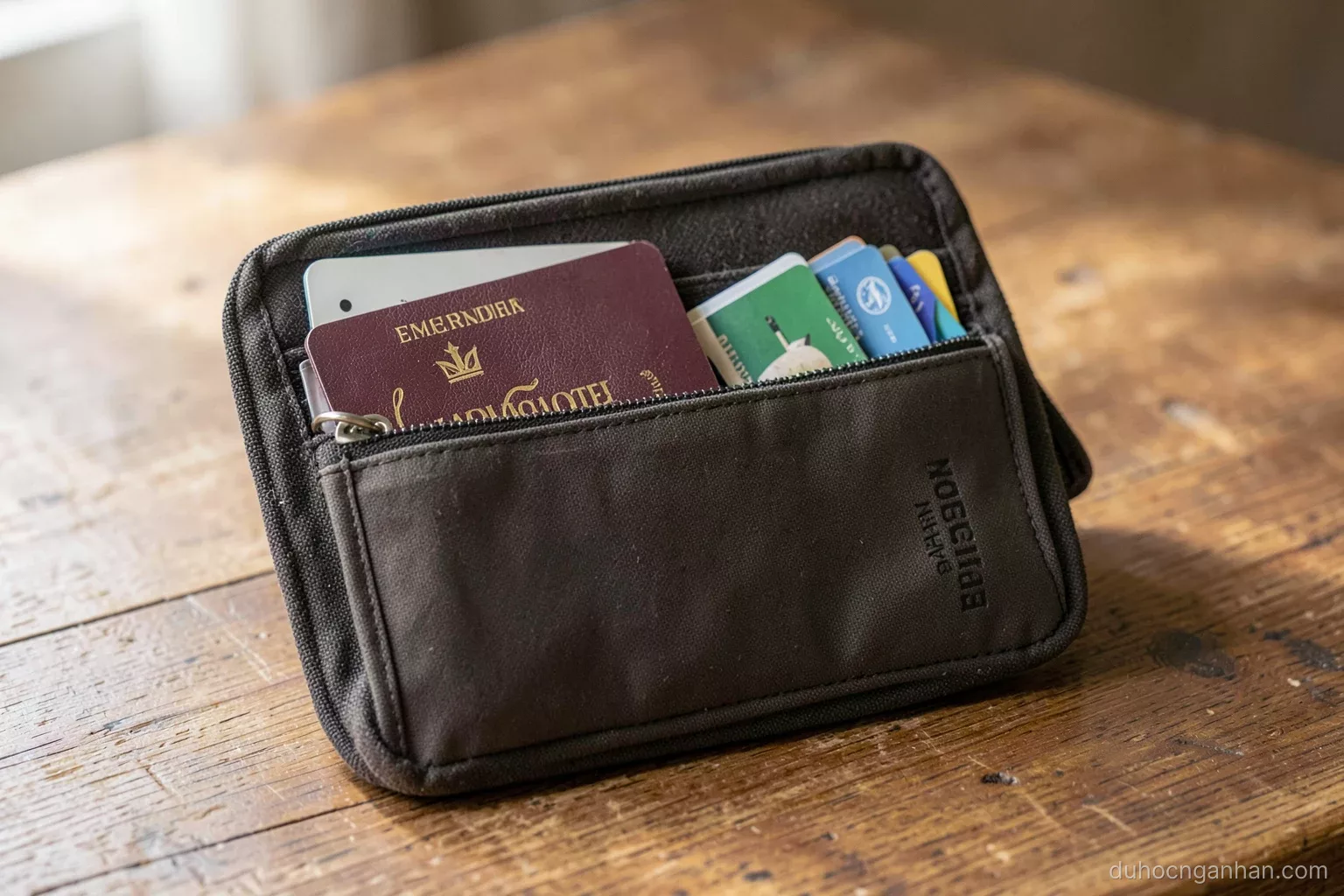
Place one: a small wallet your child carries every day. Only enough money for a day or two or one outing. The wallet should have a zip, a distinctive colour, and be kept in the back-facing pocket of the backpack or a zipped trouser pocket. Losing this wallet is a shame but does not ruin the trip.
Place two: the part kept in the safe or by boarding staff. Most of the money goes here. Many camps have an office safe or a money register: students deposit, sign for it and withdraw at set times. Ask whether the camp has this service before departure; if it does, parents should encourage their child to use it rather than hiding money in the suitcase.
Place three: an emergency reserve with the group leader or in the document pouch. A small amount for emergencies, such as taking a taxi back to camp after getting separated from the group, or making a call if the phone breaks. This money is not kept with the daily wallet, and your child knows clearly it is only for real need.
Cards, if any, are kept apart from cash. Your child's bank card should be somewhere different from the cash wallet, with a PIN your child knows by heart and has not written on the card. Lose the wallet and you still have the card; lose the card and you still have cash, and parents can block the card within minutes.
Changing money: some at home, the rest with the camp's guidance
Bringing a little of the destination's currency from Vietnam means your child is not caught out on the first day, especially when arriving at a weekend or late at night. You can exchange money at banks licensed to deal in foreign currency in Vietnam; for less common currencies, families often bring US dollars and exchange them at the destination. Keep the exchange receipt, and check the rules on carrying foreign currency when leaving and entering countries if the amount is large.
At the destination, the group leader or the camp usually knows reliable places to change money: bank counters and exchange counters in large shopping centres. Tell your child never to change money with strangers who approach them at the airport or in the street, even if the rate looks good.
Large notes are hard to spend at the school canteen or drinks counter; ask for part of the money in small denominations. Young students often confuse unfamiliar notes, so before the trip show your child pictures of the notes and practise simple mental conversion, for example how many thousand dong one hundred units of the local currency is roughly worth.
Money on weekend trips and at the airport
Weekend excursions are when your child spends the most money and is also most likely to lose it: crowded shopping centres, local markets, amusement parks, beaches. Before each trip, your child should only take out of the safe the amount they plan to spend, leaving the rest at camp. The wallet goes in a front pocket or the back-facing backpack pocket, never a back trouser pocket, and is not held in the hand while taking photos.
At the beach or a public pool, money and phones should be handed to boarding staff to look after together, or kept in a waterproof pouch worn on the body. Do not leave the wallet on a towel while the whole group goes into the water. At amusement parks, many rides require belongings to go in a locker; tell your child to remember the locker number and keep the key or ticket carefully.
On the return day, the airport is where your child usually spends the remaining small change on food and gifts. That is normal, but remind your child to keep a little back for unexpected costs such as water if the flight is delayed. Foreign small change brought back to Vietnam is hard to exchange, so spending it is more sensible than leaving it in a drawer.
Teaching your child to spend and keep track of spending
With a small notebook or a note on the phone, your child writes down every evening what they spent and how much is left. It takes a few minutes but does three things: your child sees where the money goes, knows when it is running out fast, and parents have a gentle topic for the weekly call instead of just asking "are you eating properly?".
Agree a few principles with your child in advance: money for family gifts is kept separate and not spent on the first day; no lending large amounts to friends; call and ask parents before buying anything expensive. Clear principles give your child a reason to say no when friends suggest buying something they do not want, without feeling awkward.
With older students using a card, parents can see transactions, but should tell their child in advance that they will look and why. Teenagers easily react badly when they feel watched without being told. A short trip is a good opportunity to practise managing a real, limited sum of money with adults in the background.
When your child loses a wallet or card
Staying calm and acting fast are what matter most. Your child and the parents should know these steps in advance.
- Your child tells the group leader or boarding staff straight away and explains where they last saw the wallet.
- If a card is lost, your child or the group leader messages the parents to block the card in the banking app or call the bank's hotline.
- Boarding staff help your child look in the places just visited, and ask at the school's lost property office, the coach and the sight.
- If it was lost in a public place and the wallet contained documents, the group leader explains how to report it to the local authorities.
- Parents send more money through the organiser or top up a back-up card, rather than transferring directly to a stranger offering to pass it on.
Tell your child: nobody, including people claiming to be bank staff or police, should ever ask for their PIN or a verification code sent to their phone. Scams targeting foreigners often rely on moments when people are panicking after losing something.
The Du Học Ngắn Hạn advisory team can tell families which costs are included and not included in programmes currently taking registrations, and how the camp holds money for students, so parents can work out how much money their child should take.
Frequently asked questions
At what age should a child use a bank card at camp?
There is no set age. High school students can usually use a card if they are already used to shopping on their own at home and know how to protect their PIN. For younger children, cash held by boarding staff is simpler and safer. A supplementary card with a low limit is a sensible stepping stone.
Should money be kept in the suitcase in the dormitory room?
Not large amounts. Rooms are shared, doors are sometimes left open, and many people come and go, such as boarding staff and cleaners. The office safe or boarding staff are safer. If the camp has lockable personal lockers, keep a small amount there and look after the key carefully.
Is it a problem if my child lends money to a friend?
Small amounts between friends are normal. But agree a limit in advance, because asking a friend from abroad for money back in English makes many children feel awkward. If a friend keeps borrowing and not repaying, your child should tell the boarding staff or the group leader rather than dealing with it alone.
Should we take US dollars instead of the local currency?
US dollars are easy to exchange in many countries and useful as a reserve. But canteens and small shops only accept the local currency, so you still need some. Many families take most of the money in US dollars for the group leader to exchange gradually, plus a little local currency for the first day.
How can parents send their child more money during the trip?
If your child has a card, topping it up is fastest. If not, transfer through the organiser so the group leader can advance money to your child, then settle up. Avoid transferring to strangers offering to pass it on or using unclear services, especially if someone messages claiming to be your child's friend.
Will insurance cover money lost at camp?
It depends on the terms of the travel insurance policy. Many policies cover luggage and documents, but cash is often limited or excluded, and a police or incident report is required. Read the exclusions carefully before the trip, and do not treat insurance as a reason for your child to carry a lot of cash.