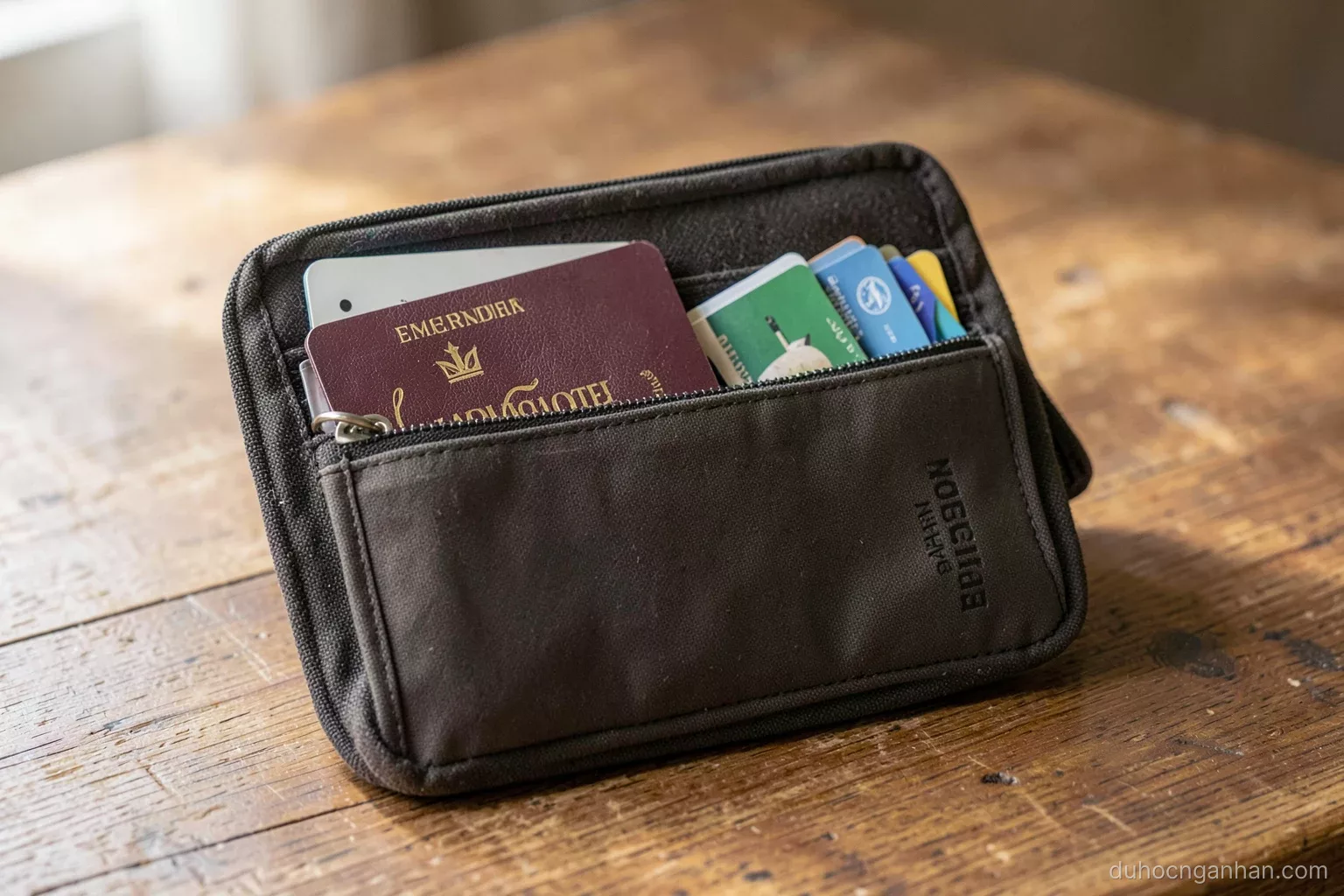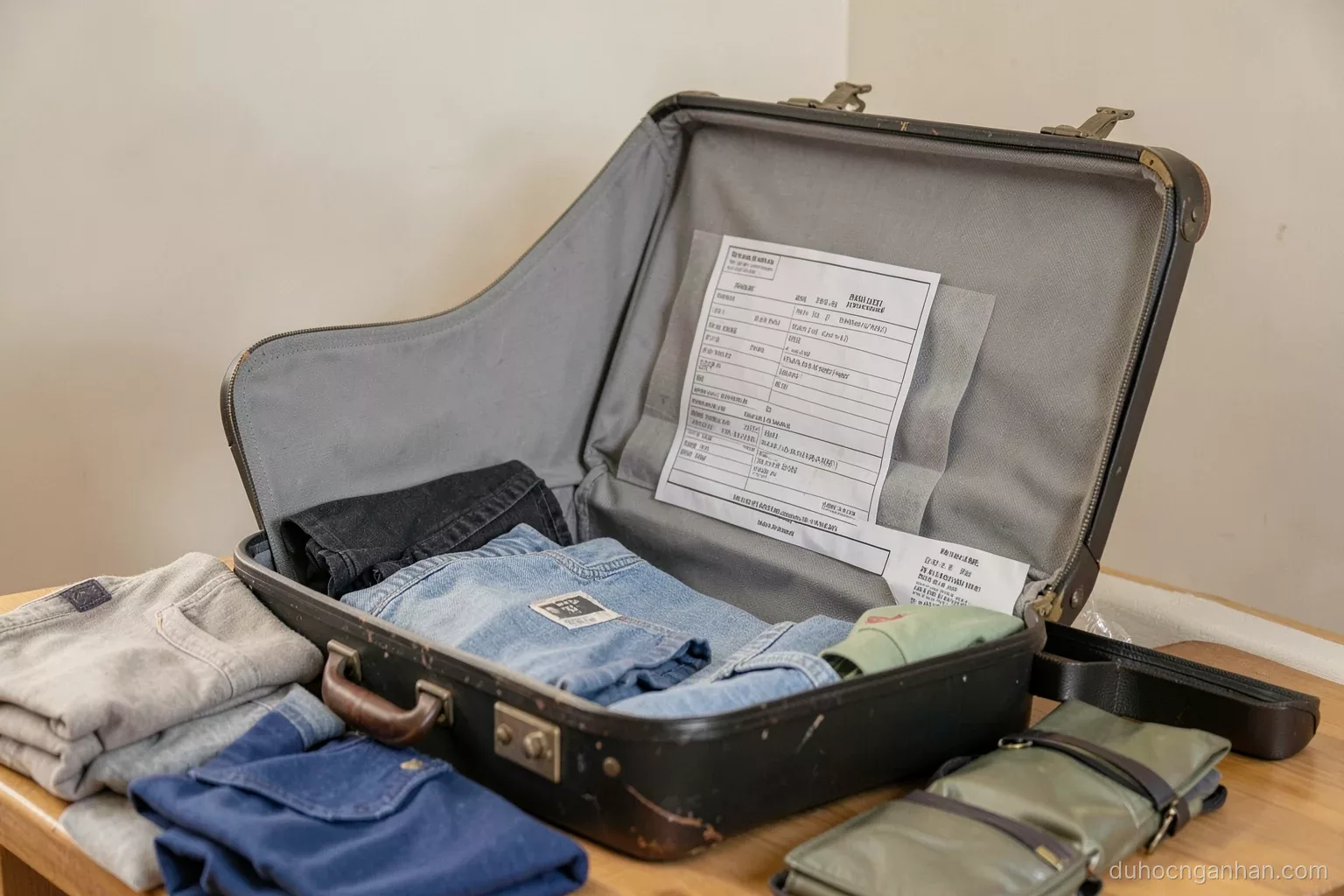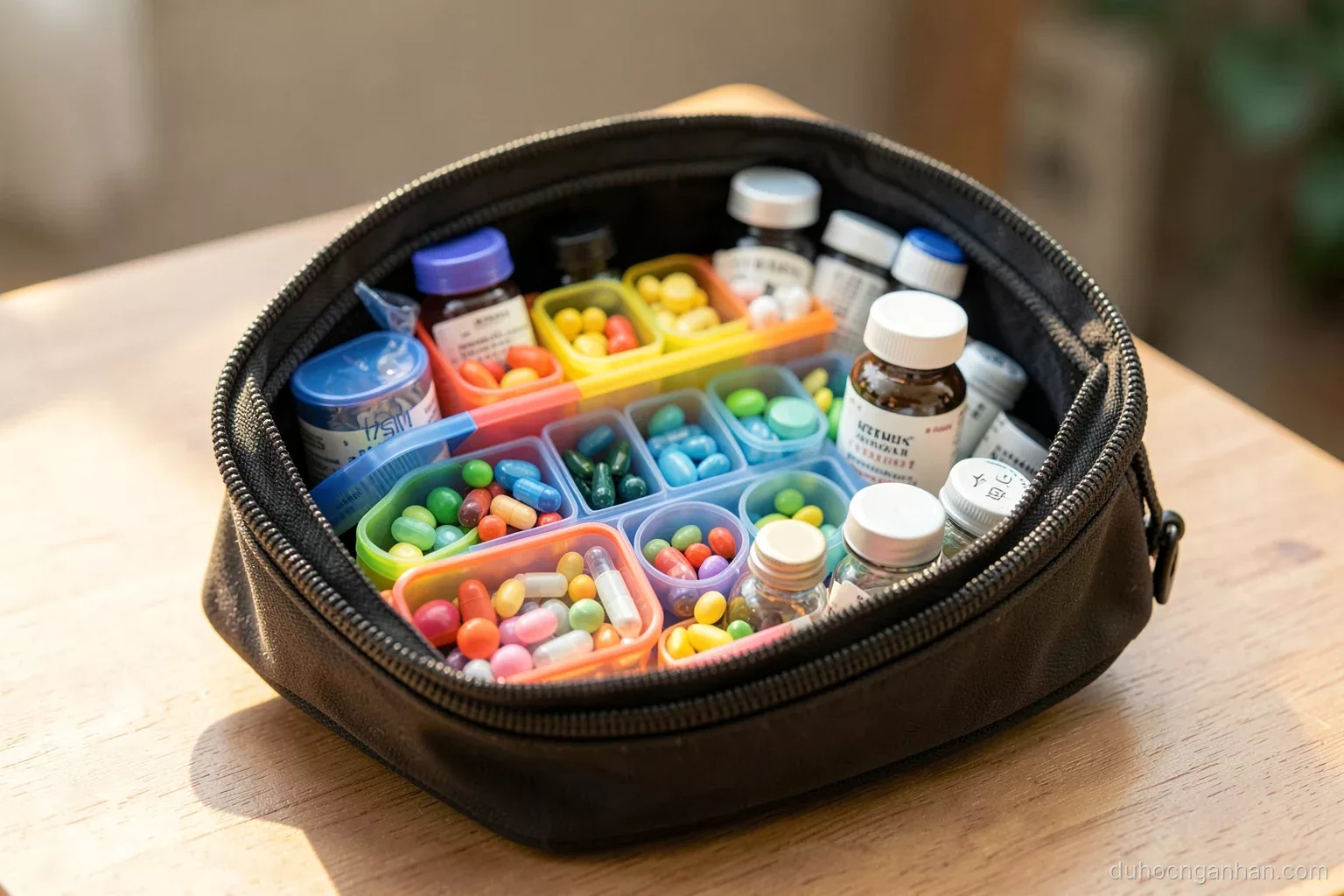
Your child's medicine bag for camp abroad should contain the medicines they currently take as prescribed by a doctor (enough for the whole trip plus a few days' reserve), a few common medicines your child's doctor agrees they can bring, and some small first-aid items; everything kept in original labelled packaging, with a prescription or doctor's letter in English. At most residential camps, medicines are handed in to the medical room or boarding staff, who keep them and give them out; children do not store them in their rooms.
This article does not replace a doctor's advice and does not say what medicine your child should take. It is about logistics: how to pack so you get through the border smoothly, which documents go with the medicines, how the camp handles them, and the mistakes that leave a child at camp without the medicine they need. Children with chronic conditions such as asthma, severe allergies or diabetes need a dedicated appointment and plan with their treating doctor before the trip.
Start with a doctor's appointment before the trip, not your home medicine cabinet
The right order is to take your child to a doctor, explain clearly how long the trip is, where it is, and what the climate and activities are like, then ask the doctor what to bring. Many parents do it the other way round: open the family medicine cabinet and take a strip of everything. That way you bring things you do not need, miss things you do need, and may even bring medicines that are restricted at the destination.
At the appointment, ask the doctor for three things: a list of your child's current medicines by active ingredient (not just brand name, because abroad the same ingredient may have a different trade name), specific instructions for use, and a short confirmation letter in English if your child has to carry prescription medicines. For children with underlying conditions, also ask which signs mean they need to see a doctor immediately, and whether any medicines should be brought in extra quantity in case the return flight is delayed.
Some camps send a medical form that needs a doctor's signature. Bring this form to the appointment so it is all done at once, rather than having to go back to the clinic close to the flight date.
What groups of items a medicine bag usually includes
The list below is a framework for parents to discuss with the doctor, not a list of medicines to buy. Whether each group is needed, and which products, is for your child's doctor to decide.
- Medicines your child takes daily: as prescribed, enough for the number of days of the trip plus a few days' reserve in case the return is delayed.
- Personal emergency medicines as prescribed: for example an inhaler for a child with asthma or an auto-injector for a child with severe allergies, with instructions in English so adults at the camp know how to help.
- A few common medicines the doctor agrees to: what the family usually uses when the child has a slight fever, stomach ache or skin allergy, with the doctor's instructions written clearly.
- Small first-aid items: plasters, gauze, antiseptic solution, cream for insect bites and a digital thermometer.
- Supporting items: sunscreen, mosquito repellent spray or cream, lip balm, and saline eye drops if your child often has dry eyes.
Every residential camp has a basic medicine cabinet and a procedure for taking students to a doctor, so your child's medicine bag does not need to be as complete as a family medicine cabinet. The aim is what your child is used to, what must be available immediately, and what is hard to find in the right form at the destination.
Original packaging, labels and accompanying documents
At security and customs, officers need to know what the items in the bag are, whose they are and what they are for. Medicines kept in their original boxes and blister packs with legible labels answer that question straight away. Pills popped out and mixed in a daily pill organiser without labels are easily held for inspection, and also make it hard for the camp's medical staff to know what your child is taking.
If you want to use a daily pill organiser for convenience, also bring the original blister packs or a photo of the original box and the prescription. Put a small label with your child's name on each box. Gather everything in a clear zip bag, with the prescription and doctor's letter right inside, so that whoever opens it sees the documents first.
Liquid, spray and gel medicines carried in the cabin bag must follow the airport's liquids rules. Most airports have exceptions for necessary medicines and medical items when accompanied by documents, but you should declare them to security staff and check the rules of the airline and the departure airport in advance.
Medicines restricted at the destination: check in advance, do not guess
Every country has its own list of controlled substances. Some medicines commonly used in one country may need an import permit or be banned in another, often among ADHD medicines, sedatives and strong painkillers, and also some cold and cough medicines containing narcotic or stimulant ingredients. Bringing the wrong one can mean the medicine is confiscated at the airport, so your child arrives at camp without it.
The reliable way to check is to look at the website of the destination's health authority, medicines regulator or customs, or to ask that country's embassy in Vietnam. Experienced organisers usually have guidance ready for the countries they often take groups to. If your child takes a medicine in a controlled group, do this early, because the permit process can take several weeks.
Besides medicines, some supplements, herbal products, extracts and pills without clear labels are also easily held at customs in countries with strict quarantine rules. If they are not really needed, leave them at home.
At camp, who keeps and hands out medicines
How medicines are managed varies by camp and by students' age. Parents should ask clearly in advance, because it affects how you pack and what you tell your child.
| Arrangement | Common at | What the family needs to do |
|---|---|---|
| The medical room keeps everything and hands it out at set times | Residential camps for young children, camps with a nurse on duty | Write the times clearly in English, pack the full quantity, hand it in on arrival |
| Boarding staff keep medicines and hand them out from a list | Camps without a resident nurse | Write simple instructions, talk to the group leader so they can give extra reminders |
| Your child keeps their own emergency medicine | Children with asthma or severe allergies who need medicine within minutes | Ask the camp for written permission; bring two sets, one kept by your child and one in the medical room |
| Older students manage their own common medicines | Some camps, for students from sixteen | Teach your child to note each time they take something and tell boarding staff |
Whatever the camp's arrangement, your child needs to know where to find their medicines and be able to say in English the name of their condition or allergy. One short sentence your child knows by heart is worth more than any paper in the bag when something happens.
Storing medicines in hot, humid places and on the journey
Many medicines need to be kept at room temperature, away from heat and humidity. At camps in the tropics, dormitory rooms can get very hot when the air conditioning is off during the day; a suitcase by the window is hotter still. That is another reason for medicines to be in the medical room rather than in your child's suitcase. For medicines that need refrigeration, tell the camp in advance to make sure there is a suitable fridge, and ask the doctor how to carry them on the flight.
On the journey, medicines always go in the cabin bag, never in checked luggage. Suitcases can go missing for a day or two, and the hold can be too cold or too hot. Your child's daily medicines are needed for the days before the suitcase arrives more than anything else.
On return, check the medicine bag: which medicines were used, which are left, and any notes from the camp's medical room about times your child was ill. Bring those notes to the follow-up appointment if your child has an underlying condition, so the doctor knows what happened during the trip.
Talking to your child about their own medicines
At home, parents remember everything about medicines for their child: when to take them, which ones, what allergies. At camp, the person remembering for your child is a boarding supervisor or nurse looking after dozens of children at once, reading English instructions written by the family. Only your child can fill the gap between the two. Children who know the name of their condition, what medicine they take and why will go to the medical room on time and notice if they are given the wrong thing.
Before the trip, spend a session with your child opening the medicine bag together, naming each item and saying when it is used. Practise a few short English sentences: what they are allergic to, what medicine they take every morning, where they feel unwell. For young children, write these sentences on a card your child can show when needed.
Also tell your child directly that saying they feel unwell is not bothering anyone. Many children at camp are reluctant to say they have a stomach ache or a fever for fear of being taken to a doctor, missing a weekend outing, or simply because they do not know how to say it in English. Reporting early is always easier to deal with than waiting until it gets worse.
When medicines run out or go missing during the trip
However careful the preparation, medicines sometimes get dropped and broken, lost along with a backpack, or the trip runs longer than planned. In that case, the camp usually takes your child to a clinic or hospital for a local doctor to prescribe a replacement. The list of medicines by active ingredient, the original prescription and the doctor's letter from Vietnam help the doctor there prescribe correctly and quickly. This is where your child's travel insurance card comes in.
Parents at home should not post medicines or ask an acquaintance to carry them over without asking the camp first: medicines sent by international post can be held at customs for days, and many countries do not allow prescription medicines to be received that way. Contact the group leader and the camp's medical room to choose the fastest and most legitimate route.
The Du Học Ngắn Hạn advisory team usually passes each child's medical form and medicine list to the camp before the group arrives; families whose children need special medicines should tell us early, at registration, to allow time to check the destination's rules.
Frequently asked questions
Does the prescription need translating into English?
It is advisable. A short English version stating the active ingredient, the dose prescribed by the doctor and the reason for use helps airport staff, customs and the camp's medical staff understand immediately. You can ask the doctor to write it directly in English, or translate it and ask the doctor to sign it if the clinic can do this.
Can my child buy medicines abroad on their own?
For under-18s at camp, buying medicines should go through the medical room or the group leader. Many countries are very strict about selling prescription medicines, and a child buying non-prescription medicine without anyone knowing may end up taking the same active ingredient as a medicine they already use. Tell your child to tell an adult when they feel unwell and not to deal with it alone.
How much medicine is enough?
Daily medicines should cover the whole trip plus a few days' reserve in case the return flight is delayed. Medicines taken as needed should be brought in moderate quantities as advised by the doctor. Bringing too much can lead to questions at customs, because quantities beyond personal needs can look like they are for sale.
How should we tell the camp about a food allergy?
State it clearly on the medical form and registration form, with a doctor's letter. Ask the camp how the dining hall prepares separate meals, who keeps the emergency medicine and whether staff are trained to use it. Teach your child to ask about ingredients in English and not to eat unfamiliar dishes when unsure.
Should we pack travel sickness medicine for excursions?
If your child often gets car sick, ask the doctor about a suitable product and how to use it, then tell the camp so boarding staff can remind your child before long trips. Sitting near the front of the coach, looking into the distance and not reading on the coach also help. A plastic bag and wet wipes in the backpack are always useful.
Should we pack vitamins and supplements?
If your child takes them on a doctor's advice, bring them in their original labelled packaging. If they are just a habit, many families pause them for the few weeks at camp to keep things simple. Some herbal products and poorly labelled pills are easily held at customs, so check the destination's rules first.