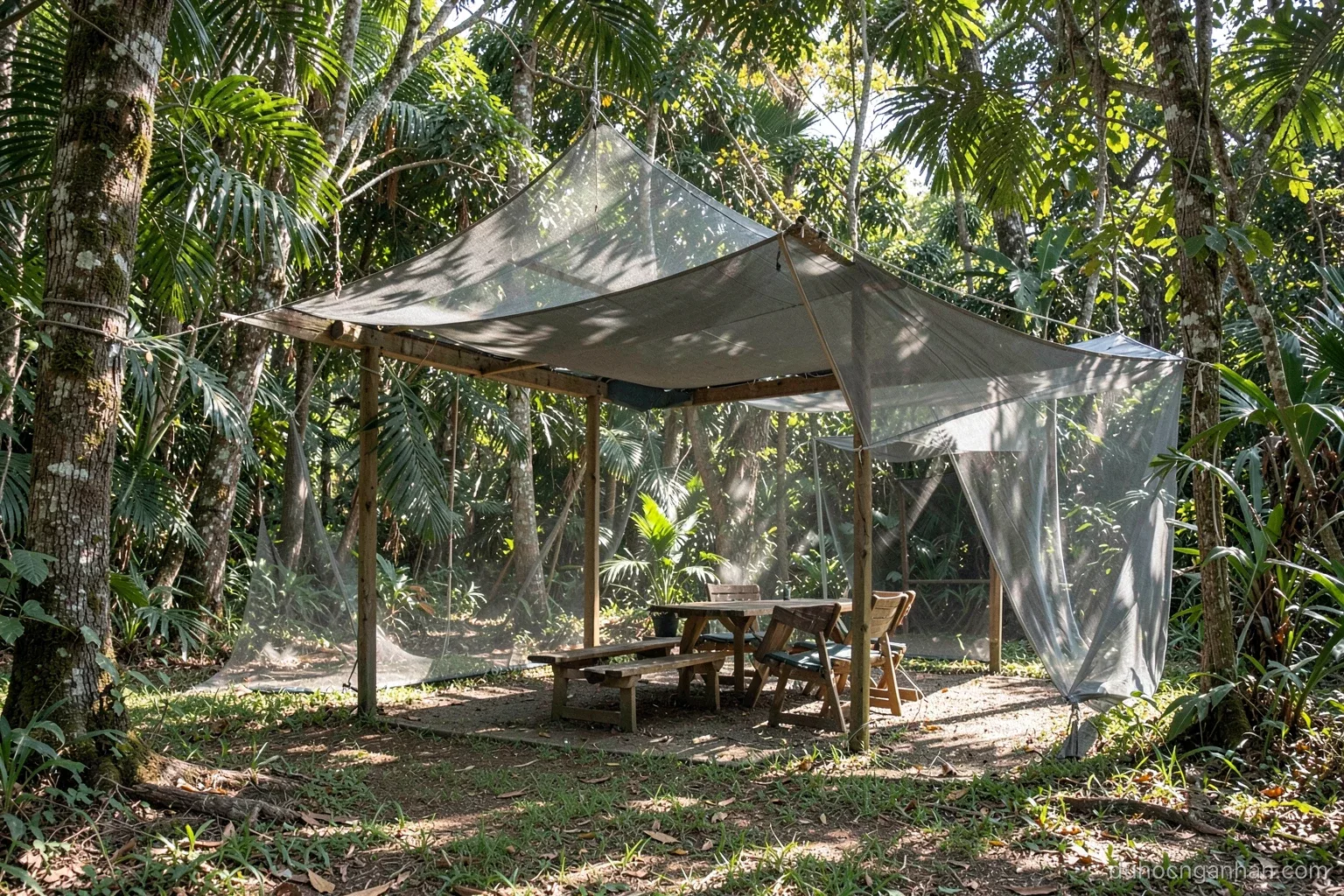
At a tropical camp such as in the Philippines, the three health risks your child faces every day are heat (exhaustion, heatstroke, sunburn), mosquitoes (the most notable being dengue fever) and the stomach (diarrhoea from changes in water and food). All three can largely be prevented by simple habits: drinking water regularly, avoiding the midday sun, covering skin and using mosquito repellent, washing hands and being careful with ice and food from outside.
Vietnamese children are used to heat, so parents often relax about it. But heat at camp is different from heat at home: your child is much more active, spends longer outdoors, goes from an air-conditioned room into the sun, and has nobody reminding them to drink as mum does. This article goes through each risk, which signs are normal, which signs need reporting to an adult, and what parents should ask the camp.
Why children used to heat still tire easily from heat at camp
How well the body copes with heat depends on three things: temperature, humidity and level of activity. High humidity makes it hard for sweat to evaporate, so the body loses its main way of cooling down. At camp, your child may study in a cool room in the morning and then play football for an hour in the humid sun in the afternoon, at a much higher intensity than an ordinary afternoon at home.
The first week is when children tire most easily. The body needs a few days to a couple of weeks to adjust to the climate and the new level of activity, while the camp schedule is usually busy from the start. Add jet lag, little sleep in an unfamiliar place and eating less because of unfamiliar food, and your child gets worn out more easily than usual.
Another factor is drinking habits. At home, children drink when thirsty and are reminded to. At camp, your child is busy playing, reluctant to go to the toilet between lessons, or drinks soft drinks instead of water. By the time they clearly feel thirsty, the body is already partly short of water.
Knowing this helps parents understand why serious camps usually schedule outdoor sport in the early morning or late afternoon, have compulsory water breaks, and let children rest when they feel dizzy. If the camp's schedule has many outdoor activities in the middle of the day, that is a question worth asking.
How heat exhaustion differs from heatstroke
The two are often both called heatstroke, but the level of danger is very different. The table below summarises the general signs according to common first-aid guidance, so parents and children can recognise when an adult must be told immediately:
| Heat exhaustion | Heatstroke | |
|---|---|---|
| Skin | Sweaty, may be pale and cool | Hot and red; may be dry or still damp |
| Mental state | Tired, dizzy, still alert and able to talk | Confused, slurred speech, drowsy, may faint or have a seizure |
| Accompanying signs | Headache, nausea, cramps, thirst | Severe headache, vomiting, rapid pulse |
| First action | Move to a cool place, lie down, sip water, cool the skin | Call an ambulance, move to a cool place, cool the body quickly while waiting |
| Level of danger | Usually recovers with proper rest, but can worsen if activity continues | A medical emergency, life-threatening |
The most important dividing line is mental state: a child who is tired but alert and answers questions correctly is one thing; a child who is confused, cannot speak clearly and does not know where they are is quite another. Tell your child that if they see a friend like that, they must call an adult straight away, not help the friend back to their room to lie down.
Drinking water properly at camp
Their own water bottle, always with them. A bottle with a lid that your child fills at the camp's water station. A bottle with markings, or one whose size your child knows, makes it easy to track how many bottles they have drunk in a day.
Drink regularly, do not wait until thirsty. A simple tip: a few sips at every break between lessons, and before and after sport. Dark urine is an easy sign that your child is not drinking enough.
Water first, soft drinks second. Soft drinks, milk tea and energy drinks cannot replace water, and the high sugar content makes your child thirstier. On very active days, a doctor or the camp's medical staff may recommend replacing electrolytes; that is for them to decide, and you should not give your child these drinks routinely yourself.
Drinking water must be safe water. In many tropical countries, tap water is not for drinking straight from the tap. Camps usually provide filtered or bottled water for students. Your child uses that water for drinking, and for brushing teeth if the camp says so, and does not drink from the bathroom tap.
Ice outside the camp is a weak point. On outings, a drink with ice from a small stall may be made from water of unknown origin. To be more careful, choose sealed bottled drinks.
Mosquitoes and dengue fever: what parents need to know
Dengue fever is endemic in many Southeast Asian countries, including the Philippines and also Vietnam. It is transmitted by Aedes mosquitoes, which bite mainly during the day, especially in the early morning and late afternoon, and breed heavily in the rainy season. For Vietnamese children it is not an unfamiliar disease, but at camp parents cannot directly watch over the days when their child has a fever.
Mosquito prevention at camp has two parts. The camp's part: clearing standing water around the grounds, spraying against mosquitoes on a schedule, screens on dormitory windows, and nets or air conditioning in bedrooms. Your child's part: wearing long sleeves and light long trousers when outside in the late afternoon, using a mosquito repellent cream or spray suitable for their age according to the instructions on the packaging or a pharmacist's advice, and reapplying after swimming or sweating heavily.
Signs that must be reported to medical staff immediately are a sudden high fever, headache, pain behind the eyes, aching all over and a rash, and in particular warning signs such as abdominal pain, repeated vomiting, bleeding from the gums or nose, and drowsiness. The period that needs the closest monitoring is often when the fever starts to fall, because some children get worse exactly at that point.
As for fever medicines, some types should not be used when dengue is suspected. Choosing the medicine is for the doctor or medical staff; parents just need to ask the camp to tell the family if their child has had a fever for more than a day and to say clearly what medicine they have been given. Besides dengue, some places have other insect-borne diseases; ask a travel medicine doctor or a preventive health centre before the trip about the situation where your child is going.
The stomach and changes in water and food
Traveller's diarrhoea is very common among people travelling far from home, including children. The cause is usually bacteria or viruses in food or water that is not clean, or simply a digestive system not yet used to new food. Most cases are mild and clear up on their own within a day or two if fluids are replaced properly.
At camp, canteens cooking for large numbers usually have controlled hygiene procedures. The higher risk lies elsewhere: street food on outings, pre-cut fruit displayed outdoors, yoghurt or ice cream of unknown origin, and food friends bring in from outside and leave overnight in a hot room.
A habit worth teaching your child before the trip is washing hands with soap before eating and after using the toilet, and carrying a bottle of hand sanitiser on outings. It sounds simple, but at camp, where dozens of children eat together, it is the most effective way to reduce the spread of illness.
When your child has diarrhoea, the most important thing is replacing fluids. Your child needs to tell medical staff if they go to the toilet many times, if there is blood, a fever, vomiting so they cannot keep fluids down, or signs of dehydration such as dry lips, passing little urine and exhaustion. Young children become dehydrated faster than adults, so do not wait overnight.
Questions parents should ask the camp about life in a hot country
These questions help you see whether the camp has taken the climate into account or just copied the schedule of a camp in a cold country:
- At what time of day do sport and outdoor activities take place, and is there an alternative schedule when it is too hot or there are thunderstorms.
- Where are the drinking water stations, and can students take water bottles into class.
- How does the camp control mosquitoes, and do bedrooms have window screens or nets.
- Are medical staff on duty throughout the afternoon, when your child does most sport.
- Is food on outings prepared by the camp or bought by the children themselves.
- When your child has a fever, how long before the camp takes them to a doctor and tells the family.
The answers do not need to be perfect. What to look for is whether the camp answers specifically. Someone who has run a camp in the tropics for years answers these questions very quickly, because they have seen it all over many seasons, and usually mentions things parents had not thought to ask.
Skin under the tropical sun: sunburn, prickly heat, athlete's foot
Sunburn is the issue most often underestimated. Near the equator, UV rays are much stronger than in many places your child is used to, especially from mid-morning to mid-afternoon, and stronger still at the beach and around pools, where sunlight reflects off the water. One afternoon at the beach without sunscreen can leave red, burning, blistered skin that stops your child sleeping and taking part in activities for several days.
Prevention is simple but has to become a habit: broad-spectrum sunscreen, applied before going into the sun and reapplied after swimming or heavy sweating; a wide-brimmed hat; sunglasses; a sun-protective top at the beach. Older children often skip it out of embarrassment or because none of their friends use it. If the camp has a shared time for applying sunscreen before swimming, this is much easier.
Prickly heat and itchy rashes are common when children wear clothes that do not breathe, sweat all day and then sleep in an air-conditioned room without showering. Breathable cotton clothes, a shower after sport and changing into dry clothes are enough in most cases. Athlete's foot and groin fungal infections appear when children wear wet sandals, sit in damp swimwear for hours or share towels. Tell your child to dry between their toes, hang their own towel to dry and not borrow friends' sandals.
These skin problems are rarely dangerous, but they make children uncomfortable and sleep badly, leading to general tiredness. Your child should be told to report to medical staff when sunburn blisters over a large area or comes with a fever, or when an itchy area spreads or weeps. Camp medical staff deal with these things every day.
Frequently asked questions
My child is used to the heat in Vietnam. Is there anything to worry about in the Philippines?
The climates of the two places are quite similar, so your child's body does not have to adjust as much as when going somewhere cold. The main risks come from the higher level of activity and not having anyone reminding them to drink. The habit of drinking regularly, resting in the shade and wearing breathable clothes is enough for most children.
Are any vaccinations needed before a tropical camp?
Ask a doctor or a travel vaccination centre, because it depends on your child's vaccination history, the destination and the time of travel. Go a few weeks before the flight so there is time for any vaccinations needed, and bring the vaccination record or a translated summary.
Which mosquito repellents are safe for children?
There are several active ingredients in mosquito repellents, each with its own age limits and suitable concentrations. Parents should ask a pharmacist, read the age guidance on the packaging carefully, and let their child try it at home for a few days before the trip to see whether it irritates their skin.
If my child gets dengue fever at camp, do they have to come home?
Not necessarily. Many cases are monitored and treated locally as the doctor directs. Whether your child comes home or stays is assessed by the doctor based on their condition and fitness to fly. During that time, the group leader stays with your child and updates the family at the agreed times.
Does the camp let children go out to buy drinks?
At most residential camps for young students, children do not leave the grounds on their own. Drinks are bought on outings accompanied by adults. Camps usually have a canteen selling drinks and snacks, so pocket money is mainly spent there and on excursions.
How can I tell whether my child is drinking enough water when they are far away?
Parents cannot measure it from afar, but you can ask your child a few simple questions during calls: how many bottles did you drink today, did you have a headache in the afternoon, what colour is your urine. Asking the group leader to remind them during the first week, while your child is not yet used to the rhythm, is also effective.