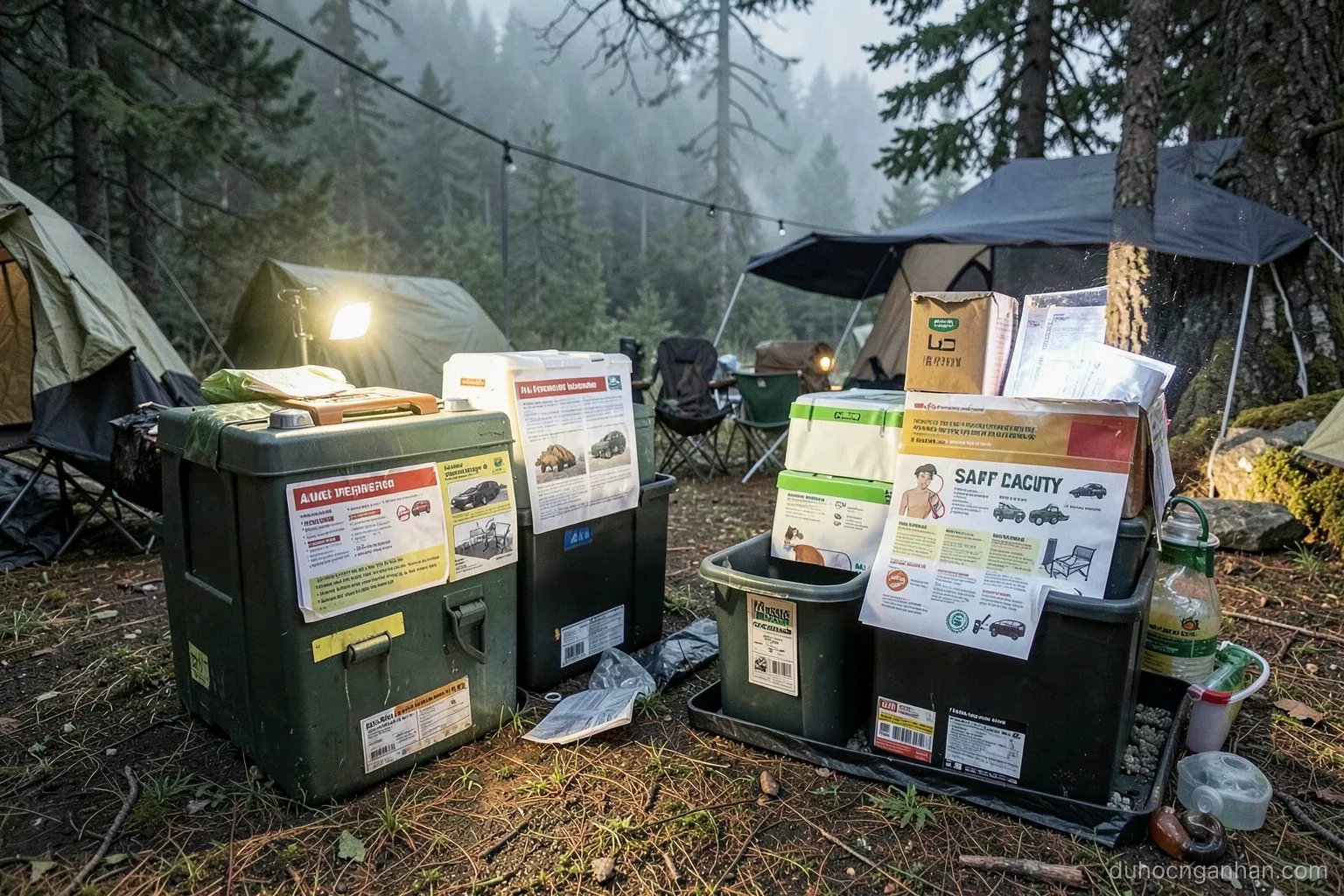
When a storm or earthquake hits the place where your child is at camp, the safest course is usually to stay on the camp's grounds, following the camp's disaster plan and the guidance of the host country's warning authorities; outdoor activities and outings are cancelled, and the return flight may be postponed. The parents' part is to follow news from official sources, wait for the group leader's updates at the agreed times, and be prepared for the possibility of their child returning a few days late.
Natural hazards follow clear seasonal and regional patterns, so most of the risk can be considered in advance when choosing the timing and destination. This article goes through the hazards common in places where Vietnamese children go on short camps, the questions to ask the camp about its emergency plans, and how the family can handle the days when their child is far away amid storm news.
Common hazards by place and season
The table below is a general picture so parents know what to ask, not a forecast. Weather varies from year to year; always check against the destination's official weather agency:
| Place | Common hazards | When to pay attention |
|---|---|---|
| The Philippines | Tropical storms, heavy rain, floods, landslides; earthquakes; volcanoes in some areas | Storms and heavy rain concentrated from around mid-year to the end of the year; earthquakes are not seasonal |
| Japan | Earthquakes, typhoons, heavy rain, summer heat | Typhoons in late summer and early autumn; heat in midsummer; earthquakes are not seasonal |
| South Korea, Taiwan | Typhoons, heavy rain; Taiwan also has earthquakes | The rainy season in early summer, typhoons in late summer |
| Australia | Bushfires, heatwaves, floods in some areas | The southern hemisphere summer, around the end of the year to the beginning of the next |
| The US, Canada | Wildfires, heatwaves, hurricanes on the east and Gulf coasts | Summer and early autumn |
| The UK, Europe | Heatwaves, thunderstorms, wildfires in southern areas | Midsummer |
Reading the table, you will see that summer camps in many places coincide with seasons of weather risk. That does not mean they should be avoided entirely, but that you should choose a camp with a clear plan, indoor facilities sufficient to keep activities going when children cannot go outside, and a location that is not in an area prone to flooding or landslides.
Official warning sources to follow
Every country has an official agency that issues weather and seismic warnings. In the Philippines, the weather agency PAGASA issues storm bulletins and wind signal levels by area, while PHIVOLCS monitors earthquakes and volcanoes. In Japan it is the Japan Meteorological Agency. In Australia it is the Bureau of Meteorology. The camp and the group leader should follow these sources, not just news on social media.
For parents in Vietnam, following these sources directly is not always easy because of language and terminology. Mainstream Vietnamese media usually report when there is a major storm or strong earthquake in neighbouring countries. What to avoid is relying on viral videos, which are often old, edited or filmed hundreds of kilometres from the camp.
When a storm comes, local governments and education authorities in the Philippines usually announce school closures according to the wind signal level. Private camps may follow these decisions or decide for themselves based on their own facilities. Parents can ask the group leader which area's warnings the camp is following.
The Vietnamese diplomatic mission in the host country sometimes issues notices to citizens during major disasters. The group leader should register the group's details with the mission if advised to, so that if needed, the mission knows there is a group of Vietnamese students in that area.
Questions to ask the camp about its disaster plan
These questions should be asked before registering, especially when travelling in the storm season or to an area with earthquakes:
- Does the camp have a written disaster response plan, and are staff trained in it.
- Do students take part in an evacuation or earthquake drill in the first week.
- During a storm, does the camp have a generator, stored water and stored food, and for how many days.
- Are the dormitory and classroom buildings in a low-lying area, near a river or near a slope.
- When children cannot go outside, does the camp have alternative indoor activities.
- When the power and internet are down, how does the group leader contact families.
- If the return flight is cancelled, who arranges accommodation, and who pays the extra costs.
A camp that has operated for years in a storm-prone area usually answers these questions calmly and specifically, because it has been through many seasons. An answer like "nothing has ever happened" is not a plan.
Extreme heat and wildfire smoke at camps in temperate countries
Parents often assume camps in the UK, Europe, Canada or Australia are cooler than home. Most days they are, but midsummer heatwaves in these places are increasingly common, and facilities there are usually designed for a cool climate: old dormitories without air conditioning, stuffy classrooms, little shade. Children from hot countries are not immune because of that; heat in a room without a fan at night makes your child sleep badly and feel tired.
When there is an official heat warning, a good camp changes its schedule: moving outdoor activities to the early morning, adding rest periods, opening the coolest rooms to students and handing out water regularly. Parents can ask in advance whether the camp has a plan for days like that.
In areas with wildfires, the most common risk to a camp is not fire but smoke: air quality worsening for several days and outdoor activities being cancelled. Children with asthma or respiratory conditions need this clearly noted in their file so the camp can monitor them closely. For outdoor camps in forests or mountains, ask which agency's wildfire warnings the camp follows and whether it has a fixed evacuation route.
When a storm comes: what a day at camp will be like
When there is a storm warning for the area, camps usually cancel outings, stop outdoor sport and keep children indoors. Lessons may continue if power and safety allow, or switch to activities in the hall: films, games, crafts, speaking practice in groups. For many children, a storm day at camp is an unusual day that is more fun than frightening.
Power may go off for a few hours. Camps with a generator usually prioritise lighting, the kitchen and water pumps. Mobile and internet connections may be patchy, so your child's evening call may not happen. The group leader should warn families of this in advance, so parents do not panic when there is no news one evening.
For young children, strong wind, rain beating on doors and power cuts at night can be frightening. Having an adult nearby, explaining what is happening and keeping routines close to normal is the best way to keep children calm. Older children can be given small jobs such as helping younger ones or doing a group headcount, which helps them feel more in control.
After the storm, the camp checks the facilities before letting children go outside: fallen trees, power lines, standing water. Children are told not to wade through water, not to touch power lines and not to go into areas being cleared up. Outdoor activities resume once the camp is sure it is safe.
Earthquakes: what your child needs to know in advance
A drill in the first week. In countries with earthquakes, many schools and camps hold regular drills. Your child should practise at least once and know the camp's outdoor assembly point and the way out from their bedroom and classroom.
Drop, cover and hold on. This is the basic guidance recommended by many disaster prevention agencies: drop low, cover your head and neck, get under a sturdy table if there is one, and hold on until the shaking stops. Do not run outside while it is shaking.
After the shaking stops. Leave the building as adults direct, go to the assembly point and have a headcount. Keep away from glass, walls and power poles. Aftershocks may follow.
If away from the camp. On an outing, your child follows the instructions of the adults in the group and staff at that place. If there is a strong earthquake near the sea, moving to higher ground as official guidance directs is important.
Reporting that you are safe. After an earthquake, mobile networks are often overloaded. A short text message may get through better than a call. The group leader should send a group message to all families saying everyone is safe as soon as possible.
Parents at home: following the news and when the return is delayed
On hearing of a storm or earthquake in the country where your child is, the natural reaction is to call your child and the group leader straight away. Remember that the country may be very large; a storm in one region does not necessarily affect where your child is. Check the camp's location against official news first, then send the group leader one short message asking about the situation, rather than calling repeatedly while they are looking after the whole group.
A group leader with a good plan will report proactively before the storm arrives: what the camp has prepared, how long contact might be lost, and when the next update will come. If the family has not received a message like that once an official storm warning has been issued, that is the time to ask the organiser's duty contact.
The return flight may be cancelled or postponed when the airport closes because of a storm. In that case, the organiser works with the airline to rebook the whole group, and the camp or a hotel near the airport provides extra accommodation. Who pays the extra costs depends on the contract and the insurance; read these terms before the trip. Keep every airline confirmation of the cancellation and all receipts for extra costs for the insurance claim.
Your child returning a few days late may clash with the start of term or extra classes. Telling your child's school in Vietnam early, with the details of the flight cancelled because of a natural disaster, usually meets with understanding. When your child comes home, take time to listen to their stories about the storm days; for many children, that turns out to be the most memorable part of the trip, when they saw that they had got through something big together with friends.
Frequently asked questions
Should we avoid sending our child to a camp in the Philippines during the storm season?
Not necessarily, because many camps operate normally throughout the rainy season and have good response plans. If you are worried, you can choose a time with fewer storms, or a camp in an area less directly affected, with large enough indoor facilities and a clear disaster plan.
Will the camp send children home early when there is a storm warning?
Usually not, because travelling to the airport as a storm approaches is more dangerous than staying on a sturdy camp site. Any decision to send the whole group home early is made by the organiser and the camp based on official warnings, not at the request of individual families.
What should we do if we lose contact with our child during a storm?
Losing power and connection during a storm is common. Message the group leader and the organiser's duty contact, follow official news about the camp's area, and wait for the next scheduled update. If there is still no news for a long time after the storm, contact the organiser so it can find a way to reach the camp.
Will insurance cover costs if the return flight is cancelled because of a storm?
Many travel insurance policies have benefits for trips delayed or disrupted by weather, provided there is confirmation from the airline. Limits and conditions differ between policies, so read them carefully before the trip and keep all the documents.
Does my child need to learn earthquake skills before going to Japan?
Yes, at a basic level: drop, cover and hold on, do not run outside while it is shaking, and know the assembly point. Many camps in Japan hold a drill in the first week. Parents can look at official guidance material with their child before the trip to help them feel less anxious.
Can social media news about natural disasters be trusted?
Many viral videos are old, from somewhere else or edited. Rely on the destination's official weather and seismic agencies, mainstream media and updates from the group leader. Ask the group leader directly about the situation at the camp rather than guessing from videos.