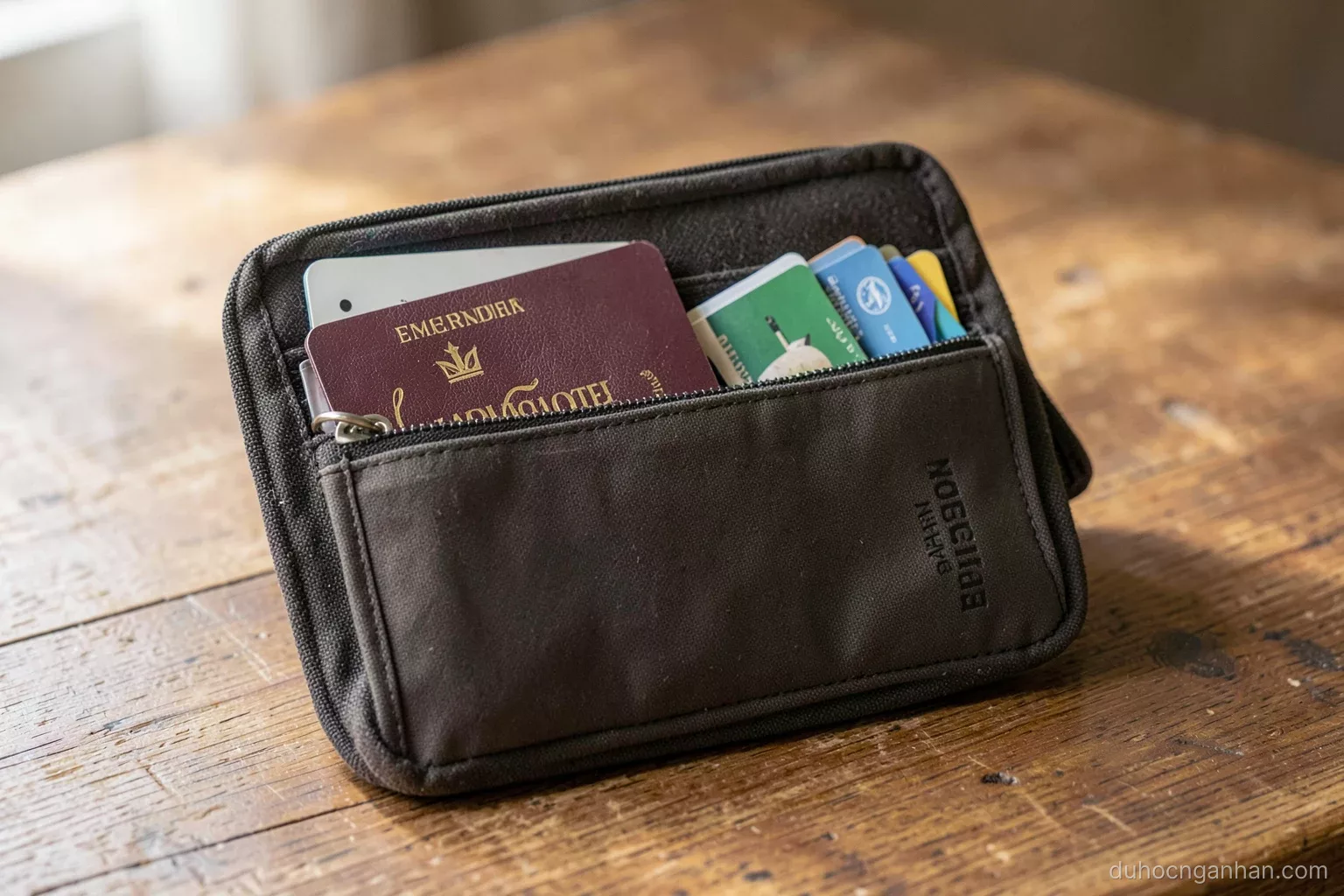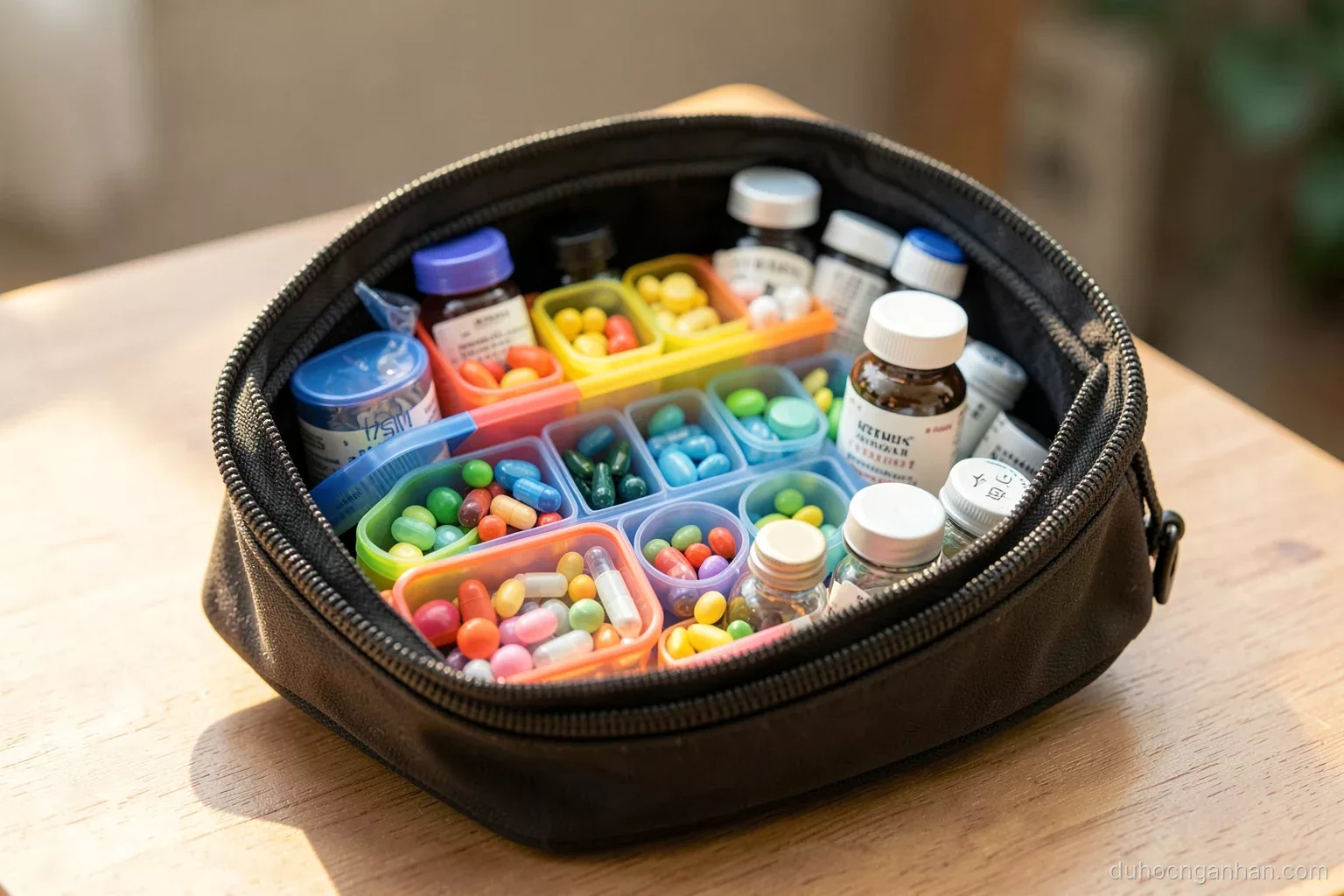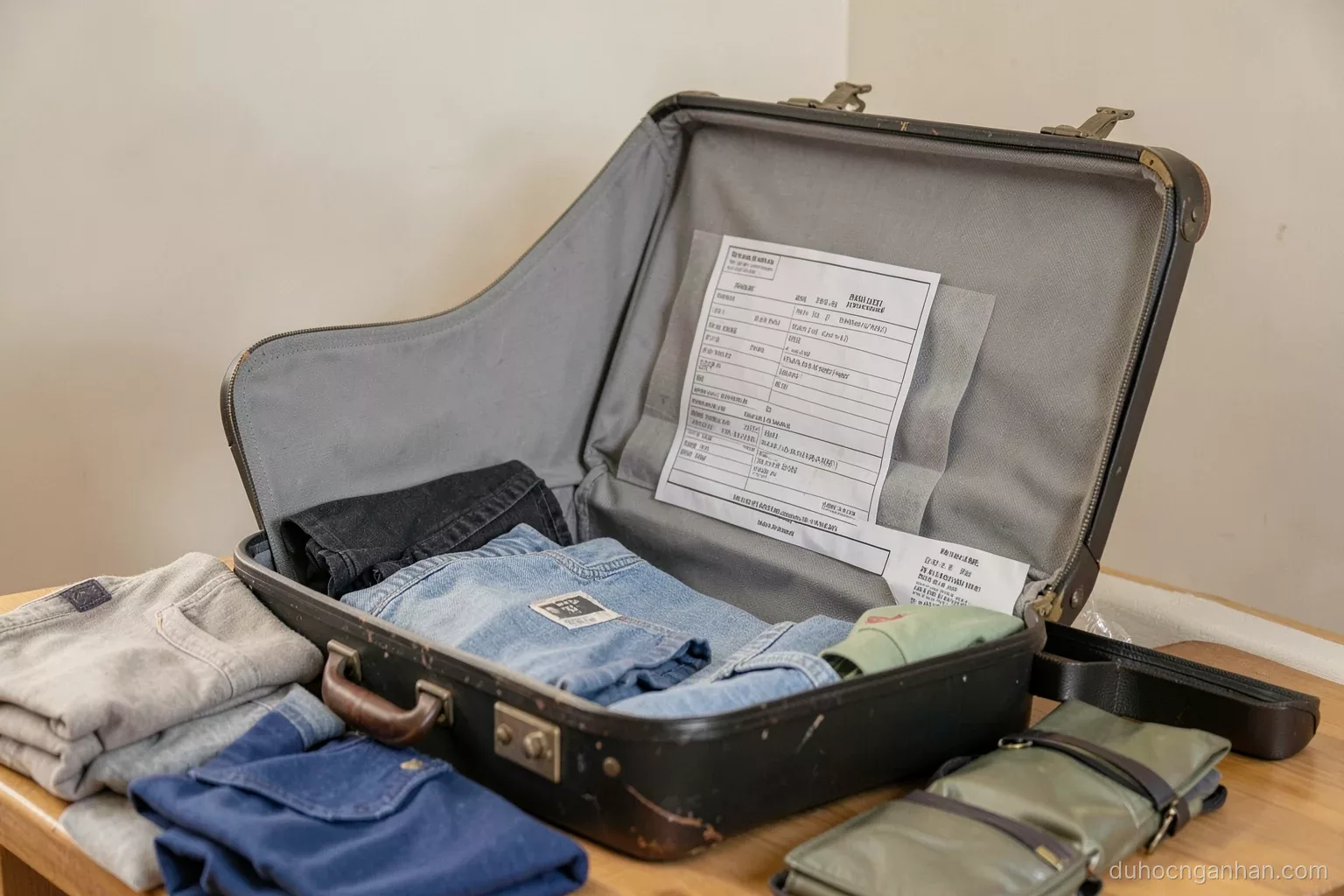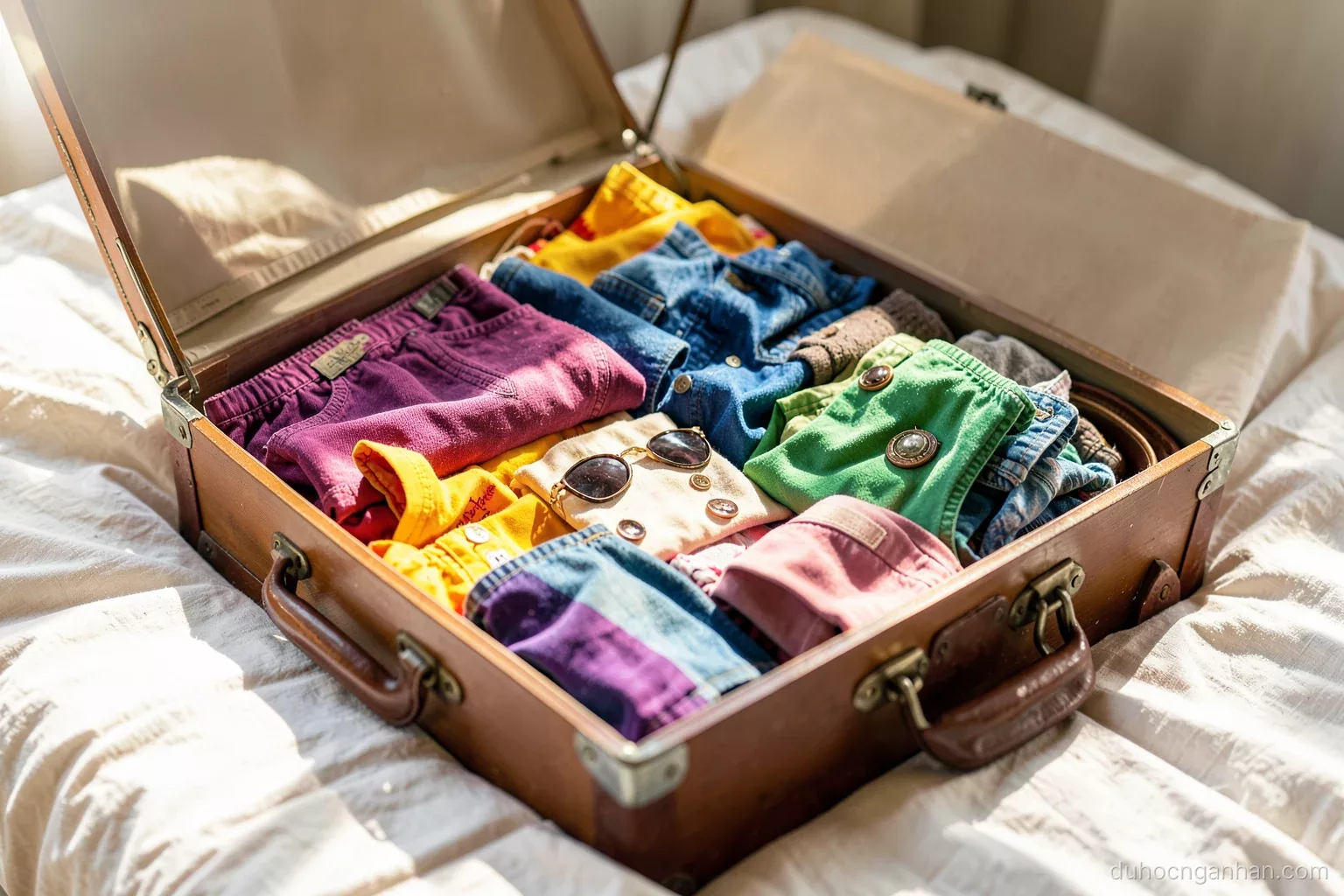
For a two- to eight-week study trip abroad, your child usually needs three items: a medium checked suitcase that they can pull through the airport and up the dormitory stairs themselves, a small backpack for daily use at camp, and a cabin bag for the flight holding documents, medicines, a change of clothes and electronics. The biggest suitcase is not the best suitcase: an oversized one tires your child, easily goes over the weight limit and crowds a dormitory wardrobe that usually has just one section for each child.
Below we go from choosing the size, material and lock to splitting things between the three items, and the mistakes parents often make when packing for their child for the first time. Weight limits, dimensions and what may be carried on board differ by airline and fare class, so the figures on your child's ticket are the final ones to follow.
Which suitcase size suits a two- to eight-week trip
The experience of many camp groups is that a four-week trip and an eight-week trip do not need two different suitcase sizes. The reason is that almost every residential camp has a laundry service once or several times a week. Your child only needs clothes for about a week plus a few spare outfits; the rest rotates with the laundry schedule. An eight-week trip only adds a few personal items such as toothpaste and shampoo, which can also be bought locally.
For primary and early secondary students, a medium suitcase (often called 24-inch) is manageable: your child can stand it up, pull it along and lift it over a step. Older students taller than about 1.6 metres can use one size up if going to a winter camp with thick coats. A simple test at home: fill the suitcase, have your child pull it from the gate into their room and lift it up one stair. If they can do it without help, that size works; if they have to strain, take things out or change the suitcase.
Do not forget the dormitory wardrobe. Camp rooms usually sleep two to four children, each with a wardrobe or drawer, with suitcases stored under the bed. A suitcase too big to fit under the bed will sit in the middle of the floor for weeks, getting in the way and easily tripping up roommates.
Hard shell or soft shell, four wheels or two
Neither type is clearly better; each suits a particular kind of trip. The table below gathers the points parents often weigh up when buying a suitcase for their child.
| Option | Strengths | Weaknesses | Suits |
|---|---|---|---|
| Hard shell (PC, ABS plastic) | Rainproof, protects fragile items, easy to wipe clean | Cannot be overstuffed, some types heavier when empty, scratches easily | Rainy destinations, carrying electronics, itineraries with connections |
| Soft shell (thick nylon, polyester) | Light, has outer pockets, expandable | Absorbs water if left in the rain, zips are a weak point | Winter camps with bulky clothes, needing extra room on the way back |
| Four spinner wheels | Glides easily over flat airport floors and corridors | Small wheels break easily on rough ground, roll away on slopes | Camps at schools with smooth paved paths |
| Two large wheels | Pulls firmly over brick paving, dirt paths and steps | Has to be tilted, more tiring on the arm over long distances | Camps in the countryside, large campuses with gravel paths |
Whichever you choose, check that the handle slides in and out smoothly, the wheels are not loose and the zip runs all the way round. An old suitcase at home works fine if it passes these three tests; there is no need to buy a new one just because your child is going to camp.
A daily camp backpack is different from a cabin bag
Many families give their child a single backpack to serve as both the cabin bag and the bag for classes at camp. It is tidy, but only works if the backpack is sturdy enough and has a separate pocket for documents. In practice, at camp your child needs a light backpack for notebooks, pens, a water bottle, a thin raincoat, sunscreen and a small towel as they move between classrooms, the canteen and the sports field. It needs to fit your child's back, have comfortable straps and not too many pockets, so your child does not forget which pocket things are in.
The cabin bag for the flight needs to hold more for a few hours in the air: passport, ticket, group documents, personal medicines, a change of clothes in case the checked suitcase goes missing, chargers and a power bank, and a light jacket for the cold cabin. If one backpack is used for both, parents should teach their child to take out the flight items once they have checked in, so the school backpack is not heavy for the following weeks. A heavy backpack is a very common reason for children complaining of sore shoulders and backache after the first week at camp.
Another approach many groups use is for the child to carry a backpack as the cabin bag, with a foldable cloth bag packed in the suitcase for weekend excursions. A foldable bag weighs almost nothing and also solves the problem of carrying gifts home at the end of the course.
Splitting things between the checked suitcase and the cabin bag
The rule for splitting is: anything whose loss would bring the trip to a halt travels with the person. The order below helps parents split things quickly on packing night.
- Always in the cabin bag: passport, group documents, emergency contact card, daily medicines, glasses, phone, power bank, headphones.
- Best in the cabin bag: a change of clothes, underwear, a small toothbrush and toothpaste, a light jacket, face masks, wet wipes, and a familiar item that helps your child sleep on the plane.
- Checked: the rest of the clothes, a second pair of shoes, full-size toiletries, sports kit, towels, gifts for friends, books not needed on the plane.
- Do not pack: sharp objects in the cabin bag, liquids over the allowed volume at security, unnecessary valuables, fresh food.
- Photograph: the inside of the packed suitcase and each valuable item, so if it goes missing you have photos for the airline and the insurer.
At most international airports, liquids in cabin bags must be in small bottles gathered in a resealable clear bag; check the exact volume limits and the exceptions for medicines on the airline's and departure airport's websites before the trip.
Weight, locks and making the suitcase recognisable
Many parents weigh the suitcase only on the way out and forget about the way back. At the end of the course your child brings gifts, a camp uniform T-shirt, certificates and things bought at weekends; a suitcase that was just within the limit going out will almost certainly be overweight coming back. The safe approach is to pack the outbound suitcase to only about four-fifths of the limit, leaving the rest spare. A handheld luggage scale packed in the suitcase lets the group leader or your child check before the return day.
A combination lock stops the suitcase bursting open on the way and reduces the risk of things being taken from it during handling. Choose a type that security staff in some countries can open for inspection without breaking. Teach your child the combination, and also write it in the group leader's notebook, because children often forget it on the very first evening.
Identical black suitcases are common on the carousel, even more so when the whole group buys the same model. A coloured strap, a sticker your child likes, or a luggage tag with your child's name and the group's name (not your home address) helps your child spot their suitcase from a distance. Inside the suitcase, add a sheet of paper with your child's name, the camp's name and the organiser's contact number, in case the outside tag is torn off.
The suitcase at camp: wardrobes, under the bed and repacking each week
On the first day, boarding staff usually ask the children to unpack into their wardrobes and store the empty suitcase. This is when many children struggle: at home mum packed, so they do not know where anything is. If your child has packed the suitcase themselves at least once before the trip, unpacking and arranging the wardrobe goes much faster, and they know exactly what they have brought.
A tip that keeps your child's wardrobe tidy throughout the trip is to use mesh or cloth bags for groups of items: one for underwear and socks, one for sports kit, one for nightwear, one for toiletries. When unpacking, your child just puts each bag into a section of the wardrobe. Mesh bags also help with laundry, since many camps collect washing in bags labelled with each child's name.
The empty suitcase under the bed is also a place for things used less often, such as a thick coat, sightseeing shoes and gifts not yet given. Tell your child to lock the suitcase when storing it, and not to keep money or electronics in the suitcase in the room if the camp has a shared safe.
Common mistakes when choosing a suitcase for your child the first time
The first mistake is buying a big suitcase "so there is enough room" and then filling it with things your child will not use. Children do not wear fifteen outfits in a week; they wear their favourites again. The second mistake is using mum's suitcase: lovely and expensive, but heavy, with a handle too high for your child. The third is putting everything important in the checked suitcase, then the suitcase arrives a day late and your child has no medicine and no change of clothes.
The fourth mistake, which few people notice, is not testing the suitcase first. Stuck wheels, gaping zips and handles that jam halfway are common in suitcases left in storage. One test run around the house a week before the flight is enough to find and fix them. The fifth mistake is packing on the very last night: there is no time to buy anything missing, and your child sees their parents stressed right before saying goodbye.
If the family needs a packing list that matches the rules and climate of the camp currently taking registrations, the Du Học Ngắn Hạn advisory team can send the list the group leader uses at the group meeting, so parents can check it against their child's suitcase.
Frequently asked questions
Should a younger child have their own suitcase or share with an older sibling?
Use separate suitcases if the two children are in different rooms, because each has to unpack into their own wardrobe. Sharing is only convenient when both are in the same room and the older one is responsible enough to look after the younger one's things. A suitcase of their own also helps a younger child learn to take responsibility for their belongings.
Should we have the suitcase plastic-wrapped at the airport?
Wrapping stops the suitcase getting scratched and makes it harder to open, but if security at the destination needs to inspect it, the wrap will be cut. With a suitcase that has a good lock, wrapping is not necessary. If you wrap it on the way out, there is usually nobody to rewrap it on the way back, so do not rely on it.
How big should my child's backpack be?
An ordinary school backpack that fits large-format books and a water bottle is enough for most camps. A backpack that is too big leads your child to carry lots of unnecessary things and have sore shoulders all day. Choose one with a padded compartment for a tablet if your child is taking one, and padded straps.
What does my child do if their suitcase goes missing at the airport?
Your child tells the group leader right there at the carousel, and the group leader goes with them to report it at the airline's lost luggage desk and keeps the receipt. This is when a cabin bag with a change of clothes and medicines proves its worth. Photos of the suitcase and its contents help with a quick report and the insurance claim.
Do we need a handheld luggage scale?
It is worth having one, small and cheap, especially for the way back. Your child or the group leader weighs the suitcase at camp before the flight home; if it is overweight, they move things into the cabin bag or leave behind what is not needed, avoiding excess charges at check-in.
Soft or hard suitcase for a camp in a rainy tropical country?
A hard shell resists water better when the suitcase has to wait outside in the rain while changing vehicles or getting off the plane on the apron. If you only have a soft suitcase, put things inside plastic or waterproof bags, especially documents and spare electronics.