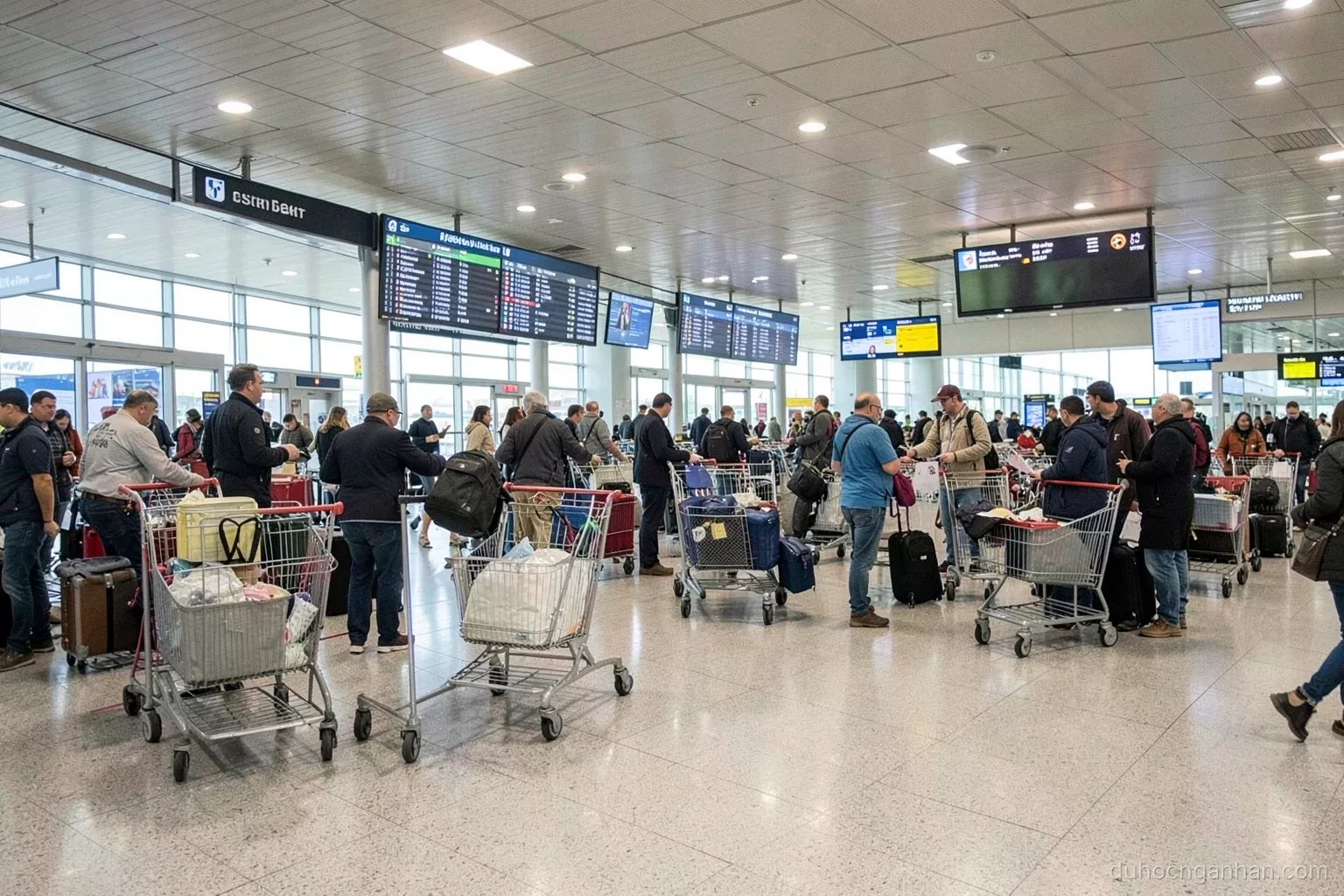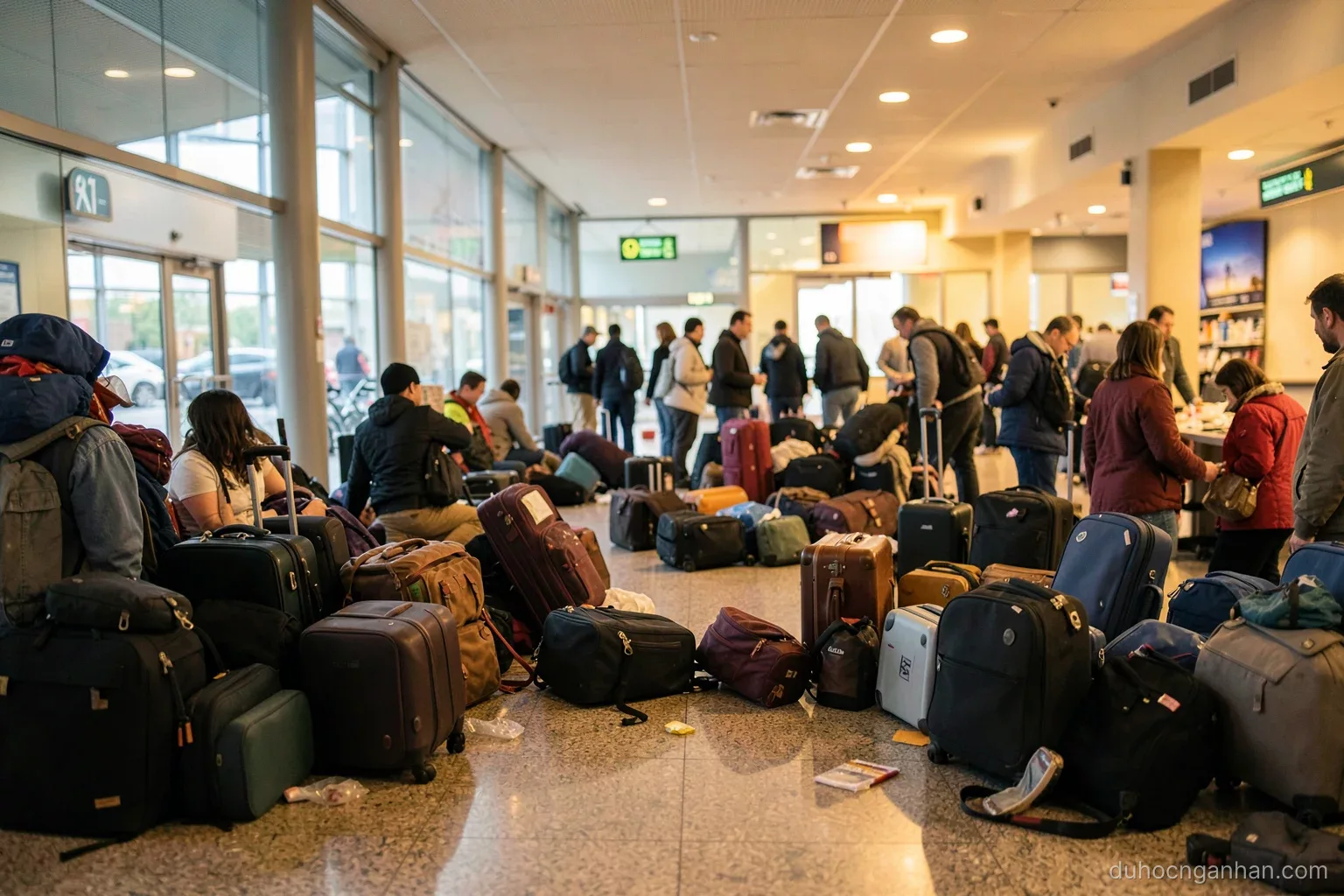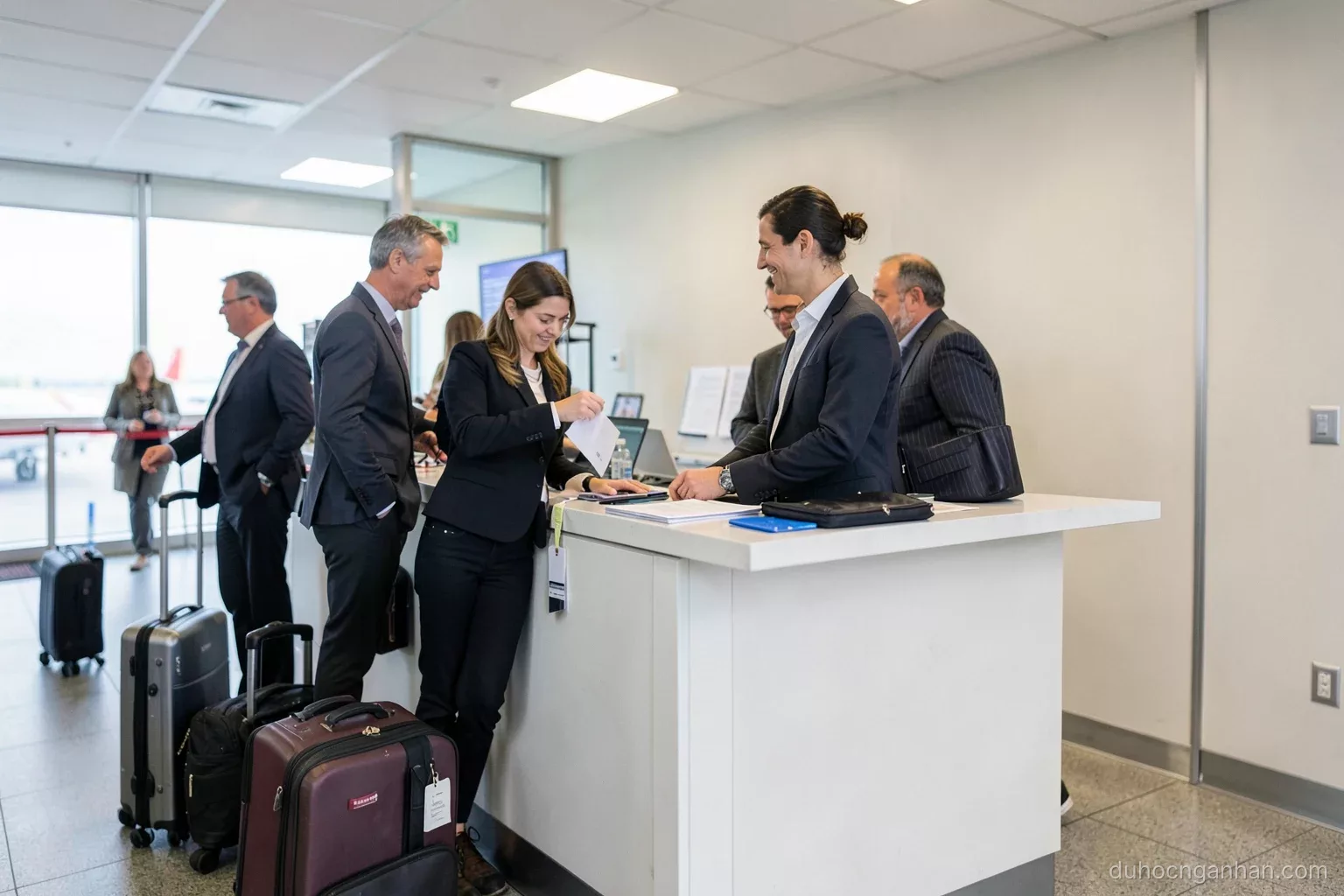
When your child travels with a group, parents see them off as far as the security checkpoint of the international departures area; from there on, the group leader is responsible. Before that point of farewell comes a sequence almost every group follows: meeting at the agreed point many hours before the flight, a headcount, a document check, group check-in at a row of counters, dropping off luggage, handing the last items to the group leader, and saying goodbye.
The send-off is much shorter than it feels to parents, and most of the time is spent waiting. This article goes through each step, points out the parents' tasks at each one, the mistakes that slow down the whole group, and how to say goodbye so your child walks through security in the lightest possible frame of mind.
Why the group meets earlier than individual travellers
An individual passenger on an international route is usually advised to arrive about three hours before the flight. Student groups usually meet earlier than that, sometimes three and a half to four hours before. It is not the organiser being overcautious: a group of twenty children takes longer than twenty individual passengers put together.
Check-in cannot start until everyone is there, because the counter usually processes the whole group from one list. Overweight suitcases have to be opened and repacked. Seats have to be swapped when the system places two young children far apart. Someone has to wait while a child who forgot a document has a relative go home to fetch it. Each task takes only a few minutes, but together they add up to an hour.
So parents should plan the departure time from home around the meeting time, not the flight time, adding rush-hour traffic and time to find parking. Arriving fifteen minutes late at the group's meeting point is less of a worry than the whole group having to stand waiting for one child while the counter is about to close.
The night before the flight and the morning of departure
The night before the flight is when the whole family is most likely to stay up late: repacking the suitcase one last time, hunting for a misplaced item, adding a few more words of advice. Close the suitcase the afternoon before and put it by the door with the backpack, the shoulder pouch and the document folder, so the morning is just a matter of leaving the house. A child who has slept well before the flight copes with the airport wait, the flight and the first evening at camp much better than a child who stayed up late from nerves.
In the morning, give your child a moderate, familiar meal, not something new. Check three things before locking the door: passport, a fully charged phone, and the medicine your child takes daily. Anything else, if forgotten, can be bought or sent later; these three cannot.
If the group's flight leaves early in the morning, the meeting time may fall around midnight or before dawn. In that case put your child to bed early in the evening, set alarms for both parents and child, and plan transport to the airport at a quiet time.
When parents cannot come to the airport
In some families, parents are away on business, live in a province far from the airport, or cannot get time off on the day. The person taking your child to the airport may then be a grandparent, an aunt or uncle, or the parent of a friend in the group. What you need to do is give the group leader the name and phone number of that person in advance, and have them bring the agreed documents and the handover list.
The person standing in should attend the group meeting if possible, or at least read the itinerary and group rules carefully. Parents who are far away can video-call their child for a few minutes before security, then end the call cleanly as they would if they were there.
If your child is going along with a friend's family, message them privately to say thank you and agree who will be the named contact with the group leader in the first hours, to avoid two people calling about the same thing.
The sequence of a group send-off
The order below is the general framework. The group leader may swap a few steps depending on the airport and airline, but the main milestones hardly ever change.
- Meeting at the agreed point. Usually a specific pillar or door in the international departures hall, with someone from the organiser holding the list. First headcount; your child receives the group T-shirt or badge if there is one.
- Document check. The group leader checks passports, visas or entry documents and parental consent letters. This is the last chance to rush home for anything forgotten.
- Weighing and repacking luggage. Overweight suitcases are opened on the spot and items moved to another bag or given back to relatives to take home.
- Group check-in. The whole group queues at the counter, the group leader hands over passports in list order, and each child puts their suitcase on the belt when called. Boarding passes are usually kept by the group leader.
- Final handover. Parents give the group leader whatever has been agreed: medicines with prescriptions, an envelope of pocket money if the group holds it, any additional medical forms. Sign for them if the organiser keeps a register.
- Goodbye. The group walks in line through the security checkpoint. This is where parents stop.
The whole sequence usually takes an hour and a half to two hours. After that the group still goes through security, departure control and waits at the gate; the group leader usually posts in the parents' chat once the group is through departure control and again once they have boarded.
Mistakes that slow down the whole group
Overweight suitcases. The most common one. Weigh the bag properly at home with a luggage scale, allowing a kilo or two for the difference between home and airport scales. Remember that items handed out at camp and gifts bought there will make the suitcase even heavier on the way back.
Prohibited items in the cabin bag. Water bottles, large shampoo bottles, scissors, fruit knives, or a power bank packed in checked luggage instead of the cabin bag. Rules on liquids and batteries vary between airports and airlines; check the website of the group's airline before packing.
Ticket details that do not match the passport. The name on the ticket must match the passport letter for letter. This mistake can usually be spotted as soon as the organiser sends the booking; read it carefully the moment you receive it rather than waiting for the check-in desk.
Documents packed in checked luggage. The passport, consent letter and enrolment letter must be in the cabin bag or with the group leader. Once the suitcase has gone, they cannot be retrieved.
The whole family joining the queue. The group check-in counter only needs the students and the group leader. Parents and grandparents waiting outside in the waiting area help the queue move faster and make headcounts easier for the group leader.
What your child should carry through security
After security, your child no longer has parents to ask "where did you put that?". Their cabin bag should be tidy enough that they know exactly what is in it. A small pouch worn on the front for things they need to take out often: the slip of personal information written in English, phone, headphones, a little small change if the group allows it. A backpack holding a light jacket (planes are often cold), a change of clothes in case luggage goes missing, a toothbrush, daily medicines, dry snacks, and a book or games that do not need the internet.
Let your child pack the backpack themselves once at home, then take out each item as you name it. This five-minute exercise helps your child not to fumble when security staff ask them to take a laptop or bottles out of their bag while a queue of people waits behind.
If your child uses medicines they must carry, such as an asthma inhaler or an auto-injector for a severe allergy, keep them in the cabin bag with the prescription or a doctor's letter, and tell the group leader at the group meeting. Do not put these in checked luggage.
Saying goodbye: short, warm and clear
Many parents think staying with their child for as long as possible is good for them. For most children, the opposite is true. A drawn-out goodbye, with adults in tears and repeated "call me straight away if anything happens", easily turns a child's normal nervousness into worry. A short goodbye, a hug and a specific arrangement ("we'll call tomorrow evening at this time") usually helps a child walk away more steadily.
If your child cries, that is not a sign they cannot go. A child crying at security and laughing with friends ten minutes later is something group leaders see all the time. Trust the group leader, turn around, and wait for the messages in the chat.
Older children sometimes do not want hugs or lingering goodbyes in front of their friends. Respect that. You can say goodbye in the car park or a corner of the hall before your child joins the group, and then let them walk in with their friends like everyone else.
One thing worth doing before leaving the airport: take a photo of the whole group if the group leader allows it, so you have a picture of what your child was wearing that day. It may seem unnecessary, but it is useful information if you ever need to describe your child in a situation where they get lost at a transit airport.
After your child has gone through: what parents do
Once your child has passed security, parents do not need to stay at the airport until take-off. The group leader will report when the group is through departure control and when they have boarded. Go home, rest, and keep your phone on ring at the times the group is expected to land.
Following the flight in the airline's app or on the arrival airport's website is enough; do not message the group leader while the plane is in the air, because they cannot reply. When the group lands and goes through immigration is when the group leader is busiest, so the update may come an hour or two after landing. A delay does not mean something is wrong.
That evening, if your child sends back a terse "I've arrived", take it as good news. Your child is busy getting used to a new place, which is exactly the point of the trip.
Frequently asked questions
Can parents go into the departure lounge with their child?
No. People without a boarding pass can only stay in the departures hall. That is why every handover of documents, medicines and money must be completed before security, and why your child needs to know exactly what they are carrying.
What if my child arrives late after the group has finished checking in?
Call the group leader straight away. If the counter is still open, your child can still check in but may not sit near the group. If the counter has closed, the airline has the right to refuse to carry them; then the ticket has to be changed and the trip rearranged, which is a lot of trouble for the whole family.
Should my child carry a lot of cash through the airport?
No. Carry just enough for the first days, and the rest in the way the group has agreed: held by the group leader, on a prepaid card, or kept by the camp. Rules on declaring cash at departure and arrival vary between countries; check in advance if carrying a large amount.
Can my child take food from Vietnam?
Sealed, packaged dry food can usually be carried in the cabin bag to eat on the way. Many countries restrict imports of meat, eggs, fresh fruit and home-made food; check the destination's quarantine rules, and do not ask your child to carry food for anyone else.
If the group departs from two different airports, where do they meet?
Some groups have children departing from Hanoi and others from Ho Chi Minh City, who then meet at the transit or arrival airport. Ask clearly who leads each subgroup, where they meet, and which children travel a leg without an accompanying adult.
What last words should I give my child at security?
Just one or two: always stay with the group, and if anything happens, find the group leader first. Long instructions should be given at home the day before. At security, your child needs an ordinary goodbye more than a list of things to remember.