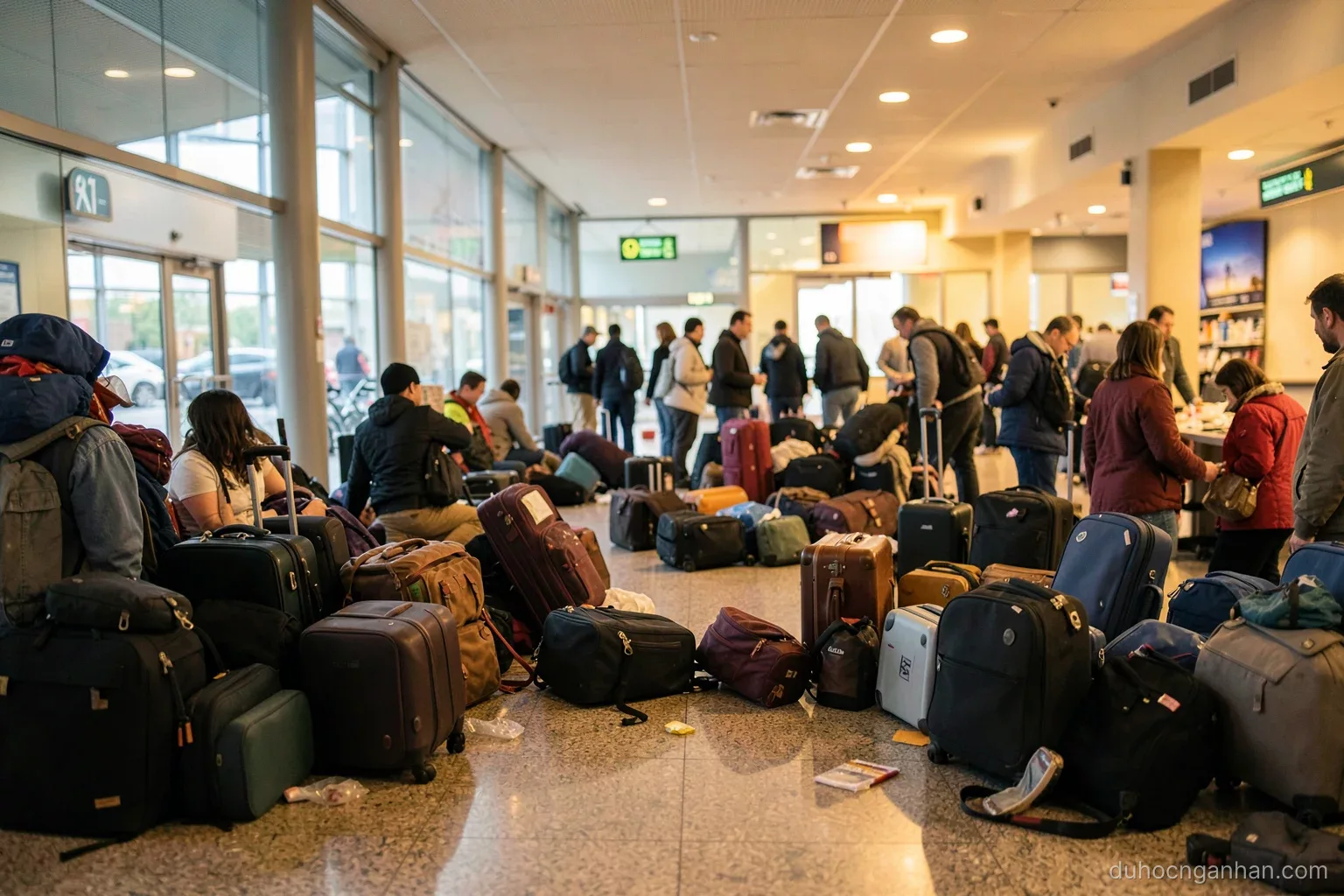
The first twenty-four hours after the group lands have four parts: the pick-up from the airport to the camp, checking in and the first meal, the first night's sleep in an unfamiliar place, and the first morning on the camp's schedule. This is when your child is most tired in the whole trip, having just completed a long journey and having to get used to new people, places and rules straight away; it is also when parents are most anxious, because news comes in slowly.
The first days at camp, such as class placement, learning the rules and making friends with roommates, are covered in a separate article in another section. This article covers only one transitional day and night: from the moment the group walks into the arrivals hall until your child wakes up the next morning, what the group leader does, what your child needs, and how parents should read the updates.
The drive from the airport to the camp: longer than parents think
Very few camps are right next to an airport. Residential camps at schools are usually tens to hundreds of kilometres from the airport; camps in the hills or by the sea are further still. For English camps in the Philippines, for example a camp in the Tarlac area near Clark airport, the drive from the airport is much shorter than from Manila, but it is still a coach journey. In Europe or North America, the drive from a major airport to a boarding school in the countryside can take three or four hours.
Camps usually send their own vehicle to collect the group: a minibus, a coach, or sometimes a few cars for a small group. The group leader has agreed the pick-up time, meeting point and the name of the person collecting them with the camp in advance. If the flight is delayed, the group leader informs the camp so the vehicle waits or the time is changed.
On the coach, most children fall asleep. That is a good thing. The group leader keeps an eye on children who get travel sick, seats them at the front, opens a window a little if possible, and stops for breaks on long drives. A light snack or a bottle of water on the way helps children not to arrive weak with hunger, especially when they arrive late in the evening.
One transitional day and night: who handles what
The table below gathers the milestones of the first 24 hours, in the usual order when a group lands in the afternoon or evening.
| Milestone | What your child does | What the group leader does | What the camp does |
|---|---|---|---|
| Arrivals hall | Walks with their group, keeps their belongings | Takes a headcount, confirms who is collecting them | Meets the group, loads luggage onto the vehicle |
| On the coach to camp | Has a snack and a drink, rests | Messages parents, watches children who get travel sick | Drives, tells the camp the expected arrival time |
| Arrival at camp | Gets a room, a key and the items handed out | Hands the list, medical forms and medicines to the camp | Allocates rooms, introduces the boarding staff |
| First dinner | Eats, meets roommates | Watches for children who cannot eat | Serves a late meal if the group arrives late |
| First night | Showers, makes a short call home, sleeps | Does a round of the group's rooms | Boarding staff on duty, reminds about lights-out |
| Next morning | Gets up at camp time, has breakfast | Meets the children, asks how the night went | Starts the orientation schedule |
If the group arrives at midnight, the camp usually skips the introductions, sends the children straight to bed and moves everything else to the next morning. Parents should not be surprised if the first call only comes at lunchtime the following day.
Arriving at camp: rooms, medicines and documents
When the coach arrives at the camp, the first task is usually allocating rooms. The room list may have been sent beforehand or the camp allocates rooms on the spot. Each child receives a key or room card, bedding and towels if the camp provides them. The group leader goes up with the younger children, shows them the toilets, the boarding staff's room and the emergency exits.
At the same time, the group leader hands over to the camp what they have brought: the group list with parents' contact details, medical forms, and each child's own medicines with instructions. At many camps students' medicines are kept by the nurse and handed out at set times rather than kept in rooms, except emergency medicines such as asthma inhalers or allergy auto-injectors. Knowing this in advance means your child is not surprised when asked to hand over their medicine bag.
The children's passports may be kept in the camp's safe until the return day, returned to each child, or held by the group leader. Any of these is fine, as long as there is a record of who holds which passport. This is a detail worth asking the group leader about in your first message.
What to pack at the top of the suitcase for the first night
Arriving late at camp, tired, nobody wants to turn the whole suitcase upside down looking for a toothbrush. Pack at the very top of the suitcase, or in a small separate bag in the backpack, what your child needs on the first night:
- A set of pyjamas and a set of clothes for the next morning.
- Toothbrush, toothpaste, a small face towel and indoor slippers.
- A phone charger and a plug adapter for the destination; many countries use different sockets from Vietnam.
- Daily medicines for the first few days, before handing the rest to the camp nurse.
- Something familiar from home: a small pillow, one of mum's T-shirts, a family photo. For young children, that small item makes the first night easier.
- A bottle of water and a few packets of biscuits, in case of hunger in the night because of the time difference.
Teach your child where each item is from the moment you pack the suitcase at home. On the first night, finding their own things is a small victory that helps your child feel in control of the new place.
When the group leader does not stay at the camp
Not every group leader stays for the whole session. Some organisers only take the group out, stay for the first few days while the children settle, then fly back; someone comes out again to bring them home. In the weeks in between, the camp is fully responsible, and the organiser in Vietnam acts as the link with families.
With this arrangement, the first 24 hours matter even more. The group leader needs to hand over full information on each child to the camp: health, medicines, personality, what the family has asked for. Parents should ask beforehand who at the camp will be the main contact with the family after the group leader leaves, in which language, and how the organiser in Vietnam keeps track of the children while nobody is with them.
For young children going far for the first time, a group with an adult staying for the whole session is usually a better fit. For older, independent children, the take-out-and-return arrangement can work fine, as long as the camp has a clear team caring for international students.
The first night: normal things parents often worry about
Your child cannot sleep. A strange bed, a strange room, the air conditioning, roommates chatting, plus jet lag if they have travelled far. Most children sleep fitfully on the first night and catch up within two or three days.
Your child eats little. Tiredness and nerves take away many children's appetite. One small meal is nothing to worry about; if your child cannot eat for several meals in a row, the group leader will let you know.
Your child cries on the phone. Hearing their parents' voices after a long day makes many children burst into tears, even those who were excited the day before. First-night tears are not a sign your child cannot cope.
Your child does not call. Some children are so tired they fall straight asleep, some are busy talking to new friends, some do not have wifi yet. The group leader reporting that the group has arrived and the children are in their rooms is enough for the first night.
Your child messages to complain. The room is small, the food is strange, the roommate is noisy. Listen, acknowledge it, and do not rush to ask for a room change or call the camp on the first night. Most first-night complaints fade on their own after a few days.
The first call: short and ordinary
The first call after arriving at camp should be short; a few minutes is enough. The aim is for your child to hear your voice and know everything is fine at home, not to ask about every detail. Good questions: have you eaten, what is your room like, what is your roommate's name, are you tired. Questions to avoid: do you miss home, do you want to come back, is it boring there.
If your child cries, keep your voice calm, say that being tired and homesick is normal, arrange the time for the next call, and say goodbye. Dragging out a call while your child is crying usually makes it harder for them to let go and to sleep.
Many camps set times for phone use; the first night may be more flexible, but not always. Agree with your child in advance: they call when allowed, and parents do not keep calling when they do not pick up.
Jet lag and the first morning
For destinations in the same time zone or one hour apart, such as the Philippines, Singapore and Malaysia, there is almost no jet lag, just tiredness from travelling. For destinations many hours apart, such as Europe and North America, your child's body needs a few days to adjust. They may feel sleepy in the middle of the afternoon, wake in the night and feel hungry at odd times.
The way to help your child adjust quickly is to follow local time from day one: eat at the camp's mealtimes, get outside in the morning, try to stay awake until the evening even when tired, and avoid long naps. Experienced camps usually make the first day light, with plenty of outdoor activities and no main lessons yet.
On the first morning, the group leader should meet the group's children at breakfast, ask each one how the night went, and watch for anyone tired, feverish or sad. This is the time to catch small problems early before the camp schedule gets going.
How parents should read the group leader's updates
In the first 24 hours, the group leader usually posts three or four messages in the group chat: the group has landed, the group has left the airport, the group has arrived at camp, the children have eaten and gone to their rooms. Some groups include photos, some do not. The gaps between messages can be several hours, because the group leader is busy with real work.
A message that does not mention your child by name means there is nothing in particular to report about them, not that the group leader has forgotten them. If your child is ill, injured or has a personal issue, the group leader will tell the family privately, not in the shared group.
If a long time passes after the "the group has arrived at camp" message with no further news, message the group leader privately once with a short question. Avoid asking in the group, because one worried question easily triggers dozens from other families.
Frequently asked questions
If the group arrives at camp late at night, will my child get something to eat?
Experienced camps usually prepare a late meal or snacks when they know a group is arriving late. To be sure, pack some dry food in your child's backpack, and ask the organiser at the group meeting about dinner on arrival day.
Can my child change rooms on the first night?
Camps usually do not change rooms on the first night unless there is a safety or health reason. Encourage your child to give it a few days; if there is still a real problem, they can tell the boarding staff or the group leader so the camp can look into it according to its procedures.
Should we video-call our child on the first night?
A short call is fine, if your child wants it and the camp allows it. It does not need to be long, and there is no need for a tour of the room or the camp on screen. Leave that for later calls once your child has settled.
What if my child gets very travel sick on the drive to camp?
The group leader seats them at the front, stops for breaks and gives them water. On arrival, the nurse is told so they can keep an eye on your child. If your child has a history of travel sickness, send the medicine a doctor has prescribed and tell the group leader in advance.
Is it all right for the camp to keep my child's passport?
It is a common practice to avoid losses. What matters is a clear record of who holds it and where, and that the passport is returned on the right day. Meanwhile, your child carries a copy of their passport on weekend trips.
What if my child is still crying to come home after 24 hours?
The first few days being hard is normal. Keep to the agreed call schedule and talk to the group leader about how your child is getting on during the day. Most children feel better after the first week; if not, the group leader and the camp will discuss with the family how to support them.