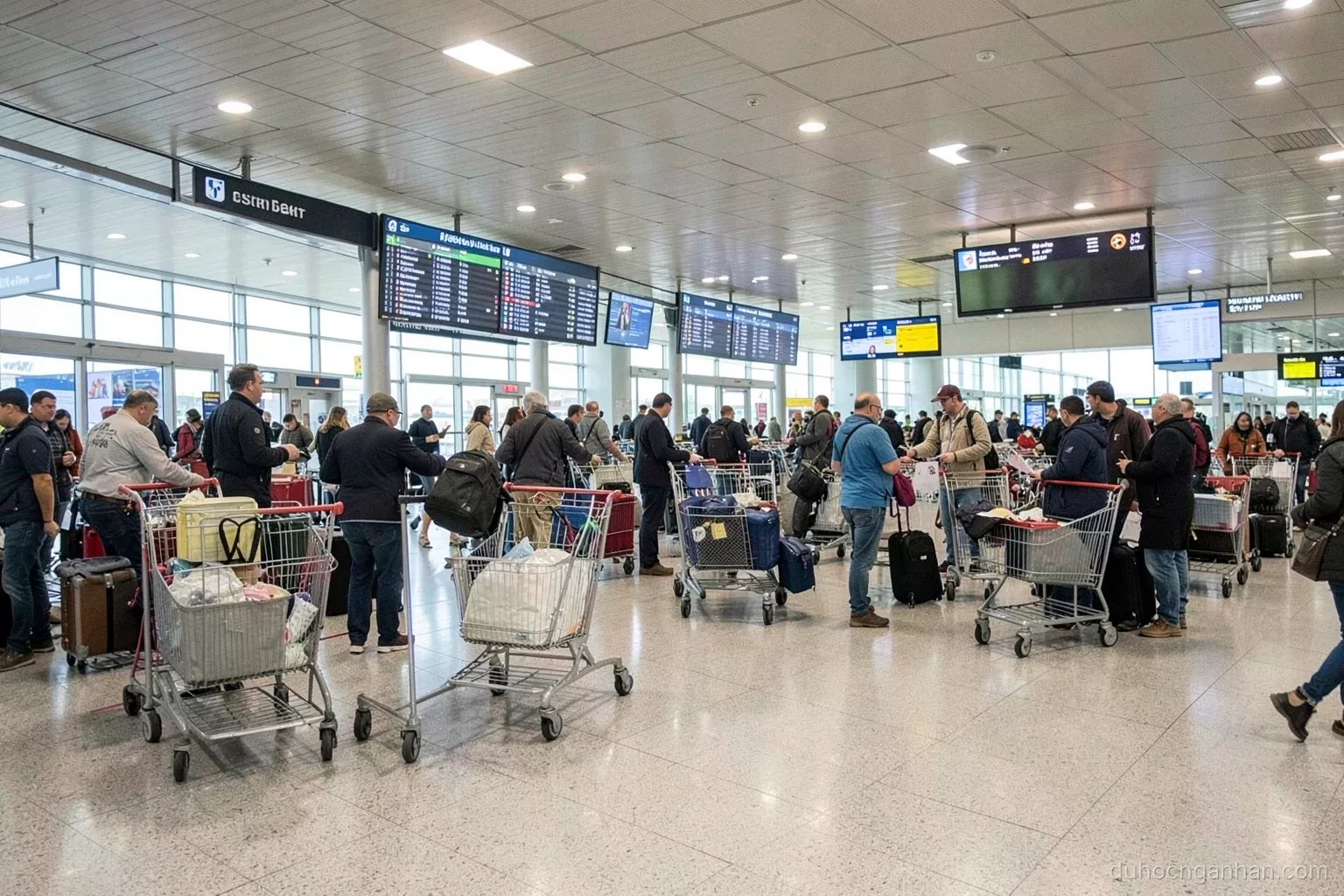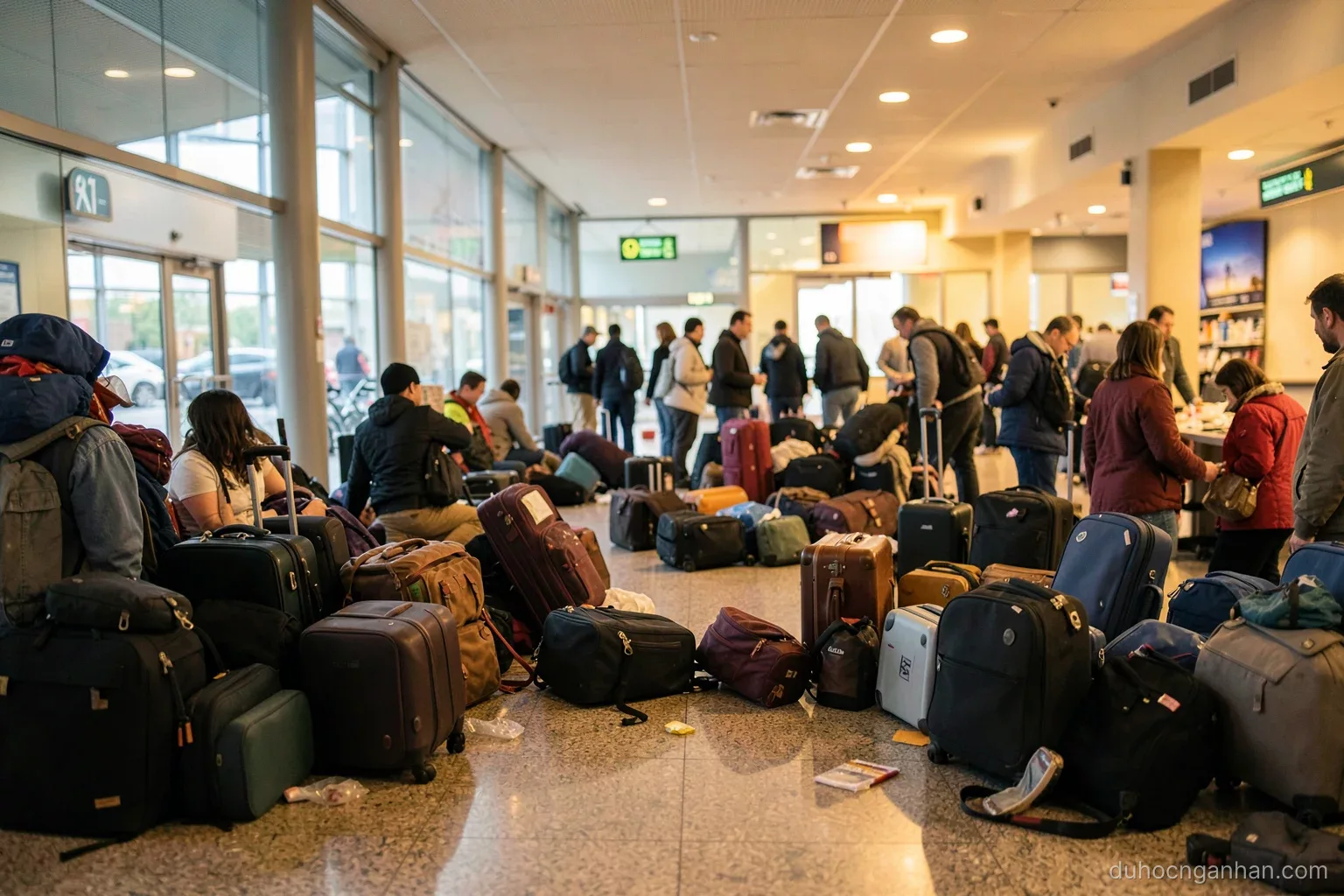
The group's return day has three parts: the camp packs up and returns belongings and documents to the children; the group leader takes the group through the airport and the flight home; and the pick-up at the airport in Vietnam, where the group leader's job is only done when the last child has been collected by their family. It is the shortest stage, but it is often underestimated, because everyone is used to things by now and starts to relax.
Parents have tasks in all three parts: reminding their child to pack, dealing with the weight of the return luggage, picking up at the right place and time, and preparing for the first days at home when the child is both tired and still half at camp. This article goes through each part.
The last two days at camp: packing and returning things
Experienced camps set aside a session before the return day for the children to pack: filling suitcases, checking rooms, returning borrowed items and collecting things the camp has kept for them. The group leader checks every room belonging to the group. This is when commonly forgotten things turn up: chargers under the bed, jackets in a shared wardrobe, trainers on the sports field, towels at the pool.
Medicines the camp has kept are returned, with a note if your child took any additional medicine during their stay. Passports the camp has kept are returned against a signature. Leftover pocket money, if the group leader or camp has held it, is returned with the spending record.
Parents can remind their child during the last call from camp: pack the suitcase the evening before, put the passport, phone and charger in the backpack, and check the wardrobe and under the bed. Your child is busy saying goodbye to friends, so a short, specific reminder works better.
Return luggage: why it is often overweight
Gifts and extra purchases. After a few weeks, your child has bought presents for the whole family, souvenirs, new clothes and books. The return suitcase is almost always heavier than on the way out.
Items handed out by the camp. Uniform T-shirts, bags, water bottles, a framed certificate, items from activities. Adding up to a few kilos is common.
Children pack less efficiently than parents. Things stuffed in hastily without folding take up more room. A bulging suitcase is also more likely to be overweight because more can be crammed in. At home, let your child pack the outbound suitcase once under your guidance: roll clothes instead of folding them, heavy things at the bottom near the wheels, fragile items wrapped in layers of clothing.
What goes in the cabin bag. When the checked suitcase is overweight, children usually shift things into their backpack; but cabin bags also have weight and size limits on the ticket. Moving things into the cabin bag does not always solve the problem.
Prevention. When preparing for the trip, leave part of the suitcase empty for the way back, or pack a foldable bag to use as a second bag if the ticket allows. Agree a limit on gifts with your child in advance; the group leader can help weigh bags at the camp before the return day.
On the way home: what the group leader takes care of
The return leg repeats the outbound leg in reverse: the camp takes the group to the airport, the group checks in together, goes through security and departure control, flies, possibly transits, and then enters Vietnam. The group leader keeps the same headcount routine as on the way out and posts in the parents' chat at each milestone.
Children are usually more tired on the way back than on the way out: the last night is spent saying late goodbyes, with mixed feelings of happiness at going home and sadness at leaving friends. This is when things are easily forgotten at the airport and when children easily fall ill. A skilled group leader pays more attention, reminds them to eat and rest, and checks belongings more carefully at each point.
On entering Vietnam, the children go through the channel for Vietnamese citizens; the group leader waits until the whole group is together in the baggage hall. If a child's suitcase does not appear on the belt, the group leader goes with that child to report it at the airline's lost luggage desk before leaving, and lets the child's parents know so they are not left waiting without knowing why.
Picking your child up at the airport: tidy steps
Picking up your child sounds simple, but international airports are very crowded at peak times and return flights can be delayed. A few steps make the pick-up smoother:
- Follow the actual landing time in the airline's app or on the airport website, not the time on the ticket.
- Allow for the time between landing and the group coming out into arrivals, usually from forty-five minutes to over an hour for a large group with checked luggage.
- Wait in the correct international arrivals hall, at the exit the group leader announced in the chat. Some airports have several exits.
- When the group comes out, wait where the group leader indicates; do not push into the group and whisk your child away. The group leader needs to see each child handed over to the right family member.
- Tell the group leader once you have your child, or sign the handover list if the organiser has one. This lets the group leader know which children are still waiting for their families.
- Check with your child before leaving the airport: passport, phone, suitcase, cabin bag, leftover medicines.
If you will be late, tell the group leader early. The group leader will stay with your child until family arrives, but the whole group and the group leader are tired after a long flight; arriving on time is the best way to say thank you.
When your child returns on a different day from the group
Sometimes a child does not return with the group: the family flies out to collect them and goes on holiday, the child comes back early because of illness or family matters, or the child stays on for another course. Each case needs a clear handover between the camp, the group leader and the family.
If parents are flying out to collect their child, tell the organiser and the camp in advance in writing, stating the date and time of collection, who is collecting, and what documents that person will bring. At the camp, the parents sign for their child and collect the passport, medicines and any money held. From then on, the child is no longer the group's responsibility.
If your child has to come home alone early, the organiser needs to agree with the family: whether your child flies alone using the airline's unaccompanied minor service or with an accompanying adult; who takes your child to the airport at the other end, and who meets them in Vietnam. For young children, the safest option is usually having an adult travel with them, even though it costs more.
Documents and money after the trip
In the few days after your child returns, check the documents once more: has the passport been put somewhere safe, how long is the visa valid for if it might be needed again, have the camp's certificate and learning report arrived. Photograph the certificate and report and keep them with your child's school records.
If your child saw a doctor during the trip, keep all the invoices, medical notes and prescriptions. These are needed to claim on travel insurance; each policy has a deadline for claims, so reread the terms so you do not miss it.
Check the pocket money spending record if the group leader held the money, and look through it with your child to see what they spent it on. This is not to criticise, but a real-life lesson in managing money that your child has just been through.
The reunion: let your child tell it at their own pace
Parents are often eager to hear everything on the way home. Many children just want to sleep, eat a familiar dish or sit quietly looking out of the window. That does not mean the trip was not enjoyable. Your child is tired and moving from one world to another.
A long hug, a home-cooked meal, a favourite dish and "you're home now, get some rest" are usually better than a barrage of questions. The camp stories will come in the following days, as your child looks through photos and talks about friends, teachers and strange food. Listen, ask about what they tell you, and do not grade the trip.
Avoid asking straight away "has your English improved?" or comparing your child with others in the group. Questions like that turn an experience into a test and make children reluctant to talk.
The first days at home: normal things parents may notice
After a trip lasting several weeks, your child may show a few signs in the first week at home. Most are normal and pass on their own:
- Tiredness, sleeping a lot or at odd times, especially after a destination several time zones away.
- Missing the camp and friends, feeling sad looking at photos; sometimes sadder than they were with homesickness at camp.
- Finding home, school and extra classes in Vietnam "boring" compared with camp for a while.
- Being more independent in some things, such as folding their own clothes or getting up on their own, but sometimes wanting to be looked after as before.
- Sneezing, coughing or mild tiredness from the change of climate and the long flight.
If your child has a high fever, a lingering cough, diarrhoea for several days after returning, or anything unusual, take them to a doctor and say which country they have just come back from. If your child stays sad or withdrawn for a long time, talk with them more and seek professional advice if needed.
After the trip: keeping what your child has gained
A short trip leaves much more than English: your child has looked after their own belongings, managed their own time, made friends from other cultures and sorted out small problems without their parents. These things are easily lost if, back home, adults do everything again.
Give your child a few of the tasks they got used to at camp: washing and folding their own clothes, getting up with an alarm, packing their own school bag. Ask your child which habits from camp they want to keep. Many want to carry on reading in English, playing a new sport or keeping in touch with friends abroad; parents can help them keep these things, in a way that keeps their personal information safe.
Finally, send the organiser feedback on the trip, specifically and calmly: what was good and what should be different. That feedback helps future groups and helps the family decide on their child's next trips. Keep a short written record of what your child says about the trip, with a few photos; in a few years, it will be something your child wants to read again.
Frequently asked questions
Can we get back things my child left at the camp?
Usually, if you report it early. Contact the organiser so it can ask the camp; the camp may send items with the next group or by post, usually at the family's expense. Check valuable items carefully before the return day to avoid having to send them across borders.
If the return flight is delayed by several hours, should parents wait at the airport?
Follow the actual landing time and the group leader's messages, and stay at home or near the airport until the new time is clear. Arriving far too early when the flight is delayed by hours leaves the whole family exhausted before your child even lands.
Can my child bring food gifts back from abroad?
Pre-packaged food can usually be brought in, but some meats, animal products and fresh fruit are controlled on import. Tell your child to buy manufacturer-packaged items, keep the receipts, and not to carry things for other people.
How long does it take for my child to recover from the tiredness after returning?
For destinations in the same time zone, a few days of rest is usually enough. For destinations many hours apart, the body may need about a week to readjust. Get your child out in the morning sun, keep to regular meals and limit long daytime naps.
Should we sign our child up for next year's camp as soon as they are back?
Wait a few weeks so your child and the whole family can look back on the trip calmly. Ask your child what they liked, what was hard, and how they would like next time to be different. A decision made after the emotions of the return day have settled is usually a better one.
Can the group leader leave before parents arrive to collect their child?
They should not. The organiser is responsible for keeping the child until they are handed over to the person registered to collect them. If someone other than the person on the list is collecting, parents must notify the organiser in advance in writing, with that person's name and identification.