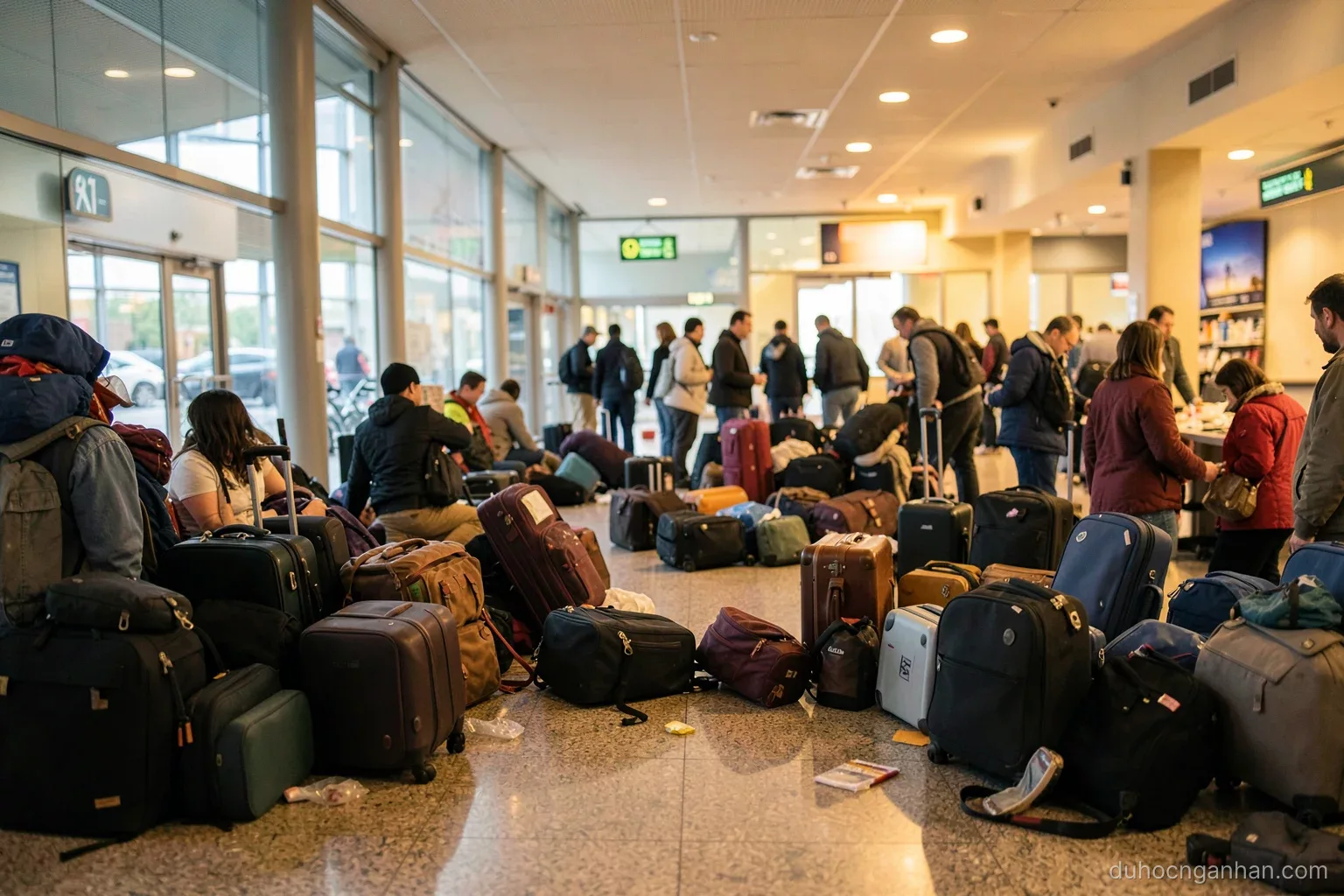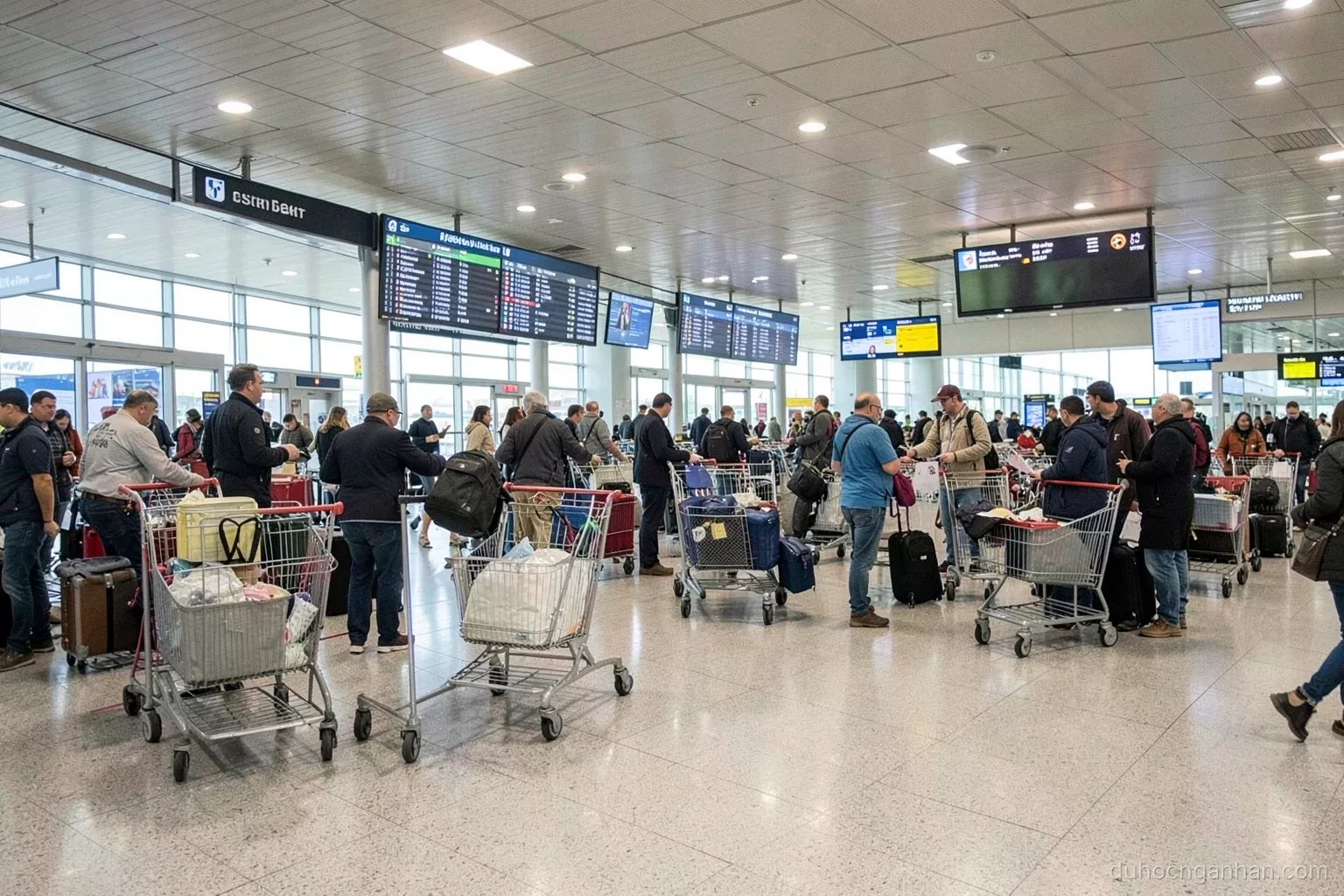
Transit is when the group lands at an intermediate airport and boards another flight to continue; for a student group, it is the most confusing stage of the whole journey, because the group has to walk through an unfamiliar airport, sometimes through another security check, within a limited time. In most cases the group does not have to enter the intermediate country or collect its luggage, but that depends on how the tickets are booked and on each airport's rules.
Parents cannot do much while their child is in transit, but they can ask the right questions when the organiser books the tickets, and prepare their child to know what to do if separated from the group. This article explains how a group gets through a transit stage, the figures worth paying attention to, and what happens when a connection is missed.
Direct or via a transit: why many groups still have to connect
A direct flight is always simpler for children. For nearby destinations such as the Philippines, Singapore, Malaysia and Thailand, many groups can fly direct from Hanoi or Ho Chi Minh City, depending on the season and the airline. For distant destinations such as the UK, the US, Canada, Australia and Europe, or when the camp is near a small airport, most groups have to connect at least once.
Even when a direct route exists, the organiser may choose a connecting itinerary because the flight times fit better with when the camp takes in students, because there are enough seats for the whole group on the same flight, or because the arrival time does not fall in the middle of the night. No option is always right; what matters is that parents understand why the organiser chose that itinerary and ask about the transit stage.
When offered two options, lean towards the one with fewer legs, even if the total time is a little longer. Every change of plane is another headcount, another security check and another chance of delay.
The figures to ask about for the transit stage
When the organiser sends the itinerary, look at the transit stage with the questions below. There is no threshold that is right for every airport, but understanding what each figure means helps parents ask the right questions.
| What to ask | Why it matters | A reassuring answer |
|---|---|---|
| How long is the connection time | Too short and even a slight delay causes a missed connection; too long and children get tired and the group is hard to keep together | The organiser can explain why it chose that time for that airport |
| Are both flights on one ticket | On one ticket, the airline is usually responsible for rebooking after a missed connection; on separate tickets the group bears the cost | The whole itinerary is on one booking reference |
| Is luggage checked through | If luggage has to be collected, the group may have to enter the intermediate country and need a visa | Luggage is tagged through to the final destination |
| Is there another security check | It takes time, and liquids bought after the first security check may be confiscated | The organiser knows in advance and briefs the children |
| Is there a change of terminal | At some large airports you need a train or bus between terminals | The group leader has been through that airport before |
"Are both flights on one ticket?" matters more than it looks. With separate tickets for each leg, if a delay on the first leg causes a missed second leg, the second airline has no obligation to rebook, and the whole group may have to buy new tickets. Student groups should always book the whole itinerary on one ticket.
How a group moves through a transit airport
The steps below are the usual sequence when a group transits without entering the intermediate country.
- When the plane stops, the group stays seated until called, checks belongings, leaves in their small groups and has a headcount right at the end of the jet bridge.
- The group leader goes first, following the signs for transfers, not the stream of people heading to immigration.
- The group goes through the transfer security check if the airport requires it; the children put liquids and laptops in the trays as they did the first time.
- The group finds the gate for the next flight, checking the information screens again because gates can change.
- The group sits together near the gate; the group leader lets children go to the toilet or buy water in small groups with a set time to come back.
- The group leader posts in the parents' chat: the group has reached the transit airport, everyone is present, and the time of the next flight.
- Another headcount before boarding.
If the connection is long, the group leader may let the children have a meal and rest in a quiet area. The rules stay the same: nobody goes off alone, and every small group has a specific time to come back.
Staying together at a big airport
A major transfer airport can be several kilometres across, crowded with people from everywhere and full of brightly lit shops, and it is very easy for a child who is busy looking around to drift away from the group. Experienced group leaders use a few simple methods: the whole group wears the same colour T-shirt or the same cap, the group is split into small groups with captains, the children walk in pairs, and adults walk at the front and the back.
The rule "stay still if you get lost" is worth teaching your child at home. If your child looks around and cannot see the group, they stay where they are, do not go searching, and call the group leader if they have a phone and a connection; if not, they find a uniformed airport staff member or an information desk and show the slip with their personal details and flight. A child who stays still where they got lost is much easier to find than a child wandering an airport looking for the group.
The slip should include the next flight number, the group leader's name, how to contact the group leader on a messaging app, and a simple English sentence: I am travelling with a student group and have been separated from the group. With the sentence written out, a panicking child does not have to come up with English on the spot.
When the first flight is late and the group misses the connection
Missing a connection happens to every group that travels for long enough. When the itinerary is on one ticket, the airline usually moves the group to the next flight with seats available. With a large group there may not be enough seats on one flight, and the group gets split in two. A good organiser has a plan for this: the assistant leader travels with the second group, or the whole group waits for a later flight to stay together.
If the next flight is the following day, the airline usually provides temporary accommodation and meals according to its policy, but taking a group of children to a hotel in the transit country may require entering it, which means needing a visa or visa exemption for that country. That is why the group leader needs to know the entry rules of the transit country in advance, not only those of the destination.
While waiting, the group leader has three tasks: telling the camp so the pick-up time can be changed, telling the parents, and making sure the children eat, drink and rest enough. For parents, a good message makes three things clear: where the children are, that everyone is present and well, and when they expect to continue. Parents who receive a message like that do not need to keep phoning the group leader, who is busy dealing with the airline desk.
Overnight transits: keeping children alert and safe
Many itineraries to Europe or North America have a transit between midnight and dawn local time. The children have half-slept on the plane, been woken up, had to walk down long corridors and then wait several more hours. This is when things are most easily forgotten and tempers are shortest.
A skilled group leader usually picks a quiet seating area near the gate, lets the children rest in their small groups with backpacks piled in the middle, and has the adults take turns staying awake. Children do not sleep in hidden corners, do not sleep alone away from the group, and do not leave phones or wallets out of their bags while sleeping.
When boarding time comes, the group leader wakes the children fifteen or twenty minutes early so they are properly awake, go to the toilet and check their belongings. A drowsy child hurried straight onto the plane easily leaves a jacket, headphones or even the pouch containing their documents on the waiting seat.
Why a group leader who has been through that airport is a big advantage
Someone who has passed through a transfer airport a few times knows things that are not on the map: the shortest route from the gate to the transfer area, which transfer security check is busy at that time, which toilets are near the gate, which area has enough seats for the whole group. That small knowledge saves tens of minutes on a tight connection.
When asking the organiser about the group leader, parents can also ask whether that person has done this itinerary, or at least been through this transit airport. A "no" does not mean they cannot do it; a new group leader can still prepare by studying the airport map carefully and asking colleagues who have been. But parents have the right to know, and the organiser has a responsibility to prepare that person.
Preparing your child for an itinerary with a transit
Tell your child about the journey in advance. Your child knows which airport they will stop at, for how long, and whether there is a long walk. Knowing in advance makes them less surprised and less tired.
A cabin bag with things for one night. A toothbrush, underwear, a change of clothes, and daily medicines for at least two days. If a missed connection means staying overnight, checked luggage usually cannot be retrieved.
A power bank that meets the rules. Power banks must go in the cabin bag, within the airline's capacity limit. A phone with battery left is how your child stays in contact if separated from the group.
A warm layer in the backpack. Transfer airports and aircraft cabins are often cold, especially at night. A light jacket and long socks help your child sleep a few hours on a waiting seat without catching a cold before reaching the camp.
Dry food for the wait. Shops at the transit airport may be closed in the middle of the night, or your child may not know how to order. A few packets of biscuits and some dried fruit stop them going hungry while waiting.
A messaging app that works over wifi. Many airports have free wifi. Knowing how to connect to airport wifi and message the group leader through an app is a small but useful skill.
Frequently asked questions
How long a connection is reasonable for a student group?
There is no single figure, because each airport has a different minimum connection time and a large group moves more slowly than individuals. Ask the organiser why it chose that connection time and whether it has allowed for a small delay on the first leg.
Does my child need a visa for the transit country?
It depends on the country, on whether the group leaves the transit area, and on the passport. Some countries require a transit visa even without leaving the airport. The organiser must check the transit country's rules when booking and inform parents.
Could my child's luggage be lost in transit?
Lost luggage is more common on itineraries with connections, especially when connection times are short. That is why the cabin bag needs enough for a few days. If a suitcase does not appear on the belt at the destination, the group leader reports it at the airline's baggage desk before leaving the airport.
Should we choose a long transit so my child is less rushed?
A long connection means less rushing, but the children get more tired and are harder to keep together for many hours at the airport. For young children, a connection that is just long enough to be safe is usually better than waiting all day.
What should my child do if separated from the group at a transit airport?
Stay where they are, call or message the group leader, and if they cannot get through, find a uniformed airport staff member or an information desk and show the slip with their details. Never follow a stranger who offers to show them the way outside the official desks.
Should parents call the airline when the group misses a connection?
Usually not. The group leader is dealing with the airline directly, and parents calling separately can confuse the information. Contact the organiser in Vietnam if you need to ask more, and wait for updates in the parents' chat.