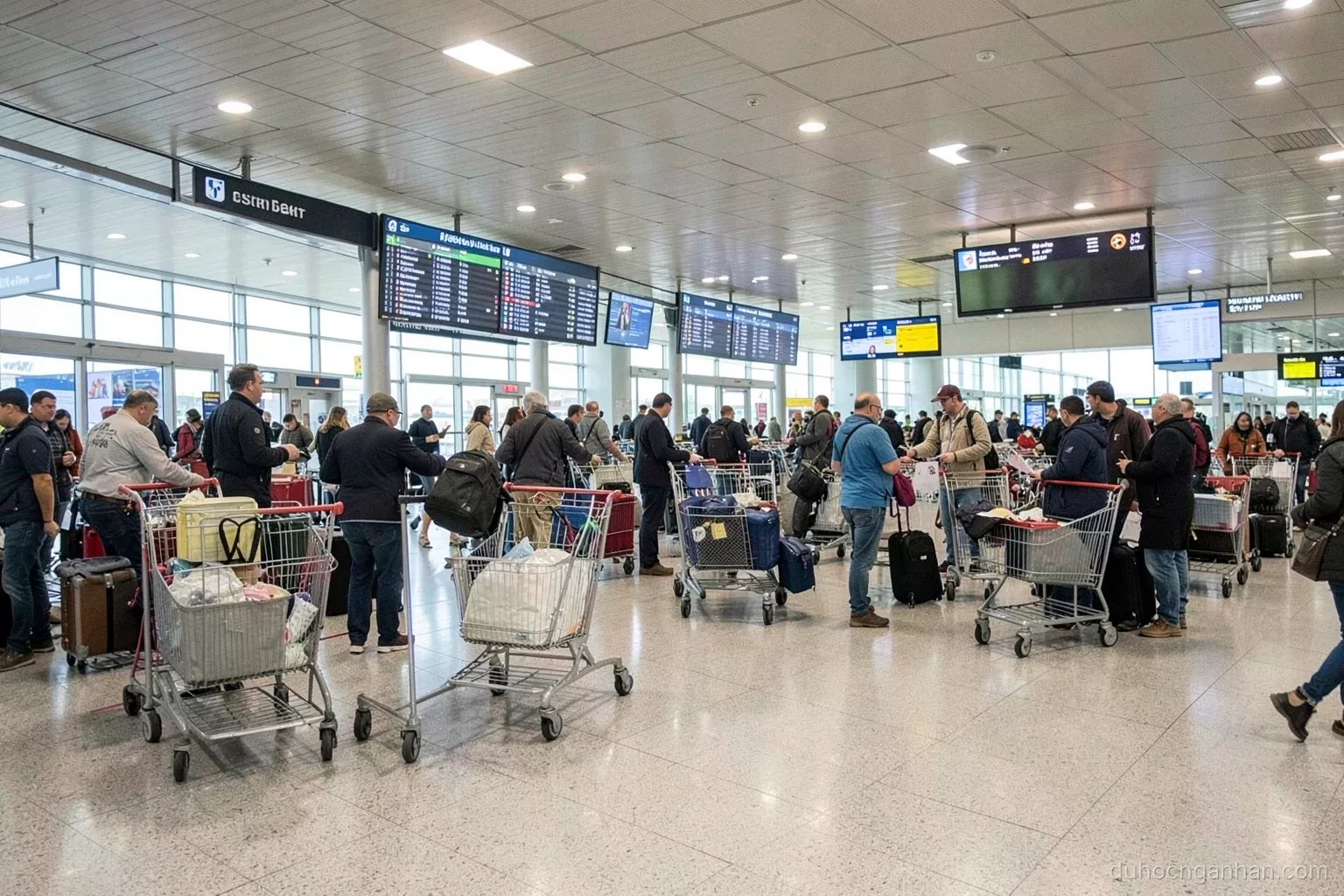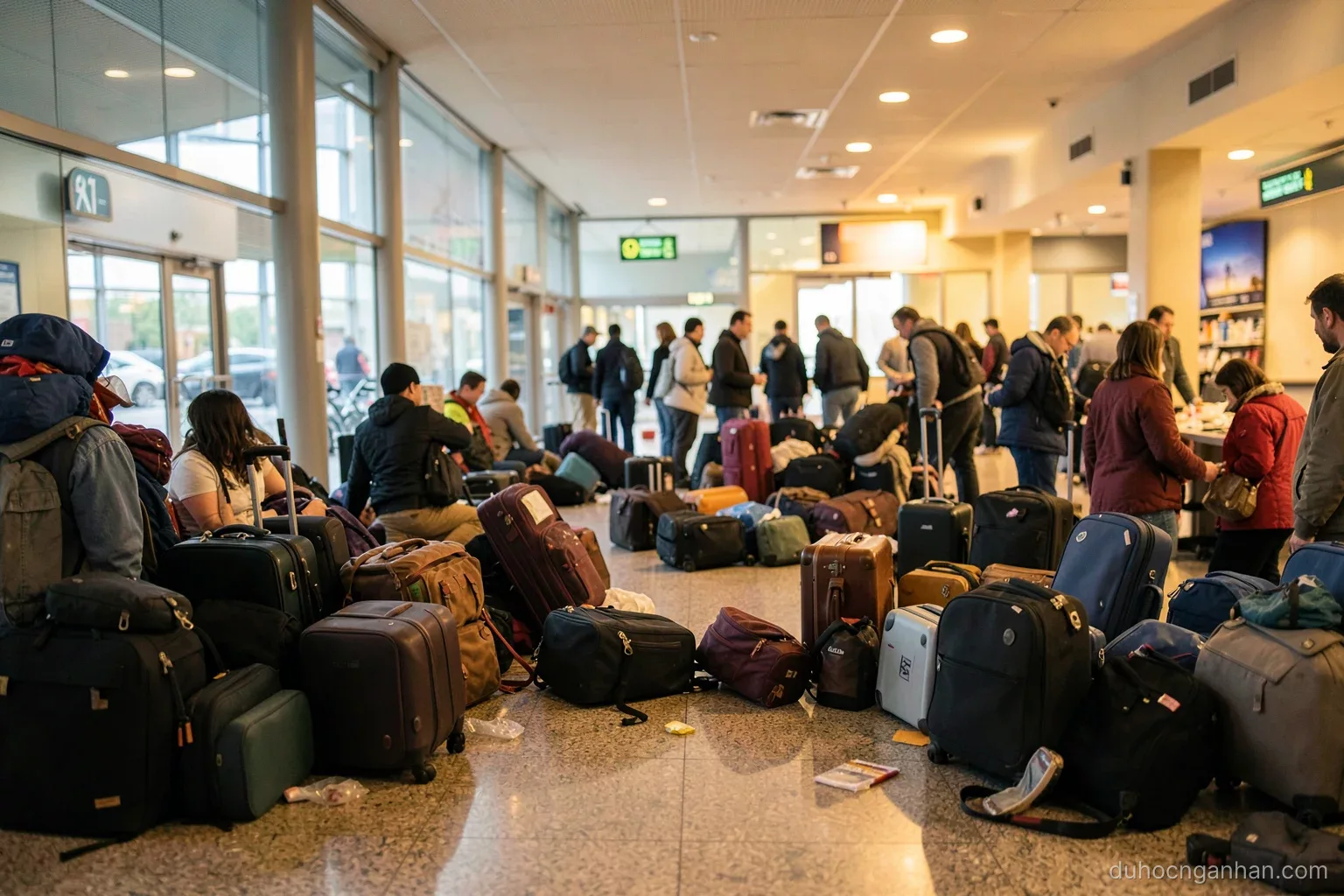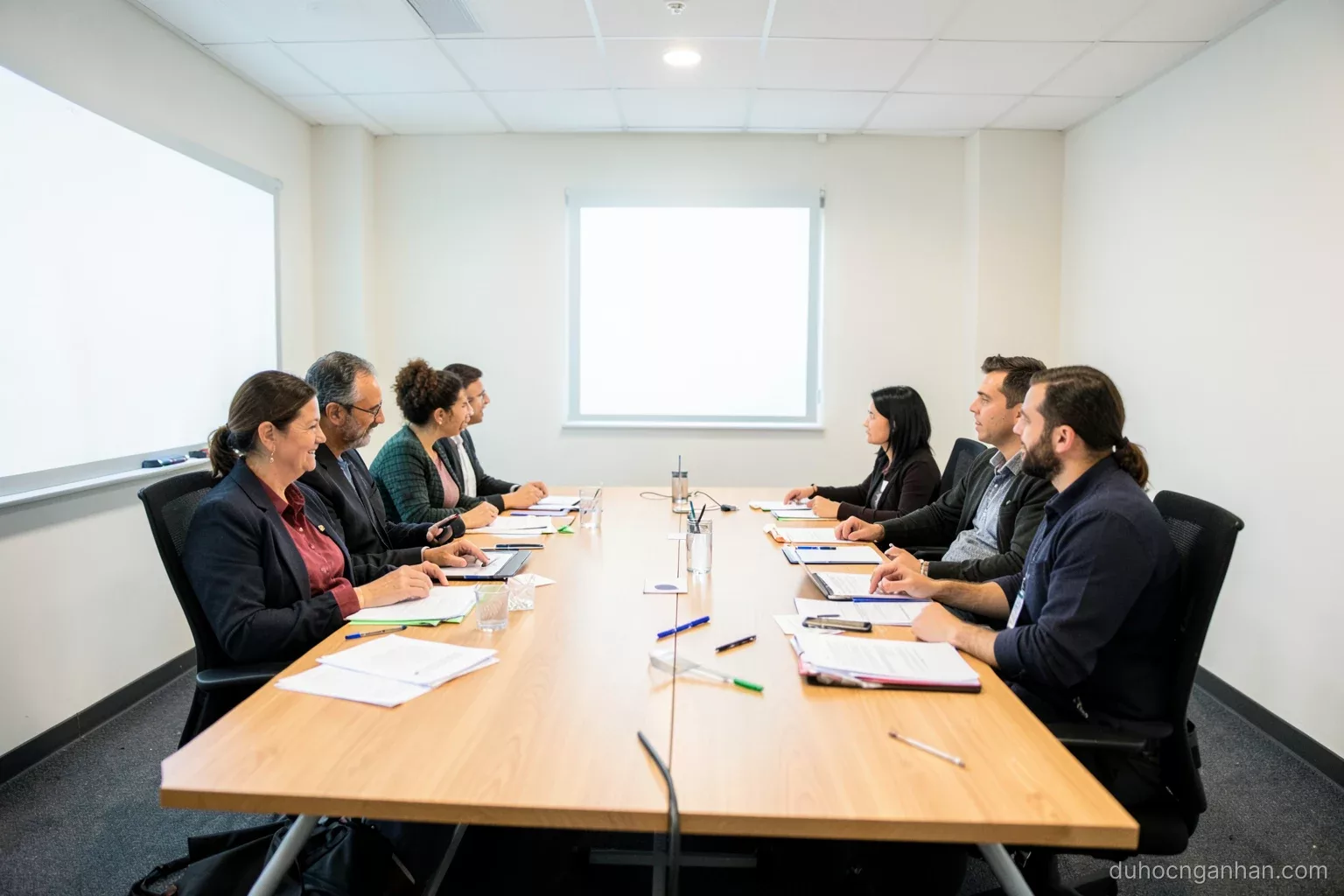
The group meeting is a face-to-face or online meeting between the organiser, the group leader, the students and their parents, usually held one to three weeks before the flight, to finalise the itinerary, documents, group rules and communication channels. It is the last time the family can ask everything in one place, see the face of the person who will travel with their child, and let the child meet the friends who will sit next to them on the plane.
Many parents treat it as a formality, arrive late or send someone else, and then spend the following weeks asking each question again by message. This article sets out what a complete group meeting must cover, the questions to ask if the organiser has not mentioned them, the forms usually signed on the spot, and what to do as soon as you get home.
Why both parents and the child should go
Your child needs to be there for two reasons. First, they need to meet the group leader at least once before the flight: to remember their face, their voice, how to address them. In a crowded airport, a child finds a familiar person far more easily than a name on paper. Second, group rules heard from the group leader carry a different weight from rules repeated by parents at home.
Both parents should go if possible, or at least the one who will be the contact person throughout the trip. The person who attends is the one who knows how the group works; if the person at home takes a midnight call without ever having heard the procedure, their first reaction is likely to be panic.
If the meeting is online, turn your camera on and have your child sit with you. Ask whether the organiser will record it so anyone who could not attend can watch later.
The meeting is also when parents meet each other. Knowing a few families with children in the same group, especially those sharing a room or in the same age group, makes the following weeks easier: there is someone to swap news with calmly, someone to arrange picking up the children with on the return day, and someone to share airport runs with if you live nearby.
What a complete group meeting must cover
Every organiser presents things differently, but after the meeting parents should be able to answer every item below. If any item is still blank, ask on the spot.
- Detailed itinerary: meeting time and point at the airport, outbound and return flight numbers, transit point if any, expected arrival time at camp, return date and time.
- The people in charge: the names of the group leader and assistant leader, who stays at the camp for the whole session, who the organiser's contact in Vietnam is during and outside office hours.
- List of documents: originals to carry, copies to hand to the organiser, who holds the passports at each stage.
- Group rules: going in pairs, headcounts, phones, pocket money, timekeeping, serious breaches and how they are handled.
- Luggage: checked and cabin allowances on the group ticket, prohibited items, items the camp specifically requires.
- Health: the medical form, medicines to bring, allergies, insurance, the procedure when a child is ill.
- Communication: the parents' group chat, how often the group leader posts updates, when your child can call home.
- Emergencies: a delayed flight, an injured child, a child wanting to come home early, a serious breach of rules — who decides and how parents are told.
If the organiser only shows beautiful photos of the camp and repeats the class schedule while skipping the second half of this list, that is a signal to ask more carefully before taking your child to the airport.
Questions to ask if the organiser has not mentioned them
"If the outbound flight is cancelled or delayed by a day, what does the group do?" A good answer says who changes the tickets, where the children stay while waiting, who pays any extra costs and through which channel parents are informed. "It has never happened" is not a sufficient answer.
"Does the group leader stay in the same dormitory as my child?" At many camps, accompanying adults stay in a separate area; at night, it is the camp's boarding staff who are on duty. Knowing this avoids false expectations.
"What is the procedure if my child wants to come home early?" There are legitimate reasons: a long illness, a family matter, a child who genuinely cannot cope. Ask who takes your child to the airport, who flies with them if they are young, and which costs are lost.
"What happens if my child commits a serious breach?" Every camp has a list of offences that can lead to being sent home: alcohol, smoking, leaving the camp without permission, bullying. Parents should read those rules with their child beforehand, not hear about them for the first time when the camp phones.
"How many children are in the group, what ages, and is anyone from my child's class?" This helps you sense the atmosphere of the group. A group with two age bands far apart is usually given separate rooms and schedules; ask whether that applies to your group.
Forms usually signed and handed in at the meeting
The group meeting is usually when the organiser collects the last forms. A consent form for taking part in the programme and agreeing to follow the rules, signed by both parents and child. A medical information form stating underlying conditions, food and drug allergies, current medicines and blood group if known. A consent form allowing the camp to take your child to a doctor and handle emergencies when parents cannot be reached in time. A consent form for taking and using photos, if the organiser wants to post group photos.
Read each form before signing, especially the medical consent and the photo consent. On photos, parents have the right to choose not to allow pictures showing their child's face clearly on public social media, and should state that choice in writing.
The medical form deserves more care than many families give it. Writing "allergic to seafood" is not enough; state which type, what the reaction is, whether your child has ever been hospitalised for it, and what medicine they are carrying. This form goes with your child to the camp; the person reading it is a nurse in another country who does not know your child and needs clear information within seconds.
If any document needs notarising or translating, such as an authorisation for the accompanying adult or papers the destination requires for minors, ask clearly about the deadline and where to get it done, because this kind of document cannot be completed in an afternoon. Keep a photo of every form you sign, because the moment you need to check something is usually the moment the organiser is busiest.
Let your child hear the rules from the group leader
The group rules should be presented directly to the students, not just to the parents. Experienced group leaders usually spend fifteen or twenty minutes talking to the children on their own: why they must go in pairs at the airport, why they must not leave the group even to buy a drink, why phones must go into flight mode when the group leader says so, and what to do if a stranger starts talking to them.
If the organiser does not include this, parents can ask for it. Let your child also ask the group leader the questions that genuinely worry them: "can I sit next to my friend?", "what if I can't eat spicy food?", "who do I call if I can't sleep on the first night?". They are small questions, but having them answered in person helps your child feel less tense before the flight.
Watching how the group leader answers children is also a way to judge them. Someone patient, who speaks slowly, uses the children's names and does not frighten them, is someone your child will dare to approach when something happens.
Back home, ask your child open questions: "which rules do you remember?", "what worries you most?". If your child can repeat the rules in their own words, they have understood; if they only remember the weekend trips, parents still have things to talk about in the days before the flight. Do not turn that conversation into a test; your child just needs to know that asking again is perfectly normal.
Signs of a perfunctory group meeting
Nothing to take home. Everything is said aloud or shown on a screen and then switched off. The itinerary, document list, group rules and emergency numbers must be given to parents to keep, either on paper or as a file sent by message.
The group leader is absent. The presenter is the sales adviser, while the person actually travelling with your child does not appear and nobody can name them. Parents should ask to meet that person before the flight, even if only by video.
Hard questions are deflected with "I'll check and get back to you". One or two questions that need checking with the camp are normal. But if every question about incidents, cancelled flights or early return has no answer yet, the organiser has never thought those situations through.
All the time is spent introducing the camp. Photos of the pool, the pitches and the classrooms are what parents already saw when choosing the programme. The group meeting is for talking about operations; if operations only take up the last few minutes, ask for another short session.
What to do straight after the meeting
Information from the meeting fades quickly. Within two days, aim to finish these tasks:
- Save the numbers of the group leader, the assistant leader and the organiser's contact person in both the parents' and the child's phones, under names that are easy to find.
- Put the itinerary in the family calendar: meeting time, flight time, expected landing time in Vietnam time, return date.
- Check the document list against what you actually have, finish any copies and photograph everything for your records.
- Reread the group's and the camp's rules with your child and go over anything they are unsure about.
- Check your packing against the group ticket's checked baggage allowance; actually weigh the suitcase rather than guessing.
- Send the organiser any missing or changed information (a new phone number, a new medicine) and ask for confirmation that it has been received.
If some questions are still unanswered after the meeting, send them in writing once, as a single list, instead of messaging them one at a time. A written answer is also something to check against if there is a misunderstanding later.
Frequently asked questions
How long before the flight should the group meeting take place?
Usually one to three weeks. Too early and the flights are not yet confirmed; too late and there is no time to sort out missing documents. If the organiser only holds the meeting a few days before departure, ask for the document list and rules in writing early.
What if we cannot attend the meeting?
Tell the organiser early, ask for the recording or the documents, and arrange a short private call with the group leader. Try to make sure your child meets the group leader at least once, even by video, before going to the airport.
Should I ask how many trips the group leader has led?
Yes, and ask in a normal way. Experience leading groups, whether they have been to this camp before, and whether they have handled a medical incident abroad are things parents have a right to know about the person who will be responsible for their child.
My child is shy. Should I ask the group leader to keep a special eye on them?
Speak to the group leader privately after the meeting and briefly describe your child's personality and what helps them stay calm. Do not say it in front of the whole group. A skilled group leader will take note and keep an eye out without making your child feel singled out.
What should we bring to the group meeting?
Bring your child's passport to check details, the documents the organiser has asked for, a written list of questions and a pen. If your child takes regular medication, bring the medicine names and doses so they are recorded correctly on the medical form.
What if we only realise after the meeting that the programme is not right?
Reread the cancellation clause of the contract and talk to the organiser as soon as possible. The closer to the flight you cancel, the larger the non-refundable part usually is, because tickets and accommodation have already been reserved.