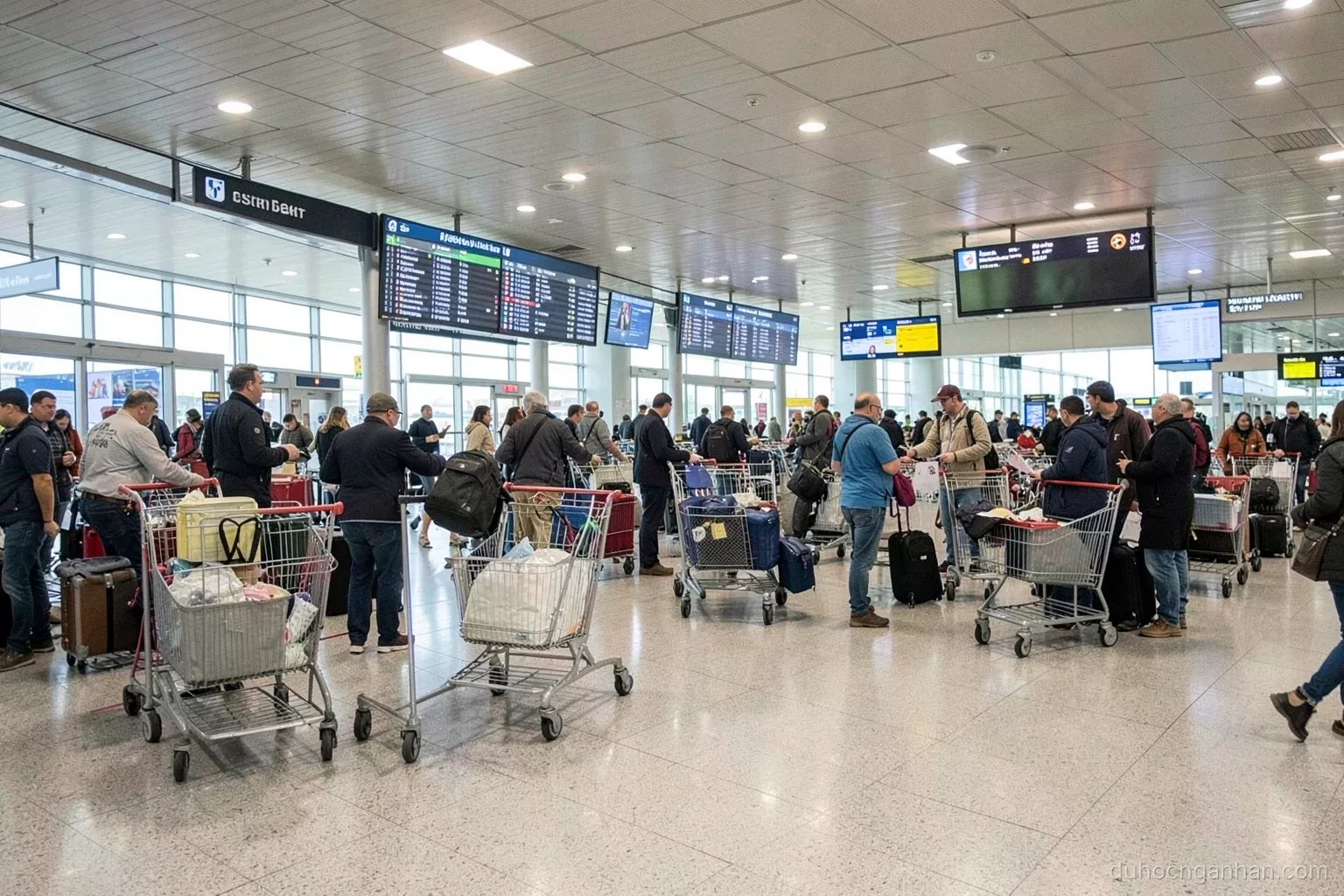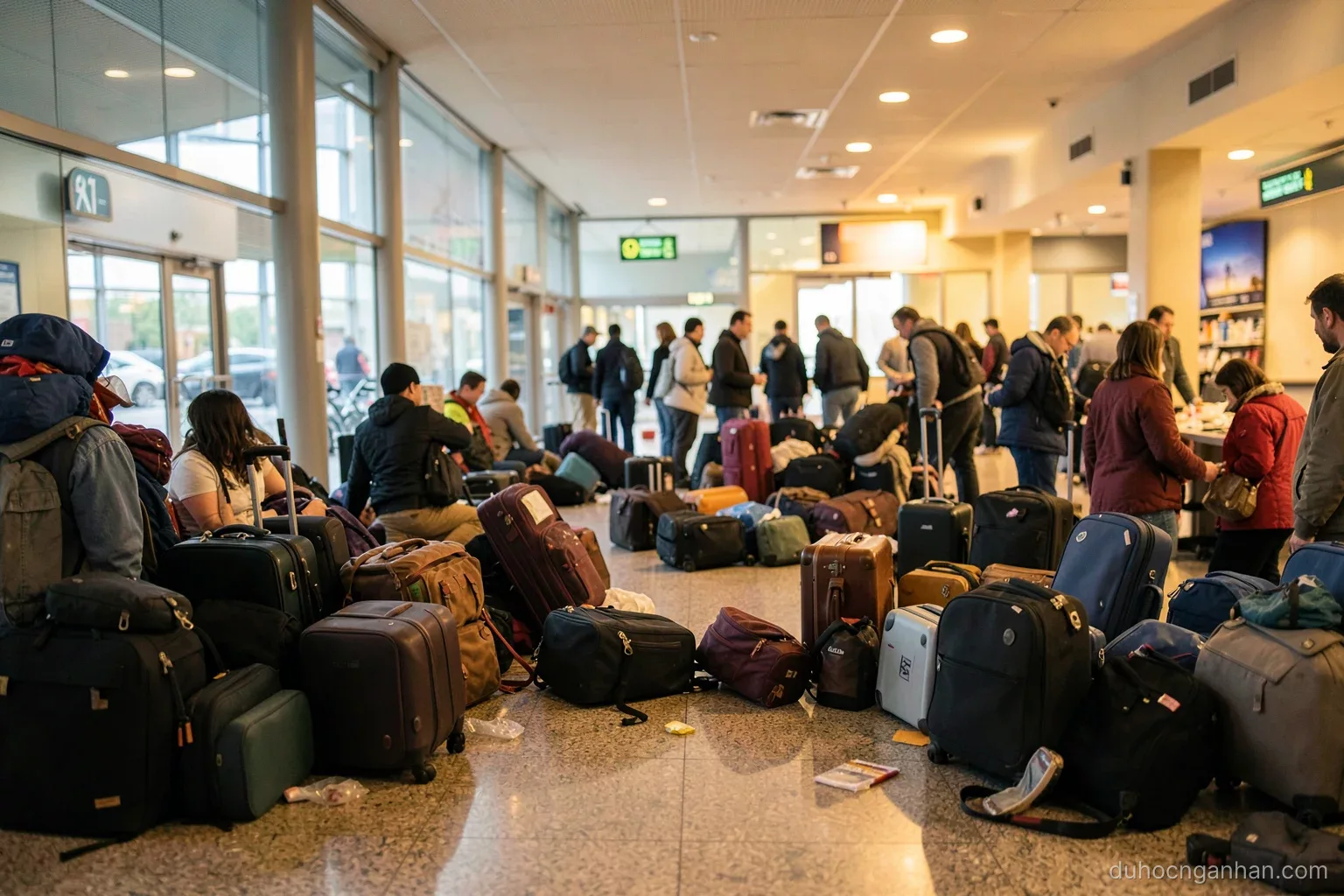
Going on a short study abroad programme as a group means your child sets off from Vietnam with a group of students and at least one adult from the organiser (the group leader) who travels with them from the departure airport to the return airport, instead of your child flying out alone and being met by the school on the other side. A group's journey usually has six stages: the group meeting before the flight, the send-off at the airport, the flight and possibly a transit, entry and the trip to the camp, the weeks living at the camp, and finally the return flight and picking your child up.
Each stage has one person mainly responsible and a few things parents have to do beforehand. This article goes through each stage in turn so parents can see the whole picture: who does what, what tends to go wrong, which documents are in whose hands at which moment. Other articles in this section go into each stage in depth.
How going as a group differs from your child flying to the camp alone
When your child travels alone, responsibility is split between the two ends: parents get the child to the check-in desk in Vietnam, the airline looks after the child on the plane (if you buy an unaccompanied minor service), and the school on the other side meets the child at arrivals. Between those ends there are gaps: during transit, when a flight is delayed, when your child is standing in the immigration queue without understanding the officer's question.
Travelling as a group fills those gaps with one adult who goes all the way. The group leader holds the list, keeps copies of documents, knows the flight schedule and the camp's contact numbers, and is the one who speaks to the airline or border staff when something happens. In return, your child has to follow the group's rhythm: meeting early, walking in line, waiting until everyone is there before moving on, sitting where they are placed.
One difference that is rarely mentioned: in a group, your child has Vietnamese companions from day one. For a child away from home for the first time, that softens the first hours a great deal. But it has a downside too: the whole group can easily stick together as a Vietnamese-speaking clique for the entire camp. A good camp and a skilled group leader will actively split rooms and classes so your child mixes with students from other countries.
The six stages of a group journey and who handles what
The table below is the general framework for most student groups going to camps of 2–8 weeks abroad. Details vary between organisers, but if an organiser cannot fill in the "mainly responsible" column for any stage, that is where you need to ask more.
| Stage | Mainly responsible | Parents' tasks | Common problems |
|---|---|---|---|
| Group meeting before the flight | Organiser, group leader | Hand in all documents, ask every question, bring your child | Parents do not attend, the child does not know the group leader by sight |
| Send-off at the airport in Vietnam | Group leader | Arrive at the meeting time, check the suitcase is within the weight limit | Arriving late, overweight bags, forgetting original documents |
| Flight, transit | Group leader, airline | Explain the rules on the plane to your child, prepare the cabin bag | Delayed flight, missed connection, air sickness |
| Entry, trip to the camp | Group leader, the camp's pick-up | Complete any online arrival declaration the destination requires, sign documents for your child | Missing documents, wrong declarations, long wait for the pick-up |
| The weeks at camp | The camp, with or without the group leader staying | Follow the group chat, keep to the call schedule | Illness, homesickness, conflicts with roommates |
| Return flight, pick-up | Group leader | Wait at the right arrivals exit, greet your child gently | Overweight luggage because of gifts, a tired and irritable child |
One question to ask the organiser from the start: does the group leader stay at the camp for the whole session or only take the group out and fly back, and if they fly back, who takes over that role in the weeks in between. Both arrangements exist, but parents need to know which one they are in.
Before the flight: whose hands the documents are in
Most group problems start with documents, not with planes. A set of documents for your child's trip usually includes a passport valid for as long as the destination requires, a visa or visa exemption if applicable, a parental consent or authorisation letter when the child travels without parents, the camp's enrolment confirmation, travel insurance and a medical information form. For some countries, minors travelling without their parents need an additional document at the border.
The most important question is not "which documents are needed" but "which document is where, and when". In many groups, the group leader holds the whole group's passports while travelling to speed up formalities, then returns them or hands them to the camp for safekeeping on arrival. In some groups, children keep their own passports in a pouch worn on the front. There is no single right way; what matters is that parents know how their group does it, and so does the child.
Parents should keep a clear scan of every document at home, send a copy to the group leader, and give the child a small slip of paper in English with their full name, date of birth, passport number, the camp's name, the group leader's name and how to contact the parents. That slip takes five minutes to make, and it is what your child needs most if separated from the group for a few minutes in a large airport.
During the flight and at the border: what the group leader does for your child
Checking in the whole group. The group leader usually gathers the group at one counter, hands over passports in list order, asks for seats close together, and keeps all the boarding passes until the gate. Your child only needs to stand in the right line and put their suitcase on the scale when called.
Counting heads at every transition. After security, before boarding, after landing, before getting on the coach: every change of place is another headcount. Experienced groups split children into small groups of three or four, each with a group captain who reports the number.
Speaking to unfamiliar adults. In the immigration queue, officers may ask your child where they are going, how long they are staying and who is meeting them. The group leader stands nearby with the enrolment letters and the group list and answers for the child when they are flustered. At some borders the group leader is allowed through with the children; at others they have to go first and wait on the other side.
Handling things when the schedule falls apart. A delayed flight that causes a missed connection, a child with a fever at the airport, a suitcase that never appears on the belt: these are the moments when the group leader's real value shows. An experienced person knows which desk to go to, which paperwork to ask for, and how to tell parents without causing panic.
The weeks at camp and the group leader's role at this point
Once the group is at the camp, day-to-day responsibility passes to the camp: teachers teach, boarding staff look after the dormitories, the kitchen cooks, the nurse takes care of health. The group leader, if they stay, acts as a bridge: listening to your child in Vietnamese, noticing which child is sad before they say so, passing messages from parents to the camp and back, and going along on weekend trips.
A good group leader does not do the camp's job or your child's. They do not sit in class translating for your child, do not ask for a room change every time there is a small issue, and do not send photos of every meal to parents. The whole point of the trip is for your child to cope on their own in an unfamiliar environment, and the accompanying adult has to know how to step back to the right degree.
For parents, this is the hardest stage to sit still through. The group chat is the main channel for news; call your child separately on the agreed schedule. If you have a real concern, message the group leader privately rather than asking in the shared group, so that one worried question does not turn into a worry for twenty families.
Three common misconceptions about travelling as a group
"With a group leader, parents don't need to worry about documents." The group leader can only hold what the family has handed in. A passport expiring too soon, a consent letter missing one parent's signature, a ticket name differing by one letter from the passport: when these are discovered at the check-in desk, the group leader cannot fix them on the spot either.
"A big group is safer than a small one." A big group means more headcounts and more children to keep an eye on. What decides safety is the ratio of adults to children and how the group is divided into small groups, not the total number of children.
"The group leader will be beside my child day and night." At camp, your child lives by the camp's schedule and sleeps in the student area supervised by the camp's boarding staff. The group leader is someone your child can turn to, not someone who follows them every step.
The return day: the shortest stage, but often underestimated
By the return day, your child is used to the camp, the group is used to each other, and everyone tends to relax. Return-day problems are usually very specific:
- The suitcase is heavier than on the way out because of gifts and extra purchases, and is overweight at the check-in desk just before the flight.
- Things left at camp: phone chargers, jackets, half-finished medicines, sometimes even a passport if the camp held it and did not return it at the right time.
- Children stay up late on the farewell night, board the plane tired and irritable, and easily fall ill after getting home.
- Parents wait at the wrong arrivals exit, or arrive hours too early when the flight is delayed, and the whole family gets home exhausted.
- Nobody checks the list on leaving the airport: which children have been collected by their parents and which are still waiting.
An organiser that does things properly will hold a packing session before the return day, return documents against a signature, and the group leader will only leave the airport once the last child is standing next to their family.
When travelling as a group suits your child, and when it is not needed
Group travel suits children under 14 best, children flying internationally for the first time, children whose English is not yet enough to manage on their own at an airport, and routes with a transit. It also suits families where the parents find it hard to take time off to take their child out.
For 15–17-year-olds who have flown before, have solid English and are taking a direct flight to a place where the camp meets them right at arrivals, travelling alone is a reasonable choice, as long as the camp offers a pick-up service and has clear guardianship rules. Some families choose a middle path: taking their child out on the first day and leaving them at the camp, or letting them travel out with the group and come back on their own.
Whichever you choose, the criterion stays the same: at every moment of the trip, parents can say straight away which adult is currently responsible for their child and how to contact that person.
Frequently asked questions
How many students does one group leader usually look after?
There is no single compulsory figure for every country and organiser. Groups of younger children usually need a higher ratio of adults to children than older groups. Ask the organiser directly how many group leaders and assistant leaders there will be for your child's group, and who takes over when one has to take a child to a doctor.
Does the group leader need to speak good English?
Good enough to deal with the airline, border staff, the camp and doctors when something happens. Experience of leading groups matters as much as language ability: someone who has done a few trips knows in advance where the bottlenecks are and has the paperwork ready.
Can my child keep their own passport when travelling with a group?
It depends on how each group works and on your child's age. Many groups have the group leader hold passports while travelling and then hand them to the camp on arrival. What matters is agreeing this in advance, your child knowing where their passport is, and handovers being recorded.
Can parents travel with the group?
Some organisers accept accompanying parents, staying at a hotel near the camp or taking their own course, but not staying with the children in the dormitory. Think carefully: parents who are too close sometimes make it harder for a child to break away and mix with friends.
If my child flies out alone, can they come back with the group?
Usually yes, if the organiser agrees and your child's ticket matches the group's flight. Tell the organiser early so it can add your child's name to the list, arrange seats near the group, and have the group leader take over your child from the camp on the return day.
Does travelling as a group make children less independent?
Not necessarily. The group only supports your child at stages a child alone would find hard, such as airports and borders. During the weeks at camp your child still looks after themselves. What to avoid is the whole group sticking together as a Vietnamese-speaking clique all session.