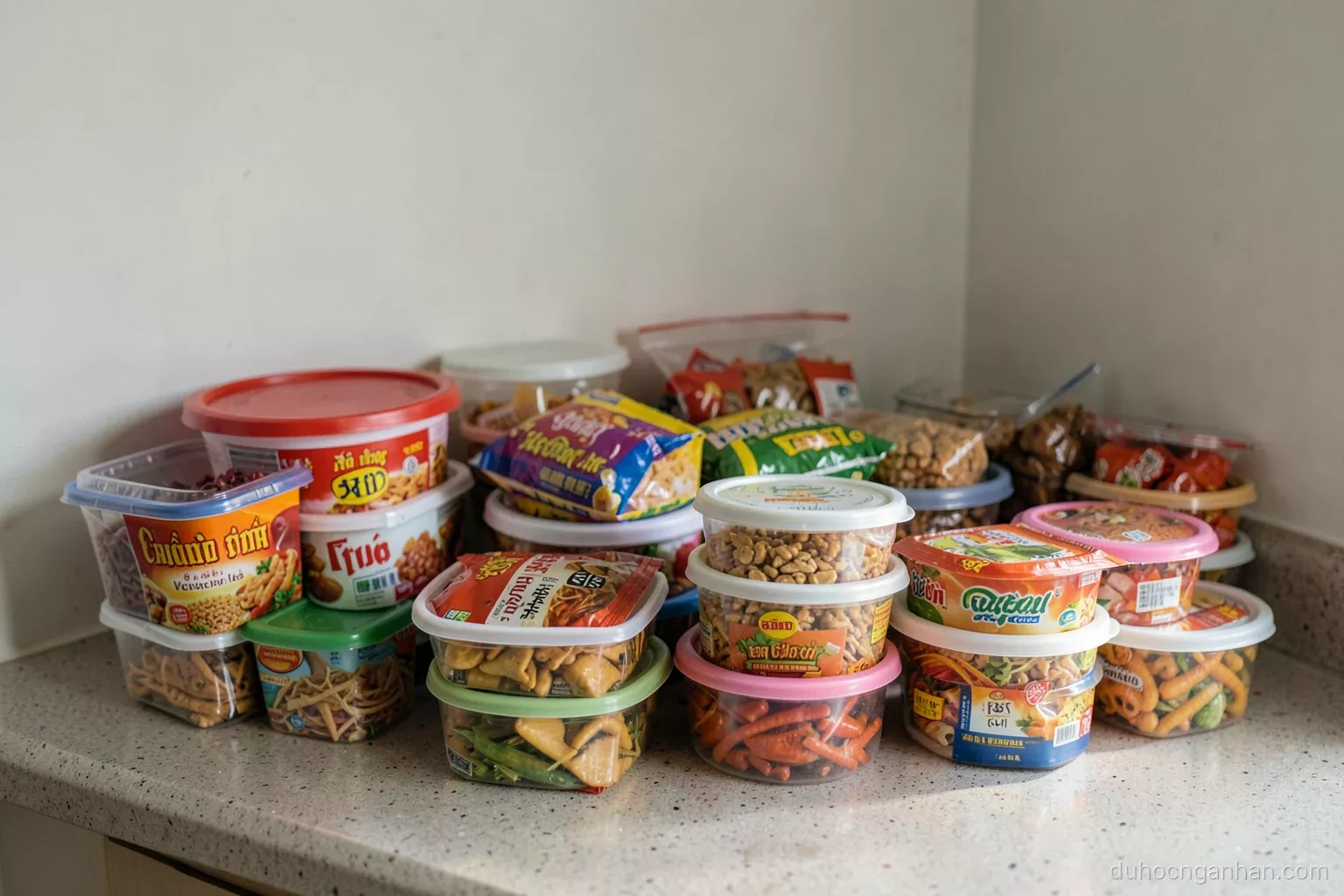
If you pack Vietnamese food for your child's camp abroad, choose a few dry items that are sealed and still carry their label and expiry date, such as biscuits, dried fruit, seaweed snacks, sweets and small seasoning sachets; avoid meat and meat products, eggs, fresh milk, fresh fruit and unlabelled home-made food, because these are the groups often banned or requiring declaration at customs. The amount should just be enough to give your child a familiar taste in the first few days and something to share with roommates, not to replace the camp's meals.
Vietnamese parents often worry that their child will go hungry or not be used to foreign food, so they want to pack a lot. But most camps provide three main meals and snacks, and many dormitories restrict food in rooms. A suitcase full of food takes up space, may be stopped at the border and may get your child into trouble with the boarding staff.
Why you should not pack much food
The first reason is that the camp already provides meals. International residential camps usually have a rotating menu, with rice and vegetable dishes and options for Asian students. In the first week your child may not be used to it yet, but most children adapt within a few days. Packing too much food from home sometimes slows your child's adjustment, because they have an excuse to skip meals in the dining hall and eat instant noodles in their room.
The second reason is the rules. Many dormitories do not allow opened food to be kept in rooms because of ants, cockroaches, mice and smells, and because a roommate may have allergies. Some only allow sealed packaged food, or require it to be kept in a shared cupboard. Kettles and electric hotplates for cooking noodles are usually banned.
The third reason is the border. Each country has its own quarantine rules to prevent animal and plant diseases. Some countries check very strictly and impose heavy fines for not declaring; others are more relaxed. Food that is stopped means not only losing the food but also your child and the group leader losing time at the airport, sometimes making the whole group wait.
Dry foods that usually work and foods best left at home
The table below is a general framework for parents choosing what to pack. The specific rules of the destination are always the final word; countries with strict quarantine may require you to declare even the items in the left-hand column.
| Group | Usually fine to pack (sealed, labelled) | Best left at home or check carefully |
|---|---|---|
| Biscuits and sweets | Factory-packed biscuits, rice crackers, hard sweets, gummies | Home-made cakes, cakes with meat fillings, cakes with salted egg |
| Fruit | Dried fruit, packaged candied fruit | Fresh fruit, seeds, fresh fruit with stones |
| Meat and fish | Very limited; check the rules carefully | Pork floss, beef jerky, Chinese sausage, Vietnamese pork roll, sausages, home-dried fish |
| Milk and eggs | Sealed tins of powdered milk when there is a reason | Fresh milk, eggs, cakes with fresh cream |
| Seasonings | Small factory-packed seasoning sachets | Large bottles of fish sauce, fermented pastes, home-made sauces, strong-smelling items |
| "Homesickness cures" | A few packets of instant noodles or porridge if the camp has hot water | Large quantities of instant noodles, food that has to be cooked on a stove in the room |
In some countries, such as Australia and New Zealand, travellers must declare all food on the arrival card, even items that are allowed; failing to declare can lead to a fine. Organisers usually remind families of this at the group meeting.
Meat and meat products: the group most often stopped
Pork floss, beef jerky and Chinese sausage are favourites that Vietnamese parents send with children going far away, because they keep well and children like them. But this is also the group most heavily restricted by many countries, because livestock diseases such as African swine fever can spread through processed meat. Pork and pork products in particular are often banned from countries that have had outbreaks.
Even factory-packed with full labels, these items may still be confiscated depending on the country. Being questioned at the customs desk about pork floss in the suitcase is an experience nobody wants their child to have on their first day away from home. If you really want to pack them, check the website of the destination's quarantine or customs authority and follow the declaration procedure correctly; if unsure, leave them at home.
Savoury favourites can be replaced with seaweed snacks or savoury rice crackers, or simply by waiting for weekend supermarket trips with the group. In many cities with Asian communities, supermarkets sell noodles, soy sauce and familiar snacks.
Food in the dormitory and roommates
On arrival at the camp, ask the boarding staff about the rules on food in rooms before taking any food out. Many places allow sealed packaged food in lidded containers, but not opened food left overnight. A plastic box with a tight lid, ideally a collapsible one, helps your child store food according to the rules without causing smells in the room.
A roommate may be allergic to peanuts, tree nuts, seafood or sesame. At many international camps, nut allergies are managed very strictly, with rooms or areas where foods containing nuts are banned outright. Teach your child to ask friends before offering food and to read the ingredients on the packet. Strong-smelling foods such as dried fish, shrimp paste and dried durian may bother roommates and are best left at home.
Sharing food from home with friends is a very natural way to get to know each other. A packet of rice crackers, coconut candy or dried fruit opened during an evening activity gives your child a way to talk about Vietnam. So if you pack food, choose small packets for sharing rather than large bags.
Fussy eaters and special diets
For fussy eaters, packing some food from home usually does not solve anything after the first week. What helps more is telling the camp in advance on the registration form: what your child cannot eat, whether they eat spicy food, whether they are vegetarian or avoid any meat. Many camps can prepare alternatives if they know early. Getting your child to try a few foreign dishes at home in the months before the trip also reduces the shock.
Children on medically required diets, such as those with severe food allergies or conditions that require avoiding certain foods, must have this communicated to the camp in writing with a doctor's letter, not rely on a bag of food from home. In this case, food brought from home is only a back-up for the flight and the first few meals, labelled clearly with its ingredients.
For children who are vegetarian for family reasons, state the level clearly: no meat, or no eggs, dairy or fish sauce either. Camps with many nationalities are usually used to many different diets, as long as they are told clearly in English.
Food for the flight and the first hours
The most genuinely useful food is often not food for the camp but food for the journey. The flight has meals, but they are not at your child's usual times, the dishes are unfamiliar, and waiting times at the airport can be long. A small bag in the cabin bag with biscuits, dried fruit and a few sweets keeps your child from getting hungry halfway and less tired when the flight is delayed.
Buy water after security, or bring an empty bottle and ask for water on the plane. Food in the cabin bag must also follow the liquids rules, so avoid yoghurt, juice and anything with sauce. At the end of the flight, uneaten fruit or filled pastries must be thrown away before going through the destination's quarantine check if that country does not allow them.
The first day at camp is usually busy: checking in, a rules briefing, getting to know people. The first dinner may not be at the time your child is used to. One or two packets of biscuits left in the backpack help your child get through the first evening comfortably, before settling into the dining hall's meal schedule.
Instead of packing a lot, prepare your child for the supermarket
Most camps have a schedule for taking students to a supermarket or shopping centre at weekends. That is when your child buys their own snacks, drinks and a few familiar items. The experience of choosing things themselves and paying in another country's currency is part of the value of the trip that a bag of food from home cannot replace.
Before the trip, give your child a few small tasks at a supermarket in Vietnam: reading the ingredients label, comparing expiry dates, adding up the total of a small basket. Abroad, they do exactly the same things in English. Children with food allergies need to practise reading labels even more, because labels abroad list allergens in different ways.
If your child wants to buy something familiar, many cities with international camps also have Asian shops selling noodles, soy sauce and rice crackers. If they ask the group leader or boarding staff, they can usually find one after a week or two, and the story of "finding a packet of Vietnamese noodles in a foreign supermarket" is often the first thing children tell when they come home.
Packing food the right way
If you have decided to pack some food, the steps below help it get through the border and the camp rules smoothly.
- Choose factory-packed food with the seal intact and a label showing ingredients and expiry date; do not decant into unlabelled containers.
- Gather everything in a separate bag in the suitcase, placed on the top layer so it is easy to take out if customs officers ask to inspect it.
- Make a list of the food you are carrying, to use when filling in the arrival card if the destination requires food to be declared.
- Keep the amount moderate: a few packets for the first week and for sharing, not a whole box.
- Do not pack food in the cabin bag if it is liquid or paste beyond the volume allowed at security.
If you are not sure whether an item is allowed, declare it. In countries with strict quarantine, declaring an item and having it confiscated usually does not lead to a fine; not declaring it and having it found is what causes trouble.
The Du Học Ngắn Hạn advisory team usually goes over the destination's food rules and the camp's food rules at the group meeting; families whose children follow a special diet should tell us at registration so the camp can prepare.
Frequently asked questions
Should we post food to our child during the trip?
Usually not. International parcels containing food are easily held at customs, take many days and may incur duties or fees. Some camps do not accept parcels for students. If your child is missing something, the group leader can take them to a local supermarket.
If my child brings instant noodles, how will they cook them?
Many dormitories ban kettles and electric hotplates in rooms. Some camps have hot water in the common room or dining hall. Ask the camp before packing noodles; if there is no hot water, instant noodles just take up suitcase space without being usable.
Can we pack powdered milk for a young child?
Sealed tins of powdered milk can usually be taken to many countries, but some countries with strict quarantine require them to be declared. For children old enough to go to camp alone, powdered milk is rarely necessary because the camp provides milk and snacks. If your child needs it for health reasons, bring a doctor's letter.
Do food labels need translating into English?
It is not required, but it is useful if your child has allergies or if customs officers ask. A short English list of the items and their main ingredients helps answer quickly. For items with common allergens, write them clearly so your child and roommates know.
What if my child cannot eat the camp food in the first week?
Eating little in the first week is common, because of unfamiliar dishes, tiredness and homesickness. Boarding staff and the dining hall are used to this. If after a few days your child is still skipping many meals, losing weight or tired, the group leader should talk to the camp about making adjustments. Parents should ask gently and not add pressure.
Should we take Vietnamese specialities as gifts for teachers and friends?
Small sealed gifts such as coconut candy, biscuits or tea are a lovely way to introduce Vietnam. Avoid items containing meat, strong-smelling items and fragile ones. Check the destination's food rules, and remember to declare if the country requires all food to be declared.