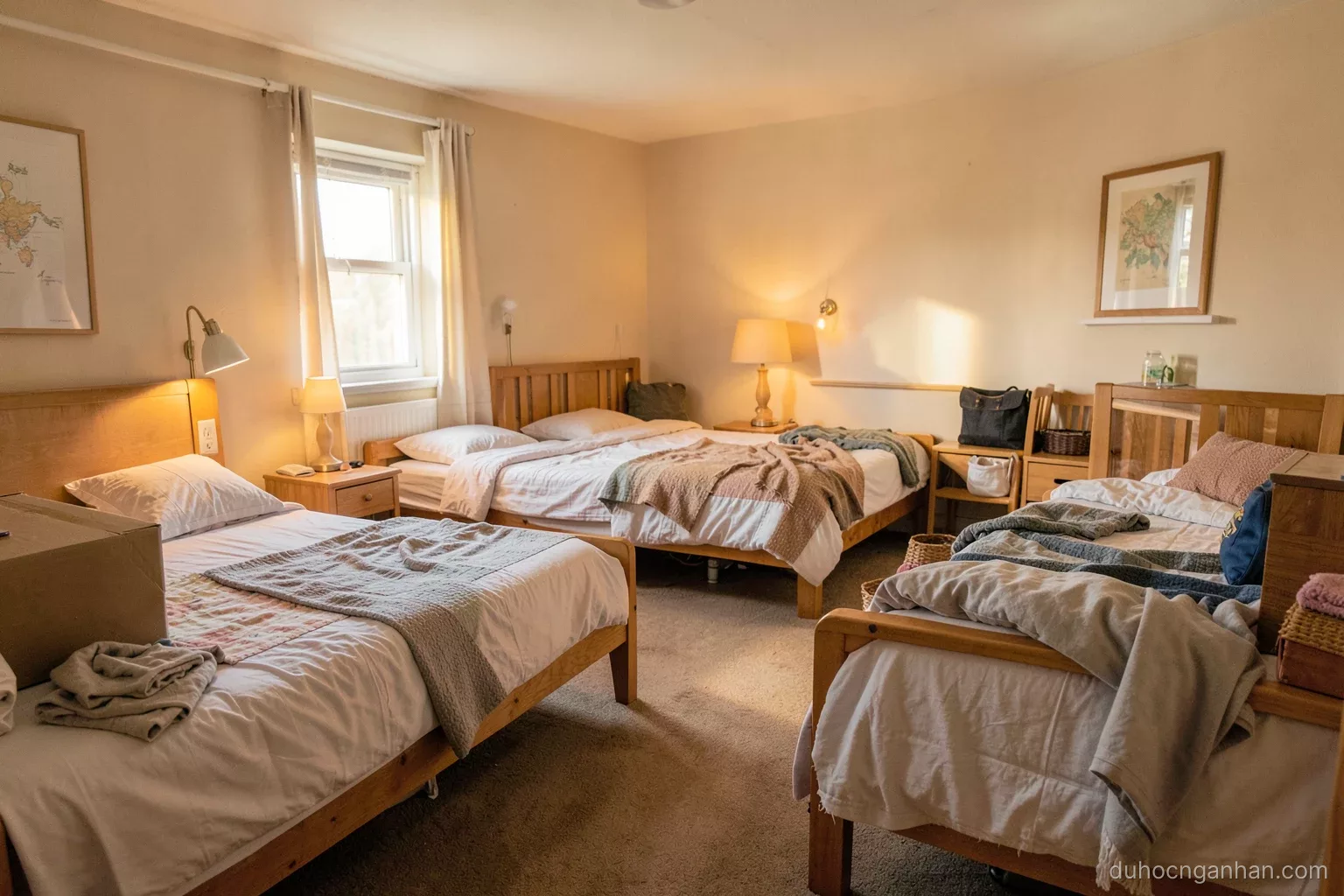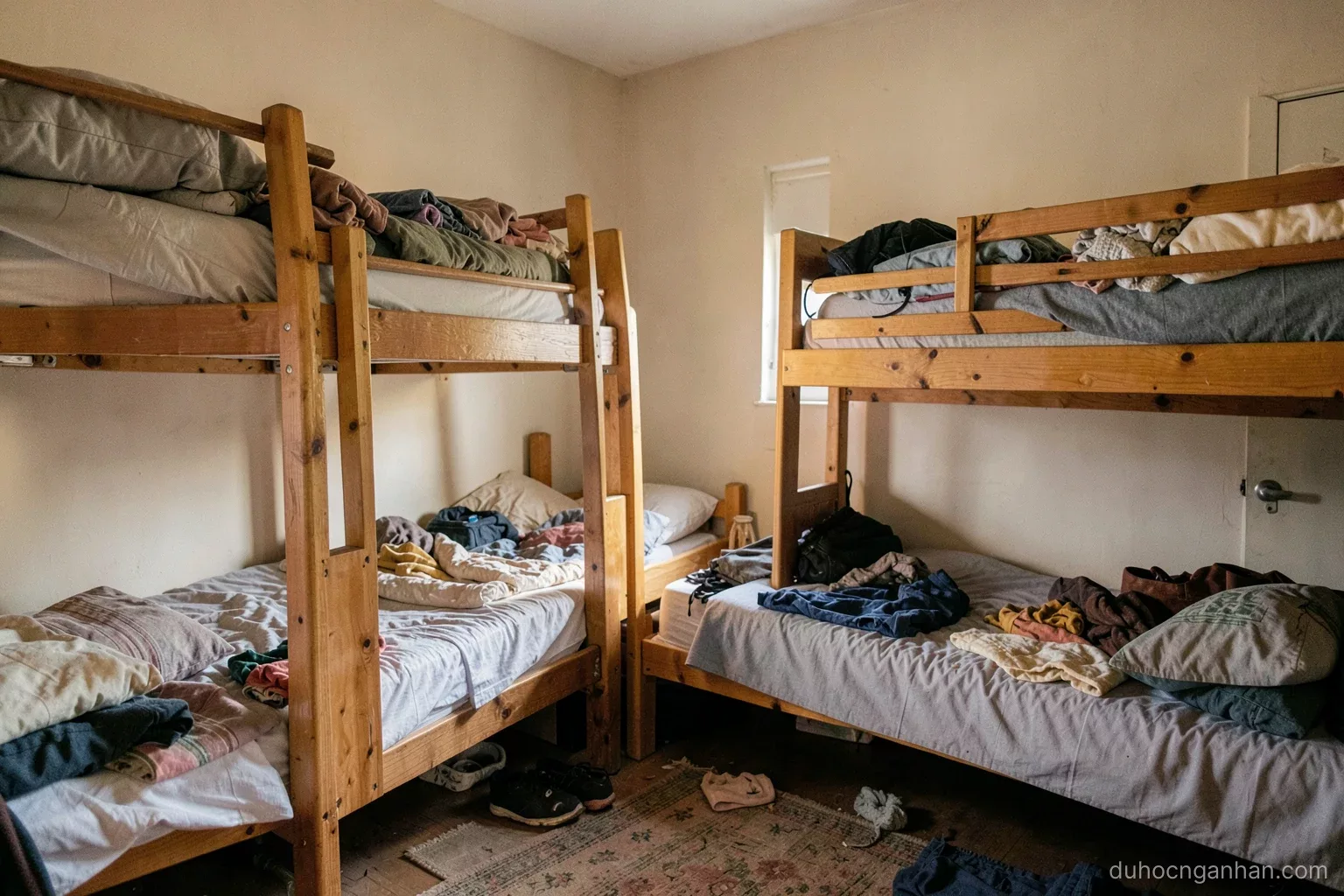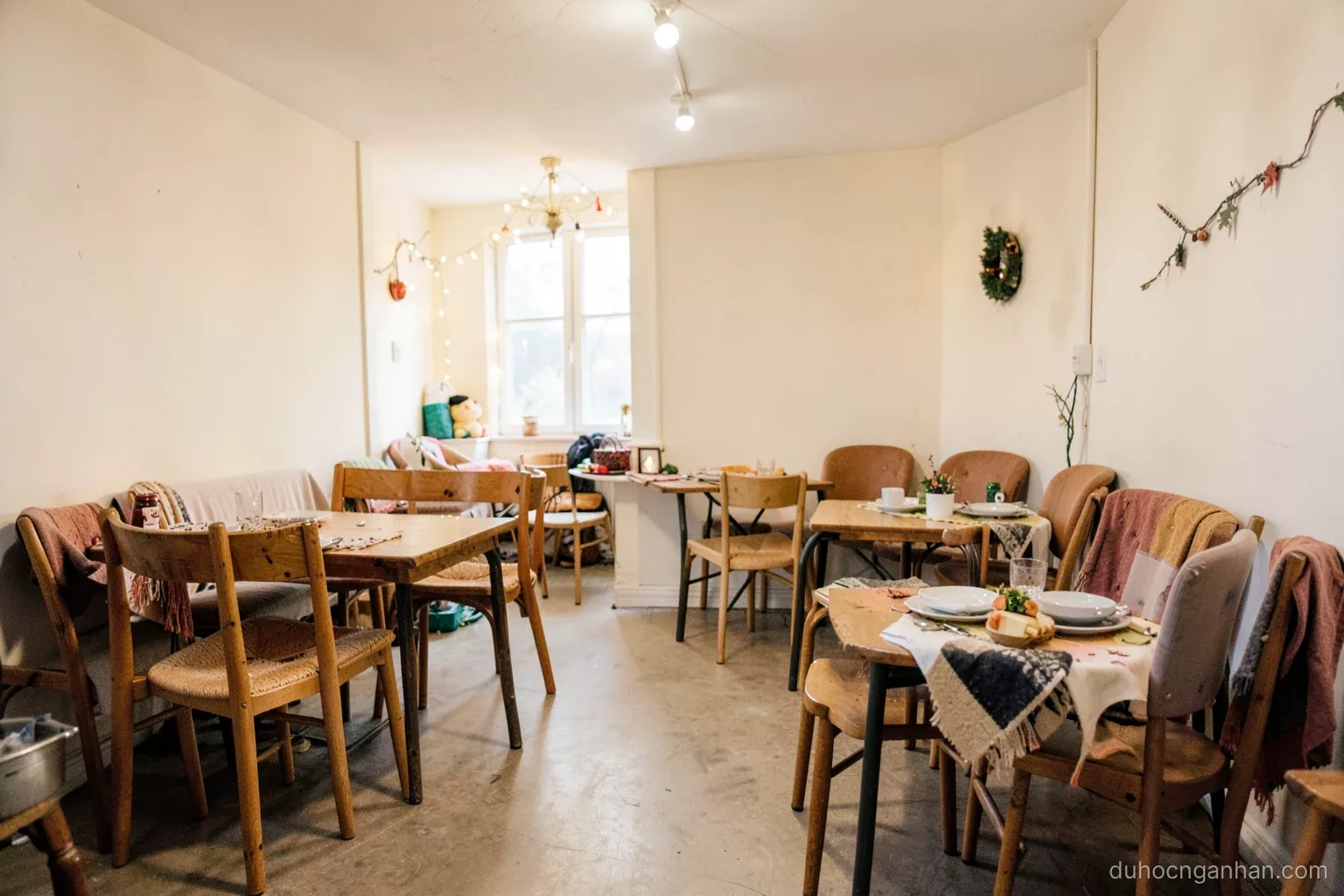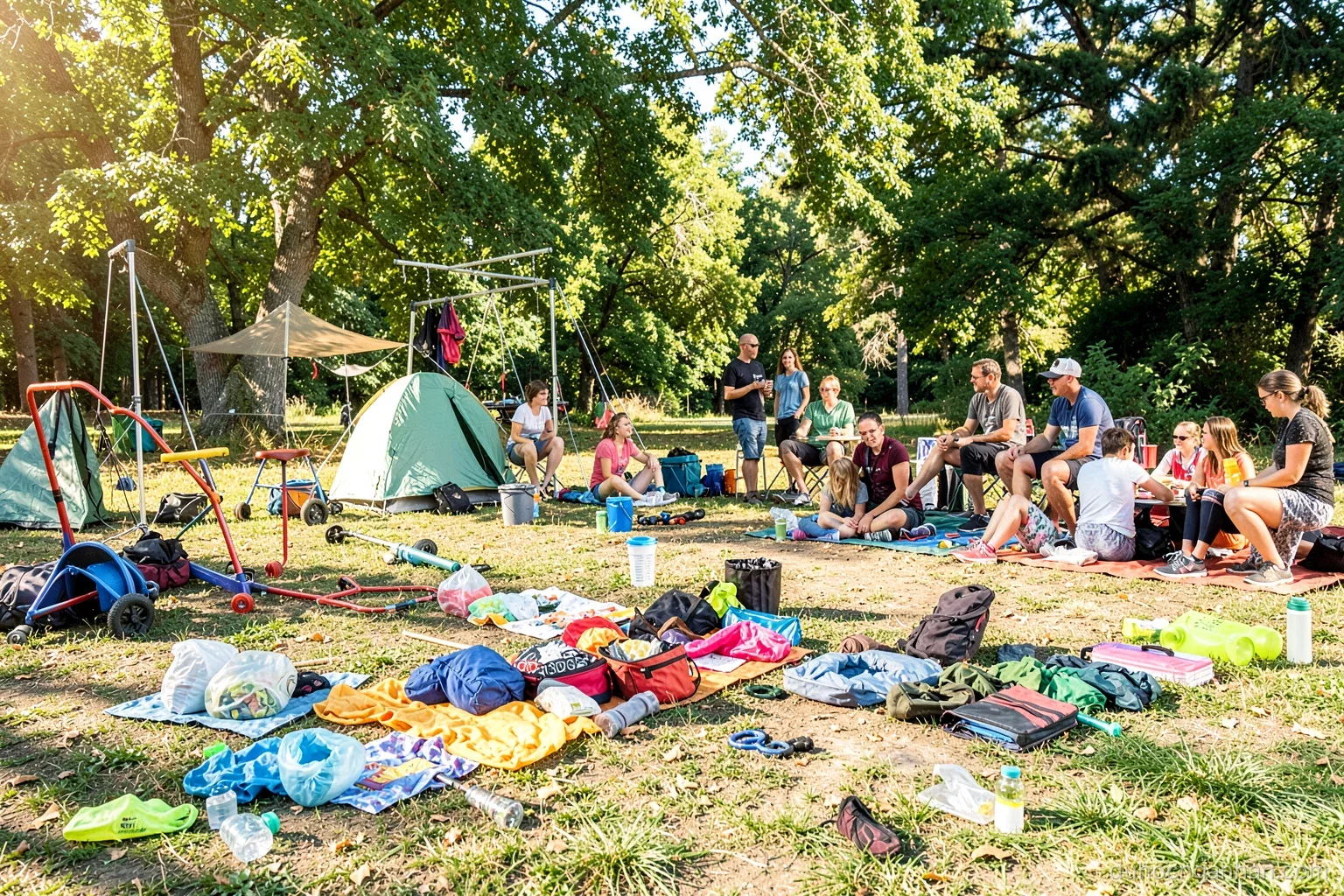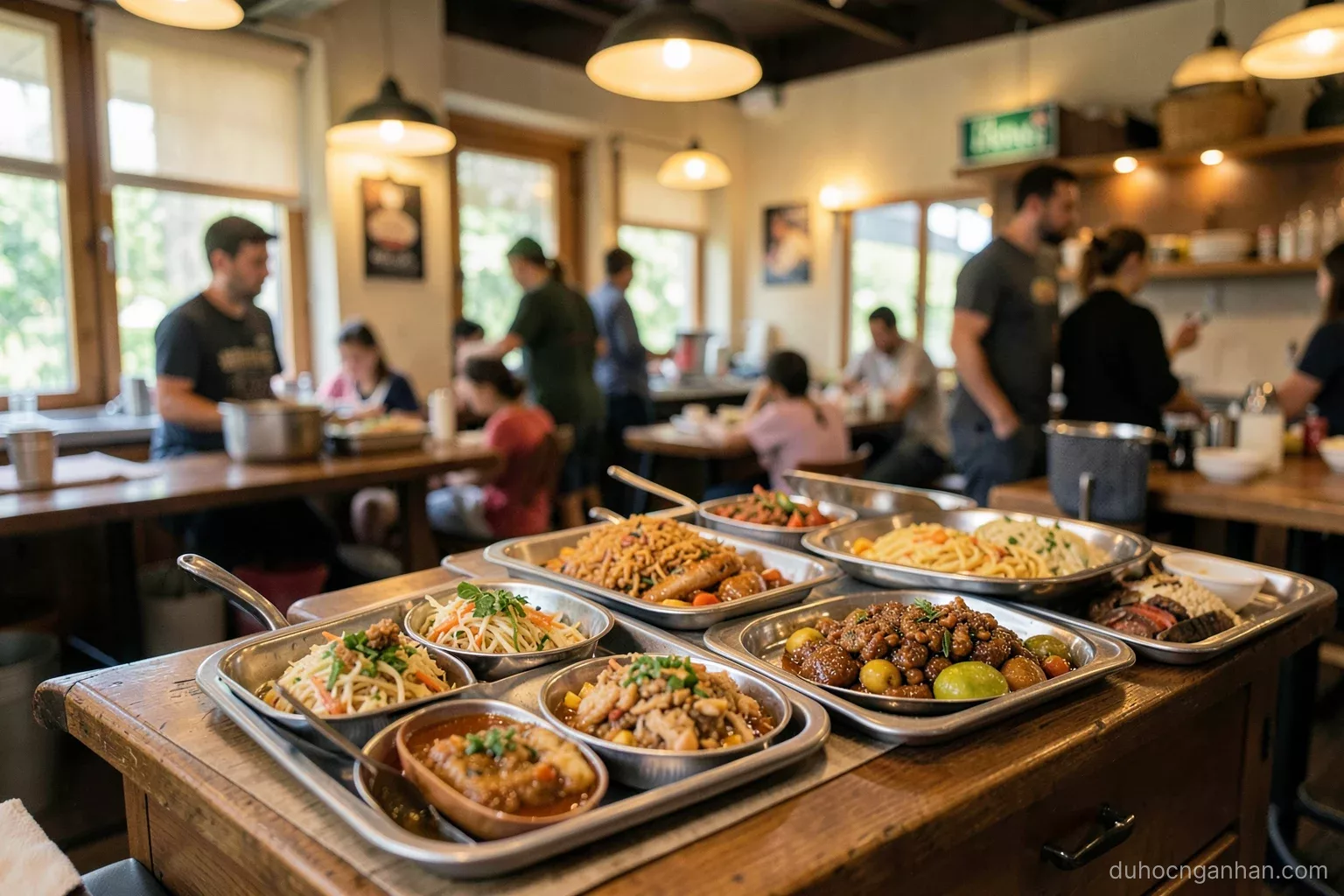
At a residential English camp in the Philippines, your child usually eats three main meals in the camp canteen, with some places adding an afternoon or evening snack; the menu rotates weekly, with rice, a meat dish, a vegetable dish, soup and fruit, mixing Filipino dishes with dishes familiar to Asian pupils. Most children are eating well after a few days, even if in the first week they may complain about unfamiliar flavours, eat little and ask for snacks.
For fussy eaters or children with allergies, food needs more careful preparation than studies. This article describes what a day of eating at camp looks like, the Filipino dishes your child will often meet, drinking water and snacks, and then how to inform the camp and prepare for a child with particular needs.
What a day of eating at camp looks like
Breakfast usually starts early, before the first lesson. Many camps offer two options: Western-style food such as bread, eggs, sausages, cereal and milk; and Asian-style rice dishes such as rice, fried eggs, marinated meat and soup. The children eat quickly because the time slot is short, so children used to slow breakfasts at home need to practise getting up earlier.
Lunch and dinner are the main meals, usually self-service or queuing for a tray. Each meal has white rice, one or two savoury dishes, a vegetable dish and a soup, sometimes noodles, fruit or a dessert. The menu rotates weekly, so your child will meet dishes they like again.
Some camps have a snack in the afternoon after sport or in the evening before bed: cakes, fruit, milk, noodles. The snack is important for older children who are at an age of eating a lot and are active all day in the heat.
Mealtimes at camp are also social time. The children sit mixed together, with staff or teachers eating alongside them, so meals are also when the most English is spoken all day. Shy children often speak up first at the table, because the questions there are very simple: what is this dish, are you going to finish it?
Filipino dishes your child will often meet
Filipino cooking uses a lot of vinegar, garlic, soy sauce, sugar and the small calamansi lime. Some popular dishes that may appear in the canteen or on weekend outings:
| Dish | What it is | How Vietnamese children usually find it |
|---|---|---|
| Adobo | Chicken or pork stewed with vinegar, soy sauce, garlic, pepper and bay leaves | Like Vietnamese braised meat but slightly sour; many children like it straight away |
| Sinigang | A sour soup made with tamarind or sour fruit, with meat, prawns or fish and vegetables | Close to Vietnamese sour soup, but sharper |
| Tinola | Chicken soup cooked with ginger, green papaya and leafy greens | Light and easy to eat, good when tired or just recovering from illness |
| Pancit | Stir-fried noodles or rice vermicelli with vegetables and meat | Like fried noodles, familiar |
| Lumpia | Fried rolls filled with meat and vegetables | Like Vietnamese spring rolls; almost every child eats them |
| Tocino, longganisa | Sweet marinated pan-fried pork, and Filipino-style sausage, often eaten with rice at breakfast | Sweeter than northern Vietnamese taste, suits southern Vietnamese taste |
| Halo-halo, turon | Shaved ice mixed with many toppings; banana wrapped in pastry, fried and sprinkled with sugar | Desserts the children adore, especially after sport |
Besides local dishes, camps with many Korean or Japanese pupils often add a few dishes familiar to them, such as kimchi or seaweed soup. Vietnamese children often find camp meals closer to home cooking than they had imagined.
Drinking water, snacks and eating out
Drinking water. In the Philippines, foreign visitors are usually advised to drink bottled or filtered water rather than tap water. Residential camps usually have filtered water dispensers in the canteen and dormitories. Give your child a named personal water bottle to refill throughout the day, especially when playing sport in the heat.
Snacks. Many camps have a snack counter or a small shop on campus, open at set times. The children buy things with pocket money held by the camp or with a top-up card. Snacks are a legitimate pleasure, but eating too many will make your child skip main meals.
Food brought from home. A few familiar dry foods such as biscuits, dried seaweed or small sachets of seasoning help your child feel less homesick in the first few days. Check the camp's rules on keeping food in rooms, as some places ban it because of ants and cockroaches, and check the entry rules on food before putting it in the suitcase.
Eating out on weekend trips. Weekend outings usually include lunch at a restaurant or a food court in a shopping centre. This is when your child tries new dishes, orders in English and pays for themselves. Remind your child to choose busy places and cooked food, and to remember their allergies when ordering.
Fruit. The Philippines has delicious and widely available mangoes, bananas, pineapples and papayas. Many children eat more fruit than at home because it is tasty and refreshing in the hot weather.
Eating in the heat and when very active
A day at camp combining lessons and outdoor sport in hot, humid weather makes the body lose more water and salt than at home. Many children who are used to sitting in air conditioning all day in Vietnam have never felt this. The early signs are constant thirst, afternoon headaches and unusual tiredness after sport.
The simplest prevention is to drink steadily all day rather than waiting until thirsty. A personal water bottle on the desk, taken out to the field and refilled after every meal. Many camps have drinking water at the sports ground and remind the children to take water breaks. Juicy fruit such as watermelon, pineapple and mango at meals also helps with hydration.
Lunch before sport should not be too heavy, but should not be skipped either. A child who skips lunch because they dislike the dish and then goes out into the sun is the one most likely to feel faint. Tell your child that even if they do not like the main dish, they should still eat rice, eggs and fruit to have energy for the afternoon.
If your child says they feel dizzy or nauseous, or stop sweating while hot, they need to tell the supervising adult straight away so they can rest somewhere cool and be seen by medical staff. That is the camp's job, not something your child should put up with alone. Remind your child to keep an eye on the friend beside them too: if a friend looks flushed or is flagging on the field, call an adult straight away.
Fussy eaters: the first week and after
Almost every child eats less in the first few days. Tiredness, heat and homesickness reduce appetite, and every dish tastes a little different. Many children live on white rice, eggs and fruit for two or three days, then gradually try more. For a healthy child, that is nothing to worry about yet.
Genuinely fussy eaters, who only eat a few familiar dishes at home, will find it harder. What to do before leaving is ask the camp for a sample weekly menu, circle with your child the dishes they can eat, and practise trying a few similar dishes at home. Knowing for certain that every meal will have white rice, eggs or a simple meat dish helps your child feel less anxious.
When your child is at camp, ask specifically: "What did you take at lunch today?", rather than "Is the food good?". A specific answer tells you whether your child is eating enough. If your child is still eating only white rice beyond the second week, has visibly lost weight or is exhausted, tell the group leader so the camp can monitor your child's meals and work together to find dishes your child will eat.
Do not send a suitcase full of snacks to "make up for it". Snacks help your child through hunger, but they mean your child never has to try the canteen food, and the canteen is where your child gets a balanced diet over several weeks.
If your child has allergies or a special diet: how to inform the camp
With food allergies, all the information must reach the people who cook and the people who look after your child, in writing, before departure. A suggested sequence:
- Ask your child's doctor about the severity of the allergy, what to do in case of accidental exposure, and whether emergency medication should be carried. Ask for a summary in English.
- State clearly on the camp's medical form: what your child is allergic to, what the symptoms are, whether they have ever had a severe reaction, and where the medication they carry is kept.
- Ask the camp by email: how does the canteen handle allergies, are ingredients labelled, are there alternative dishes, and are the kitchen staff told your child's name?
- Teach your child to recognise dishes that may contain what they are allergic to, practise the English sentence "I am allergic to ..., does this have ...?" and not to be shy about asking again.
- For family dietary choices, such as vegetarianism or avoiding a particular meat, also inform the camp early and ask whether it can cater for them fully.
This is general information for preparation and does not replace a doctor's advice. If the camp cannot explain clearly how it handles allergies, that is a sign to think again before paying a deposit.
What meals teach your child
At home, many children have their favourite dishes cooked for them, are reminded to eat and have food served onto their plate. In the canteen, your child takes their own tray, chooses for themselves, judges how much they will eat and clears their own tray. These small things add up to a self-reliance that parents notice clearly when their child comes home: your child knows when they are hungry, takes just enough and tries something before rejecting it.
Meals are also where your child meets cultural differences most clearly. A Korean friend eats kimchi at every meal, a Japanese friend says "itadakimasu" before eating, a Filipino friend eats rice with almost everything, including noodles. Your child learns to be curious rather than pulling a face, and how to decline politely a dish they cannot eat. Many children come home asking their mother to try cooking adobo or sinigang.
Parents can carry this lesson on at home. After the camp season, let your child serve their own rice and clear their own bowl, and occasionally cook with them a dish they ate in the Philippines. Habits formed over a few weeks at camp are easily lost if everything is done for your child again at home.
If your child talks about food enthusiastically by the third week, that is usually a sign they have adapted well to the whole camp season, not just to the meals.
Frequently asked questions
Does the camp cook Vietnamese food?
There is rarely a separate Vietnamese menu, unless there is a large group of Vietnamese pupils and the camp adds dishes itself. But many Filipino and Asian dishes are quite close to Vietnamese taste: rice, sour soup, adobo-style braised meat, fried noodles, spring rolls. Your child usually finds suitable dishes after a few days.
Can a vegetarian child go to camp?
Yes, if the camp confirms it can cater for them. Ask carefully: does each meal have a vegetarian dish with enough protein, is the stock made from meat, are dishes labelled? Being vegetarian in an unfamiliar environment can leave your child short of nutrients if the camp only caters for it superficially.
Should my child take instant noodles?
A few to keep for hungry evenings or tired days is fine, if the camp allows hot water and food in rooms. Do not let instant noodles replace main meals, because your child will lack vegetables and protein and feel more tired in the heat.
What if my child has a stomach ache at camp?
Your child should tell the house staff or the medical room straight away rather than putting up with it. Mild stomach aches from the change of food are quite common in the first few days. If the pain lasts, or comes with fever, vomiting or a lot of diarrhoea, the camp needs to take your child to a doctor and inform the family.
Is pocket money enough for my child to buy extra food?
It depends on how much the parents send and on prices at the camp's counter. Pocket money is usually for snacks, drinks, souvenirs and extra meals on outings. Agree a weekly spending limit with your child in advance so they practise managing it and do not spend it all in the first few days.
If my child says the camp food is bad, should parents believe it?
Listen to your child, but ask specifically what they are able to eat. Complaints in the first week are often just missing home cooking. If your child can be specific — for example eating only white rice every day, or seeing food that does not look hygienic — then talk with the group leader.