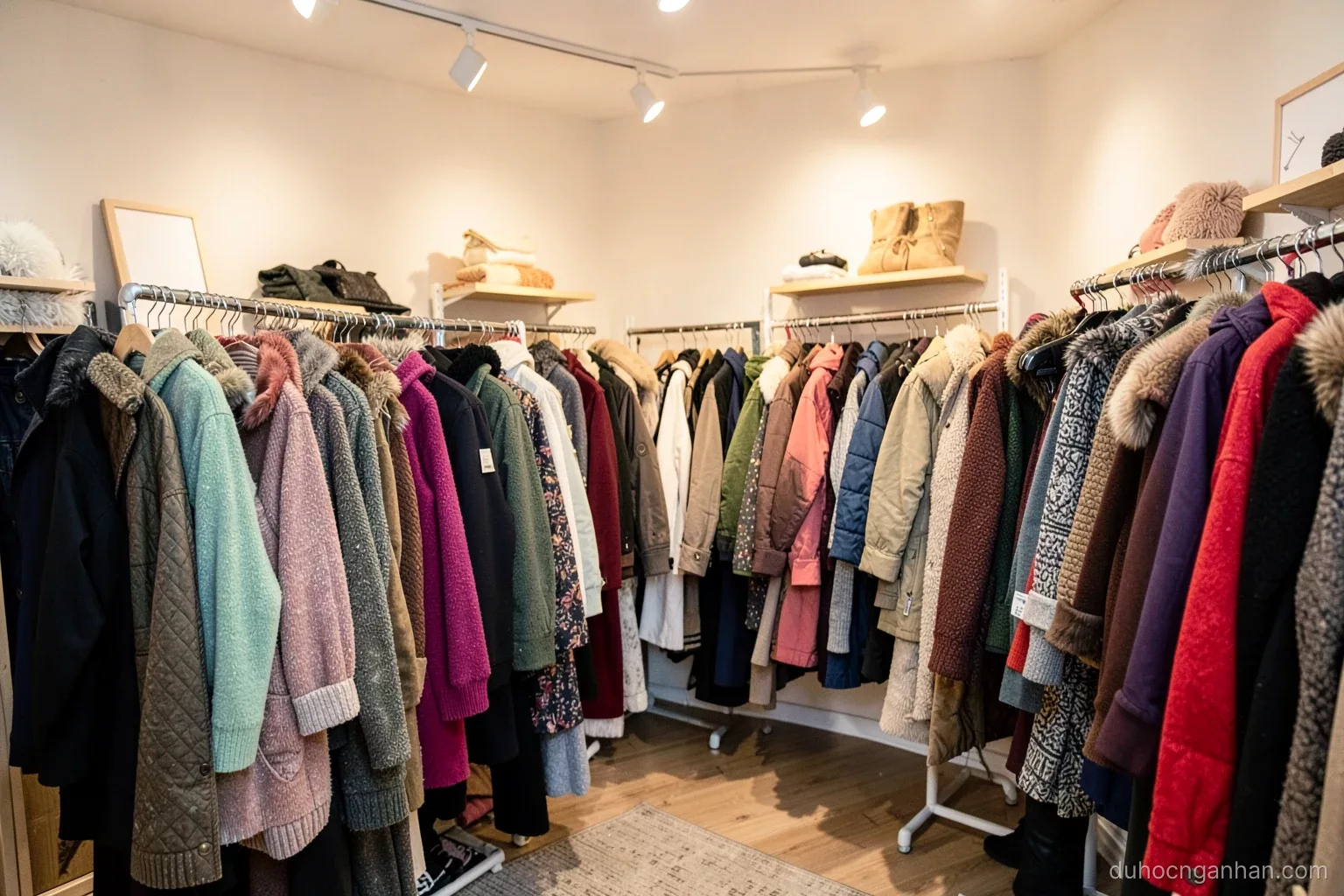
For a winter camp in a cold country, your child needs to dress in three layers: an inner layer that stays dry (a thermal top, not thick cotton), a middle layer for warmth (a sweatshirt or fleece), and an outer layer against wind and water (a hooded coat), plus a woolly hat, gloves, a scarf, warm socks and non-slip shoes. Several thin layers are warmer and more practical than one very thick coat, because your child can take some off in heated classrooms.
Children who have grown up in southern Vietnam or other warm regions have often never worn real winter clothes, so preparing warm clothing for a winter camp is a job for both parents and child: choosing the right types, trying on all the layers, practising zips and gloves. This article covers what to pack; how the body adjusts to cold and short days is covered in a separate article in the timing section.
Why three thin layers are better than one very thick coat
The cold that bothers children most is not when they are standing outside, but when they move between outdoors and indoors. Classrooms, dining halls and dormitories in cold countries are usually well heated. A child wearing a very thick puffer jacket into class will break into a sweat; taking it off leaves only a thin top underneath, and going back outside they are cold in a damp shirt. Three thin layers let your child adjust to each place.
The innermost layer should be a close-fitting thermal top made of synthetic fibre or fine wool, which wicks sweat away. Cotton holds moisture, and wet means cold, so it does not suit the layer next to the skin on active days. The middle layer is a sweatshirt, fleece or jumper that traps warm air around the body. The outer layer is a windproof, waterproof coat with a hood.
Trousers follow a similar but simpler principle: a thin pair of thermal leggings underneath and a moderately thick pair of long trousers on top. For camps with activities in the snow, waterproof over-trousers are also needed; many camps rent out or lend ski suits, so ask in advance to avoid buying unnecessarily.
A suggested list of warm clothes for two to four weeks
The quantities in the table are for a camp with weekly laundry and daytime temperatures typical of a temperate winter. Camps in areas with deep snow or very low temperatures will have their own list from the organiser.
| Item | Suggested number | What to look for |
|---|---|---|
| Long-sleeved thermal tops | 3 to 4 | Close-fitting, not cotton; worn as an undershirt every day |
| Thermal leggings | 2 to 3 | Thin and stretchy, fitting comfortably under trousers |
| Sweatshirts, jumpers, fleeces | 2 to 3 | With a front zip so they can be taken off quickly in class |
| Outer coat | 1 | Windproof, waterproof, hooded; long enough to cover the bottom to keep the back warm |
| Thick long trousers | 3 to 4 | Fleece-lined tracksuit bottoms or thick chinos |
| Woolly hat, scarf or neck warmer | 1 to 2 of each | A neck warmer is safer than a long scarf for young children at play |
| Gloves | 2 pairs | One thin pair that works with a phone, one thick waterproof pair |
| Warm socks | 7 pairs or more | Wool blend or thermal fibre; plus one thick pair for sleeping |
| Shoes | 1 pair of warm shoes, 1 pair of indoor shoes | Grooved, non-slip soles; high-topped if there is snow |
Label the gloves, hats and scarves first: these are the items children leave behind most at winter camps, and they look so alike that boarding staff struggle to return them to the right owner.
The outer coat: the item most worth investing in
If the budget is limited, put it into the outer coat. A good coat keeps warm by blocking the wind and having a thick enough layer of padding, down or synthetic fibre. A thin fashion coat bought in Vietnam for the northern winter is often enough for camps in milder places such as southern Australia in winter, but not for snowy places such as North America, Northern Europe, South Korea or northern Japan.
When trying on a coat for your child, have them wear the middle layer underneath, then raise their arms above their head, bend over and sit down. The coat must not ride up at the back or pinch under the arms. The hood should cover the ears when pulled up. The zip must be big enough for your child to pull while wearing gloves; tiny zips are a common failure point when children are in a hurry.
A thick coat takes up a lot of space in the suitcase, so many families have their child wear it to board the plane. It is a good trick: it saves space and means the warm coat is ready when stepping out of the airport. Down jackets can be compressed in a vacuum bag for the suitcase, but should be shaken out to fluff up again as soon as you arrive.
Shoes, socks and your child's feet
Cold, wet feet are the number one reason children are uncomfortable at winter camps. Shoes need thick, grooved soles so they do not slip on thinly iced paths, and waterproof uppers so they do not get wet when stepping in melting snow. The breathable mesh trainers used in Vietnam soak up water very quickly and are only suitable for the sports hall.
Choose shoes half a size bigger than your child's everyday shoes, because they will be wearing thick socks. Buy them early and let your child wear them at home for at least a week with thick socks so the shoes soften and your child can say where they rub. A light pair of soft-soled indoor shoes lets your child change when entering the dormitory, as many schools do not allow outdoor shoes in rooms.
Warm socks are worth packing extra. Wet socks must be changed immediately, and children often get their socks wet several times a day if they play outside. Tell your child: if their feet are cold, numb or change colour, tell an adult straight away, and do not keep playing. This is basic safety knowledge at camps in cold regions and the boarding staff will repeat it, but children remember it longer when they have heard it first from their parents.
What to wear on the plane and during transit
Flights from Vietnam to cold countries are usually long, sometimes with a transit at another airport. The cabin is kept cool, and your child sits still for many hours, so they easily feel cold. When leaving Vietnam it is still hot; on leaving the destination airport it may be close to freezing. The outfit for the plane therefore has to work at both ends.
The approach many groups use is to have your child wear a thin thermal top and comfortable long trousers from home, with a zip-up sweatshirt on top, carrying the thick coat over their arm through security. A woolly hat, thin gloves and a neck warmer go in the cabin bag, together with a pair of thick socks to change into for sleeping on the plane. When the plane lands, your child only needs to put on the coat, hat and gloves and is ready to step outside.
Avoid having your child wear high-topped snow boots on a long flight if possible; their feet will get hot and the boots are hard to take off at security. A pair of closed trainers with non-slip soles is enough for the walk from the airport to the coach, and the warm boots can go in the suitcase to be changed into at the camp.
Sleeping warmly in a winter dormitory
Most dormitories in cold countries are heated, but how warm rooms are varies and heating is often turned down late at night according to the building's schedule. Children used to sleeping with a fan or air conditioning in Vietnam may find the heated room too dry and hot, or may find their feet cold towards dawn. A moderately thick long-sleeved set of pyjamas and a pair of bed socks are enough for your child to adjust.
Bedding is usually provided by the camp; few camps ask students to bring a sleeping bag, unless there is an overnight camping trip. Ask in advance whether a sleeping bag is needed, because a winter sleeping bag takes up a great deal of suitcase space. If one is needed, many organisers rent or lend them locally.
Dry heated air easily causes children mild nosebleeds, a dry throat and itchy skin. A bottle of water by the bed, moisturiser and lip balm make your child more comfortable. If your child has a history of asthma or allergies, tell the camp and bring enough medicine as advised by the doctor before the trip.
Buy in Vietnam or at the destination
Thin thermals, sweatshirts, woolly hats and thin gloves are easy and affordable to buy in Vietnam, especially in northern cities in autumn. In the south there is less choice, but they can still be found in sports shops, travel shops and on e-commerce platforms. The advantage of buying at home is that your child can try things on, they can be washed in advance, and your child gets used to the clothes before leaving.
Coats for snowy regions, snow boots and waterproof gloves come in more suitable options in cold countries. Some families have their child wear a reasonably warm coat for the flight and then let the group leader take the group to buy warm clothes on the first day. This only works if the organiser confirms there is a shopping trip straight after arrival, and your child does not have to go out into the cold before that trip.
Another option is borrowing. Ski wear and thick coats from cousins or friends who have been to cold countries are often only worn a few times and are still in very good condition. For a trip of two or three weeks, borrowing is a sensible approach, as long as the clothes fit your child and are still waterproof.
Packing warm clothes in the suitcase and bringing them home
Winter clothes take up twice as much space as summer clothes. Vacuum bags or zip compression bags considerably reduce the volume of sweatshirts and jumpers. Thin thermals can be rolled up and stuffed into shoes. Gloves, hats and scarves go together in a separate mesh bag so your child can take out the whole set at once.
On the way home, the coat and thick clothes have to fit in the suitcase again, plus gifts. Remind your child to wear the coat on the plane again, and leave space in the suitcase from the outbound trip. After the trip, warm clothes should be washed, dried completely and stored in sealed bags with desiccant sachets, because Vietnam's humid climate easily makes wool and down go mouldy if left for a year.
Du Học Ngắn Hạn group leaders usually send a list of warm clothes based on the average temperature where the camp is located, with suggestions on which items to buy at home and which to buy locally; parents can ask for it before starting to shop so they do not buy too much.
Frequently asked questions
My child is only going to a winter camp for two weeks. Do we need to buy a new coat?
Not necessarily. If you have a windproof coat that is warm enough for the destination, adding a middle layer and thermals will do. Borrowing a coat from someone you know is also fine for a short trip. Only buy new if going to an area with deep snow and the clothes you have are not waterproof.
Do thermal tops need to be expensive?
No. An ordinary close-fitting synthetic thermal top that does not itch is enough for a child at camp. What matters is that the fabric is not thick cotton and that your child finds it comfortable all day, because they will be wearing it almost all the time.
Do children often get too hot wearing several layers?
Yes, especially when entering heated classrooms or running around. That is why several thin layers are used instead of one thick one: your child can take off the coat and the middle layer. Teach your child to notice when they are sweating and take a layer off, rather than letting the inner layer get damp and then going outside.
Are moisturiser and lip balm needed for a winter camp?
Yes, bring them. Cold air and indoor heating dry the skin, crack lips and chap hands quickly, especially for children used to a humid climate. A tube of hand cream and a small lip balm in the coat pocket make your child more comfortable throughout the trip.
Do snow boots need to be high-topped?
If the camp has activities in the snow or paths with lying snow, high-topped waterproof boots stop snow getting into socks. If your child will only be in a city where snow has been cleared, low waterproof shoes with non-slip soles are enough. Ask the camp about specific activities before buying.
Do we need to bring our own ski gear?
Many camps or ski resorts rent out skis or snowboards, boots, helmets and sometimes ski suits. Families should ask the organiser what is already provided and what needs to be brought. Waterproof gloves, thick socks and anti-glare goggles are usually still best prepared yourself.