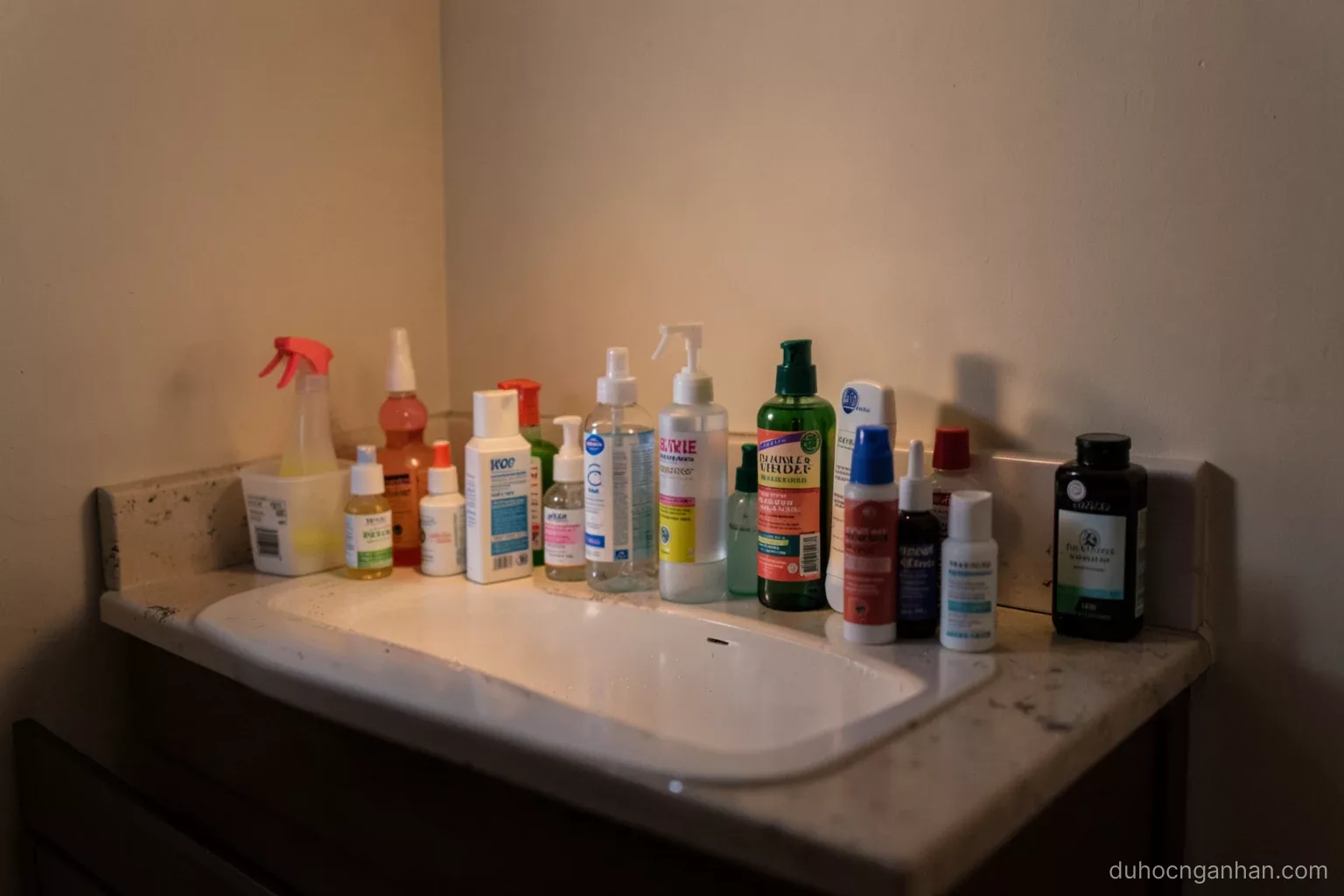
Your child's toiletries for camp should include a toothbrush, toothpaste, shampoo, shower gel, a bath towel and face cloth, a comb, nail clippers, sunscreen and mosquito repellent, plus personal items for girls going through puberty, all packed in a hanging wash bag. Most residential camps have a laundry service on set days of the week, so your child needs their own named laundry bag and every item of clothing labelled so nothing gets mixed up.
At home, personal hygiene and laundry are mostly handled or prompted by adults. At camp, your child does them alone in shared bathrooms, on a shared schedule, alongside friends from many countries. Packing the right things is half the job; the other half is practising the habits at home before departure.
The wash bag: a compact list
Daily items should cover the first week; the rest can be bought there. Travel sizes keep the suitcase light and are easy for your child to carry between the room and the bathroom.
- Teeth: a toothbrush with a cap, toothpaste, dental floss if your child uses it, a small plastic cup.
- Washing: shampoo, shower gel or soap in a case, conditioner for long hair; small bottles with screw caps that do not leak in the suitcase.
- Towels: one large bath towel, one face cloth and one small quick-dry towel for sport; ask whether the camp provides towels.
- Small care items: a comb, hair ties, nail clippers (in checked luggage), cotton buds, lip balm, moisturiser.
- Outdoor protection: sunscreen and mosquito repellent cream or spray; in the tropics these are daily items, not spares.
- For shared bathrooms: shower sandals, and a small hanging bag or caddy for carrying things from the room to the bathroom.
Unfamiliar scents of shampoo and shower gel abroad sometimes make young children more homesick. Bringing the exact products your child is used to, at least for the first week, is a small way to help them feel comfortable during those unfamiliar days. After the first week, your child can buy more at a supermarket near the camp on a weekend outing.
Shared bathrooms: what your child should know in advance
Many camp dormitories have rows of shared bathrooms, or one shower room per room shared by a few children. Peak shower times are after afternoon sport and before bed. Children used to long showers at home will need to practise being quicker so others get their turn. Some camps set evening shower times, after which the hot water is turned off or the bathrooms are locked.
Your child carries their toiletries in a bag or small caddy each time, there and back, and does not leave personal items in the shared shower. Their own shower sandals keep feet clean and prevent slipping. They take clean clothes into the shower cubicle so they can change in private rather than walking along the corridor in a towel.
Children going through puberty may feel shy about showering in the same area as others. Parents should ask beforehand whether the camp has private cubicles with doors, and tell their child that feeling shy is normal. If your child has particular privacy needs for health or cultural reasons, tell the camp at registration so arrangements can be made.
How camps do students' laundry
Laundry arrangements differ between camps. Asking in advance helps parents work out how many outfits to pack and prepare laundry bags properly.
| Laundry arrangement | Common at | What the family prepares |
|---|---|---|
| The camp collects clothes in bags, washes and returns them on schedule | Most residential camps for children | Two named mesh laundry bags, every item labelled |
| Students use shared washing machines themselves | Camps for older students, language schools for adults | Teach your child to use the washing machine at home, bring small sachets of detergent or buy locally |
| A separately charged laundry service | Some programmes that only cover board and lodging | Ask about prices and schedule, and add it to the money your child keeps |
| Underwear and socks washed by hand | Many camps encourage or require this | Small sachets of detergent, a hanging dryer, clothes pegs |
Shared laundry is usually washed in warm water and tumble-dried. Wool jumpers, clothes that shrink easily and colours that run should stay at home; clothes taken to camp should be able to stand machine washing and drying.
Sun and mosquito protection: daily tasks, not spares
At camps in the tropics, your child spends much more time outdoors than at home: walking between teaching buildings, afternoon sport, the beach, weekend excursions. Sunburn after the first swim is very common among children at their first camp, and can make them uncomfortable for a whole week. Applying sunscreen must become something your child does themselves before going outside, like brushing their teeth in the morning.
Choose a sunscreen your child has used at home without irritation, water-resistant if they swim a lot, and in a roll-on or stick form that is easy for children. Teach your child to reapply after swimming or sweating heavily. A wide-brimmed hat and a thin long-sleeved top reduce how often they need to remember the cream.
Mosquitoes in the tropics can carry diseases such as dengue fever, so mosquito protection is also a daily task, especially in the late afternoon and evening. A repellent cream or spray your child is used to, light long trousers when sitting outside in the evening, and the habit of closing the room's insect screens help prevent bites. If your child develops a fever a few days after many bites, the group leader and the camp need to take them to a doctor, not deal with it themselves.
Labelling clothes: a small job that saves a lot of belongings
In one laundry run, a camp may wash clothes for dozens of students. White T-shirts, sports shorts and black socks look so alike that even your child cannot tell them apart. Unlabelled clothes usually end up in the lost property box and stay there until the end of the course. Labelling every item is the only way to make sure things get back to their owner.
There are three common ways to label. A permanent fabric marker on the inside label: cheap and quick, but fades after many washes. Iron-on name labels: more durable and neat. Sewn-in name labels: the most durable, but time-consuming. For a trip of a few weeks, a marker or iron-on labels are enough. Write your child's full name, or first name plus the initial of the family name, because there may be another child with the same name.
Do not forget small items: socks, underwear, hats, towels, swimwear, jackets, laundry bags, bath towels. These go missing most often. Also label the sunscreen tube, water bottle and toothbrush case, because in a shared bathroom they are easily picked up by mistake. Do the labelling with your child, so they know which things are theirs.
Girls going through puberty at camp: talk first, prepare enough
For girls from around ten years old, periods may start or arrive in any week of the trip. A change of climate, routine and the stress of being away from home sometimes make a period come earlier or later than usual. If your daughter has not started yet, this is a good opportunity to talk beforehand, so that if it happens for the first time at camp she knows what it is and whom to go to.
Pack enough of the sanitary pads your daughter is used to for at least one period, with a small discreet pouch to carry in her backpack. Sanitary products are sold abroad, but the types, sizes and packaging may differ, and your daughter may feel too shy to ask to buy them. Add a few spare pairs of underwear, sealable plastic bags for temporarily holding soiled items, and wet wipes.
Tell your daughter the name of an adult she can go to: usually a female boarding supervisor, the camp nurse, or a female group leader if there is one. Parents can let the group leader know in advance so they can keep a discreet eye out. If your daughter often has bad period pain, ask a doctor before the trip how to manage it and note it on the camp's medical form. A short, calm conversation at home helps your daughter not to panic and not to hide it from adults at camp out of embarrassment.
Boys going through puberty need reminders too
Boys aged twelve to seventeen start sweating more, have more noticeable body odour and may start shaving. At home, parents remind them every day; at camp, it depends on their own habits and sometimes on a roommate's blunt comments. A roll-on deodorant, the habit of showering after sport and changing underwear every day help your son feel more confident living with others.
If your son already shaves, razors count as sharp objects and must go in checked luggage. An electric shaver is more compact and safer for teenagers. Trainers worn for days on end easily start to smell; a pair of replaceable insoles and the habit of airing shoes after practice are enough.
How you talk about it matters more than the list. Talk to your son as someone about to live independently for a few weeks, not as if reminding a little child. Teenagers respond better to practical reasons, such as a room for four with the air conditioning sealed in, than to a general "remember to keep clean".
Practise at home first: two weeks is enough
The things your child will do alone at camp should be practised at home for a few weeks beforehand: getting their wash things ready and taking them into the bathroom, putting dirty clothes in the laundry bag, folding clean clothes and putting them away, hand-washing underwear and socks, and remembering to apply sunscreen before going out. Each task is small, but only doing them consistently every day turns them into habits.
If the camp lets students use shared washing machines, teach your child to use the washing machine at home: separating whites from colours, adding detergent, choosing the programme, hanging or tumble-drying. Do not do it for your child during these two weeks, even if they are slow or do not get things quite clean. The aim is for your child not to struggle in front of friends at camp. Ruining one T-shirt at home is better than ruining a whole bag of clothes at camp.
Families who want to know the laundry schedule, bathroom arrangements and hygiene rules of a specific camp currently taking registrations can ask the Du Học Ngắn Hạn advisory team; the group leader usually has photos of the dormitory and bathrooms for parents and children to look at beforehand.
Frequently asked questions
Does the camp provide towels and bedding?
Most residential camps provide duvets, pillows and sheets; towels depend on the camp. Ask in advance whether you need to bring towels. Even if the camp provides them, it is still worth bringing a small quick-dry towel for sport and the beach, because the camp's towels are usually only for use in the room.
Should we bring laundry detergent?
Not if the camp does students' laundry. If your child hand-washes underwear and socks or uses shared washing machines, a few small sachets of powder or detergent pods are more convenient than a large bottle. Detergent can also be bought at supermarkets near the camp, so there is no need to bring much.
What if clothes go missing in the laundry?
Your child tells the boarding staff or the person in charge of laundry, describing the item and the name written on it. Camps usually have a lost property box or room. Labelled items are usually found; unlabelled ones are much harder. That is why labelling before departure is the best prevention.
If my daughter gets her first period at camp, will the camp help?
Most camps have female boarding staff or nurses who are used to handling this discreetly. What matters is that your daughter knows in advance what a period is, whom to go to, and has supplies ready in her backpack. Parents can let the group leader know in advance so they can keep an eye on her.
Should older students take perfume and cosmetics?
A small amount is fine if the camp does not ban it, but strong perfume in a shared room easily bothers others. Cosmetics should be small sizes in plastic bottles, kept in a sealed bag so they do not leak. Fragile glass items are best avoided, as suitcases often get knocked about.
What can parents do if their child is not washing regularly at camp?
Ask gently during a call and look for the reason: cold water, shyness about shared bathrooms, tiredness, or shower times clashing with something else. Talk to the group leader so the boarding staff can give a tactful reminder. Scolding from afar has little effect; solving the practical reason usually works better.