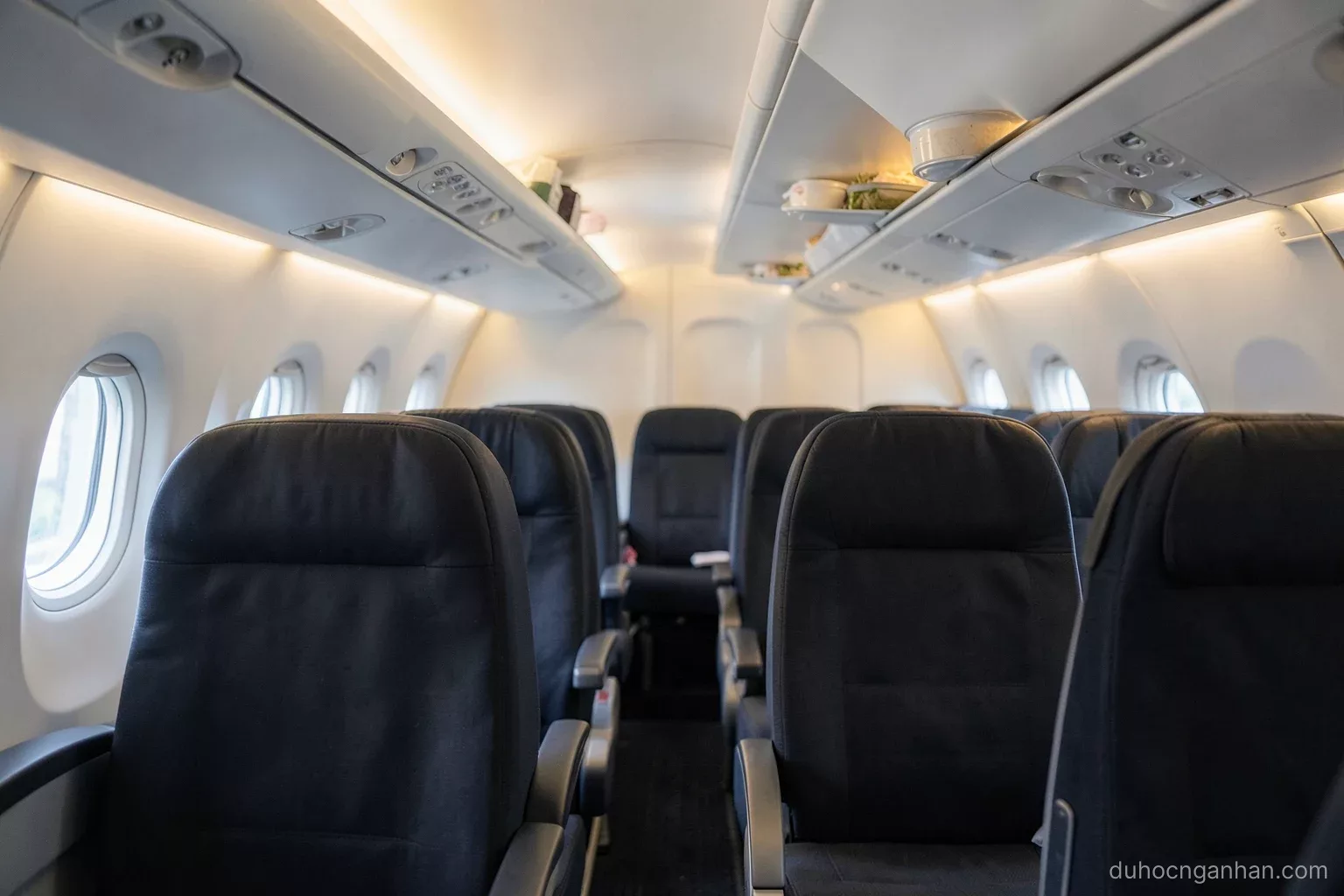
On a group's international flight, your child sits where the group leader has placed them, follows a few simple group rules (no swapping seats without asking, no leaving the seat while the seatbelt sign is on, tell an adult when feeling unwell), and the group leader checks on the children regularly. On a short route to Southeast Asian countries this means a few hours; on a route to Europe, North America or Australia it may be a whole night, sometimes two legs.
Most children fly without any trouble. The common issues are blocked ears during descent, air sickness, difficulty sleeping on overnight flights, losing things in the seat pocket and irregular eating. This article helps parents prepare their child before the flight so these things do not become a problem.
How the group arranges seating
At group check-in, the group leader usually tries to get the whole group seated as a block, or at least in pairs and threes next to each other. That is not always possible: the flight may be full, the airline may have allocated seats in advance, or the group may have booked in several batches. In that case, the group leader prioritises seating the youngest children near themselves and shy children next to a friend.
Accompanying adults usually choose aisle seats so they can get up and check on the children easily. A window seat is more fun for your child but harder to get in and out of; children who often need the toilet or get sick easily are better near the aisle. If your child has a particular need like this, tell the group leader before the flight, not at the counter.
Tell your child not to swap seats with a friend without asking the group leader. Swapping sounds harmless, but the seating list is what the group leader and cabin crew use to find a child when needed, especially when a child is unwell or when a special meal is being served to a child with allergies.
Four rules on board parents should teach their child at home
Listen to the cabin crew first, then the group leader. On a plane, the cabin crew have the final say on safety. When the seatbelt sign is on, your child stays seated even if they want to go to the toilet or over to a friend.
Do not leave the group's seating area except to go to the toilet. Wide-body planes have several cabins; wandering into another cabin is not dangerous, but it means the group leader has to go looking.
Report straight away when something is wrong. Ear pain, nausea, stomach ache, fever, difficulty breathing: tell the group leader or press the call button for the cabin crew. Many children are too shy and put up with it until landing, when it is harder to deal with.
Keep belongings within reach. The passport if your child holds it, the phone and headphones go in a pouch worn on the body, not in the seat pocket. Things left in the seat pocket are the items most often forgotten on landing.
Blocked and painful ears during descent
As the plane descends, the pressure in the cabin gradually increases; your child's middle ear needs to equalise pressure through the Eustachian tube, a small tube connecting the ear to the throat. If the tube does not open in time, your child feels blocked, painful and muffled. Adults usually deal with this by swallowing or yawning; children, especially when asleep, often forget.
The simplest remedy: have your child chew gum, suck a sweet or sip water when the plane starts its descent, usually about thirty to forty minutes before touchdown. Tell your child to wake up or ask the friend next to them to wake them at that point. Yawning and swallowing several times also help.
If your child has a runny or blocked nose or an ear infection before the flight, equalising pressure is harder and more painful. Take your child to a doctor a few days before the flight and ask whether any medicine is advisable. Do not give your child nasal drops or decongestants unless a doctor has advised it.
The blocked feeling usually goes a while after landing. If your child has severe ear pain, discharge from the ear, or reduced hearing lasting into the next day, the group leader should take them to a doctor at the destination.
Air sickness: prevention and dealing with it on the way
Air sickness is less common than car sickness, but it happens. Children who have been car sick on long journeys or seasick are more likely to get air sick, especially in turbulence. When choosing seats, seats near the wings usually shake less than those at the back. Give your child a light meal before the flight, not an empty stomach but not too full either, and avoid fatty food.
If your child's doctor has prescribed travel sickness medicine before, ask the doctor whether it can be used for the flight and what dose suits your child's weight; tell the group leader the name of the medicine and the time your child took it. Never give your child adult medicine on your own initiative.
On the plane, when they start to feel unwell, your child should look straight ahead, avoid reading or looking at a phone, loosen their clothes, breathe slowly and sip water. Sick bags are in the seat pocket; tell your child not to be embarrassed about using one, and to tell the cabin crew so they can help clean up and bring more water.
Day flight or night flight: what your child should do
The group's flight schedule is usually fixed at booking. Knowing in advance whether the group's flight is during the day or overnight helps your child prepare properly.
| Type of flight | Your child should | Your child should avoid | The group leader's job |
|---|---|---|---|
| Short daytime leg (a few hours) | Eat and drink normally, get up and walk around once | Being fast asleep just as the descent starts | Headcount before leaving the plane |
| Short night leg, arriving late | Nap after the meal, wear long sleeves | Watching the phone the whole flight | Gather the group quickly on landing, update parents |
| Long overnight leg | Sleep according to destination time if possible, drink water regularly, move their legs | Fizzy drinks, coffee, strong tea | Check on the children every few hours |
| With a transit in the middle of the night | Wear comfortable clothes for walking through the airport, keep a jacket handy | Falling asleep on a waiting seat without telling the group leader | Headcount at every gate, keep the group in one place |
On long flights, layered clothing, warm socks and a neck pillow are enough for your child to sleep for a few hours. Do not expect them to sleep straight through; children sleeping fitfully on planes is perfectly normal.
Eating, drinking and moving on a long flight
Cabin air is dry, and children easily become thirsty and tired without noticing. Tell your child to drink water regularly and take a cup every time the cabin crew come past. Pack an empty bottle in the cabin bag and fill it after security. Limit fizzy drinks and caffeinated drinks: they make it harder to sleep, cause bloating as the pressure changes, and mean more trips to the toilet at a time when the seatbelt sign can come on at any moment.
If your child has a food allergy or is vegetarian, a special meal must be ordered in advance according to the airline's rules; ask the organiser to do this when booking and confirm it again at the group meeting. Even if it has been ordered, pack safe dry food for your child in case the meal is wrong or runs out.
On long legs, your child should get up every few hours, walk to the back of the cabin and back, and stretch their legs and rotate their ankles while sitting. Sitting still for a long time makes legs swell and the body ache on landing. The group leader reminds the whole group to do it together, which is fun and means nobody feels self-conscious.
When a child in the group is unwell on the plane
Most group flights pass without anything notable happening. But with twenty children on a long flight, one having a slight fever, a stomach ache or vomiting is not unusual. In that case the group leader tells the cabin crew first. Cabin crew are trained in first aid, have a basic medical kit on board and know how to ask whether there is medical staff among the passengers when needed.
The group leader will sit with that child for a while and note when they started feeling unwell, what they ate and what medicine they took. These notes help if the child needs to see a doctor on arrival. Your child's own medicines sent by the family, with the doctor's instructions, are the first thing the group leader will use; so write the medicine name, dose and when to use it clearly.
Parents usually only hear about it after the plane lands. A skilled group leader will tell that child's family privately, explaining clearly how the child is and what the next step is, and will not post anything in the shared chat before telling the family privately.
The last minutes before leaving the plane
Once the plane has come to a stop, the whole cabin usually stands up at once, opens the overhead lockers and crowds into the aisle. This is when the group is most likely to scatter. The group leader usually tells the children to stay seated until called, check the seat pocket, under the seat and the overhead locker, and only then leave in their small groups.
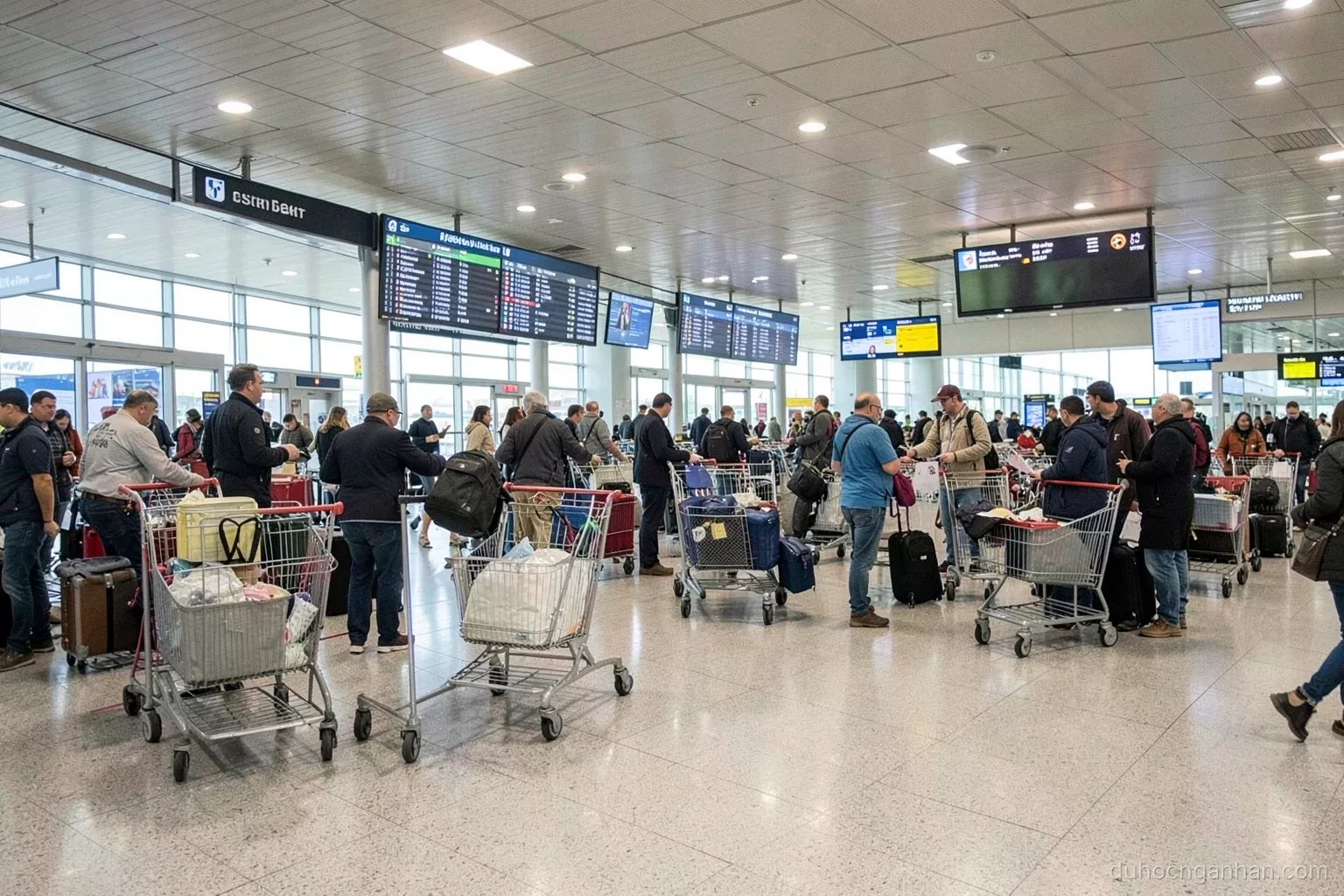
Right at the aircraft door or the end of the jet bridge, the group stops for the first headcount at the destination. Your child needs to know: if they get out ahead of their group, they wait just past the end of the jet bridge and do not follow the crowd towards baggage reclaim. Large airports have many turnings; a child a few minutes ahead can become separated from the group very quickly.
This is also when your child turns their phone back on. Tell them to send you a short message, then put the phone away and listen to the group leader. Long messages, photos and calls can wait until the group is out of the arrivals area.
Younger and older children on the same flight
A group may include children aged from eight to seventeen. Younger children need more attention from adults: reminders to eat and drink, help opening the meal tray, being taken to the toilet during turbulence. Older children need more trust, looking after their own things and sometimes being asked to keep an eye on a younger child sitting next to them.
Many group leaders pair them up: an older child sits near one or two younger ones and gives gentle reminders. This works when the older child is asked first and agrees, rather than having it imposed. Parents of older children should talk to them about this role beforehand; many feel proud to be given it.
Conversely, if your younger child is very shy, tell the group leader so they can sit next to a familiar friend or near an adult, rather than between two strangers on an overnight flight.
Frequently asked questions
My child is flying for the first time. Do they need any special preparation?
Tell your child what happens: take-off is noisy and you feel pressed into your seat, there are bumpy moments, and ears may feel blocked on landing. Knowing in advance that these feelings are normal helps your child feel less afraid. You can watch a video of a flight together.
What if there is strong turbulence and my child panics?
Tell your child to fasten their seatbelt whenever seated, even when the sign is off. Turbulence is common and planes are designed to withstand it. Your child can hold the hand of the friend next to them, breathe slowly, and tell the group leader if they are still scared.
Can my child use their phone on the plane?
According to the airline's rules, usually in flight mode. Many flights have paid wifi; groups usually have a rule against buying it so children can rest. Download films, books and music before the flight and remember to charge the phone fully.
What if my child has a nosebleed on the plane?
Dry air can cause nosebleeds in some children. Your child should sit upright, lean slightly forward, pinch the soft part of the nose firmly for a few minutes and tell the cabin crew. If your child gets them often, tell the group leader in advance and ask a doctor how to prevent them.
Will the group leader sit next to my child for the whole flight?
They usually cannot sit next to every child. The group leader chooses a seat with a view of the group's block of seats and checks on the children regularly. Your child needs to know where the group leader is sitting so they can go to them when needed.
What if my child leaves something on the plane?
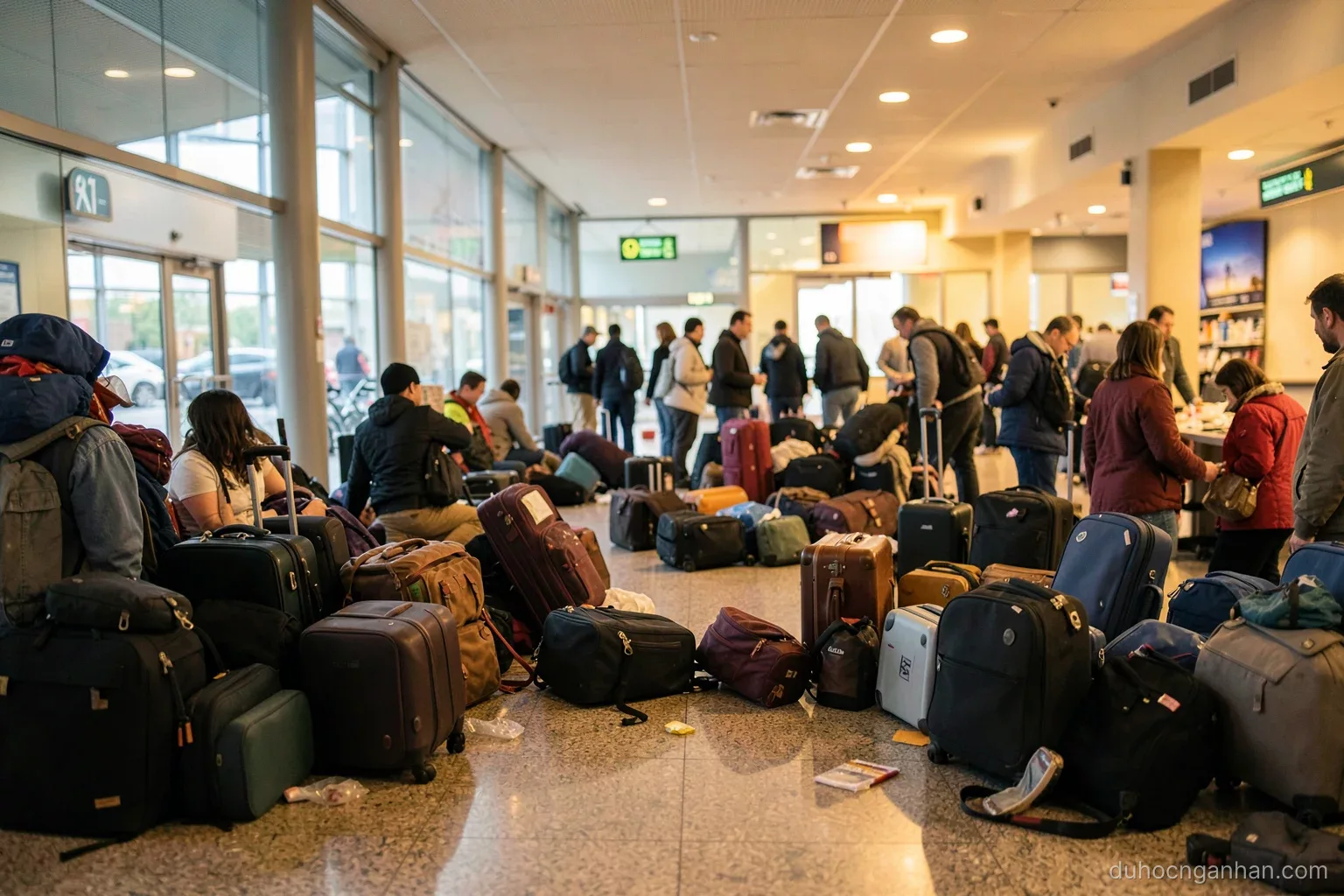
Tell the group leader straight away while still at the aircraft door or in the baggage hall. Once you have left the airport, finding it has to go through the airline's lost property desk, which takes a long time and is not guaranteed, so it is best to check the seat before standing up.