At a residential English camp in the Philippines, your child is surrounded by several layers of adults with their own roles: classroom teachers, academic staff, dormitory managers who supervise outside lessons and at night, the group leader travelling from Vietnam if your child goes with a group, medical staff, sports coaches, security guards and canteen staff. Knowing who does what helps your child find the right person when needed, and helps parents know whom to ask when they are worried.
Many small incidents at camp drag on simply because the child does not know whom to tell: telling a classroom teacher about lost belongings, telling a roommate about being teased, putting up with a stomach ache all night because they do not know whose door to knock on. This article draws a map of the adults around your child, how to address them, and the safety boundaries a good camp always keeps.
A map of the adults at camp
Names and the division of tasks differ from camp to camp, but the roles below are present at almost every residential camp for pupils. The table also suggests whom your child should look for in each kind of situation:
| Person | What they do | When your child should look for them |
|---|---|---|
| Classroom teacher | Teaches group and one-to-one lessons, marks work, gives feedback | Not understanding the lesson, wanting to ask more, finding the class too hard or too easy |
| Academic staff | Class placement, timetables, changing teachers, learning reports | Wanting to change class or teacher, asking about tests |
| Dormitory manager, night staff | Supervise the children outside lessons, evening roll call, enforce room rules | Problems with roommates, lost belongings, sleeplessness, homesickness at night |
| Vietnamese group leader | Travels with the group, links with parents, gives support in Vietnamese | Things that are hard to say in English, things your child wants to tell their parents |
| Medical staff | First aid, giving medicine according to the file, monitoring when ill, taking pupils to a doctor | Feeling unwell, being hurt, needing to take personal medicine |
| Coaches, activity staff | Run sports sessions, activities and outings | Getting hurt while playing, being scared of an activity, getting separated on an outing |
| Security, canteen and cleaning staff | Guard the gate, cook, clean | Asking the way on campus, asking about food, reporting something broken |
Show your child this table before leaving, and once your child is at camp, ask them the real names of the people in the important roles. If your child can tell you the name of the night staff and the name of the person in charge of medical care, they have the map in their head.
Filipino teachers: close, but with a limited role
English teachers at schools in the Philippines are usually young, enthusiastic and used to working with Asian pupils. In one-to-one lessons, your child sits opposite one teacher every day, so they often become close quickly, talking about home and friends. Many children still mention the name of their favourite teacher after coming home.
That closeness is a strength, but your child should also understand the limits of the role. Teachers look after learning during lessons. What happens in the dormitory, health matters and asking permission to go out belong to other people. When your child tells a teacher about something serious, a good teacher will pass it on to the right person, but if your child goes straight to the right person, things are dealt with faster.
Outside lessons, many schools have rules that teachers must not contact pupils privately through personal social media accounts or meet pupils alone outside shared areas. Those rules protect both sides. If a teacher wants to become friends privately or message your child privately, your child should tell the group leader or the person in charge.
Dormitory managers and night staff
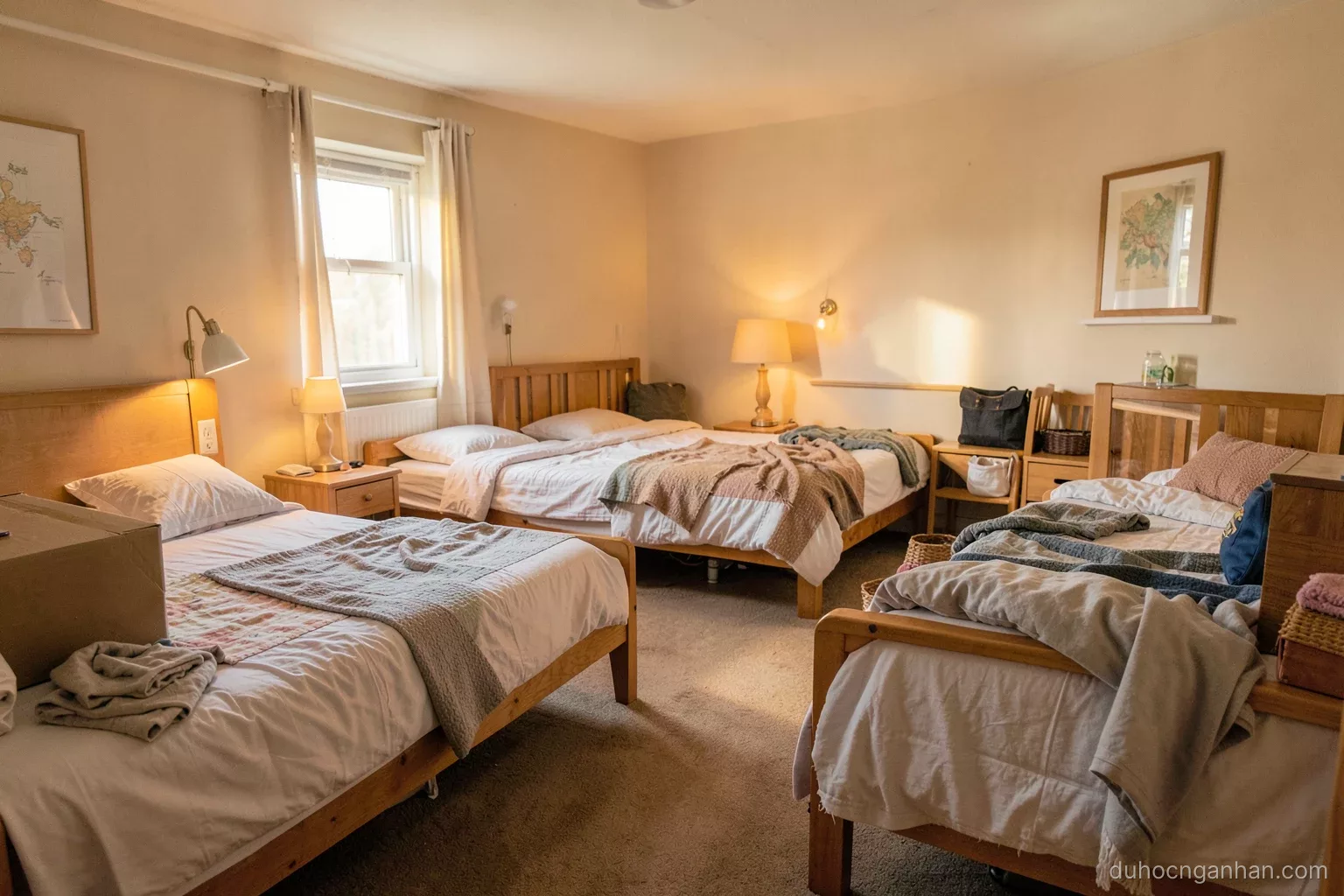
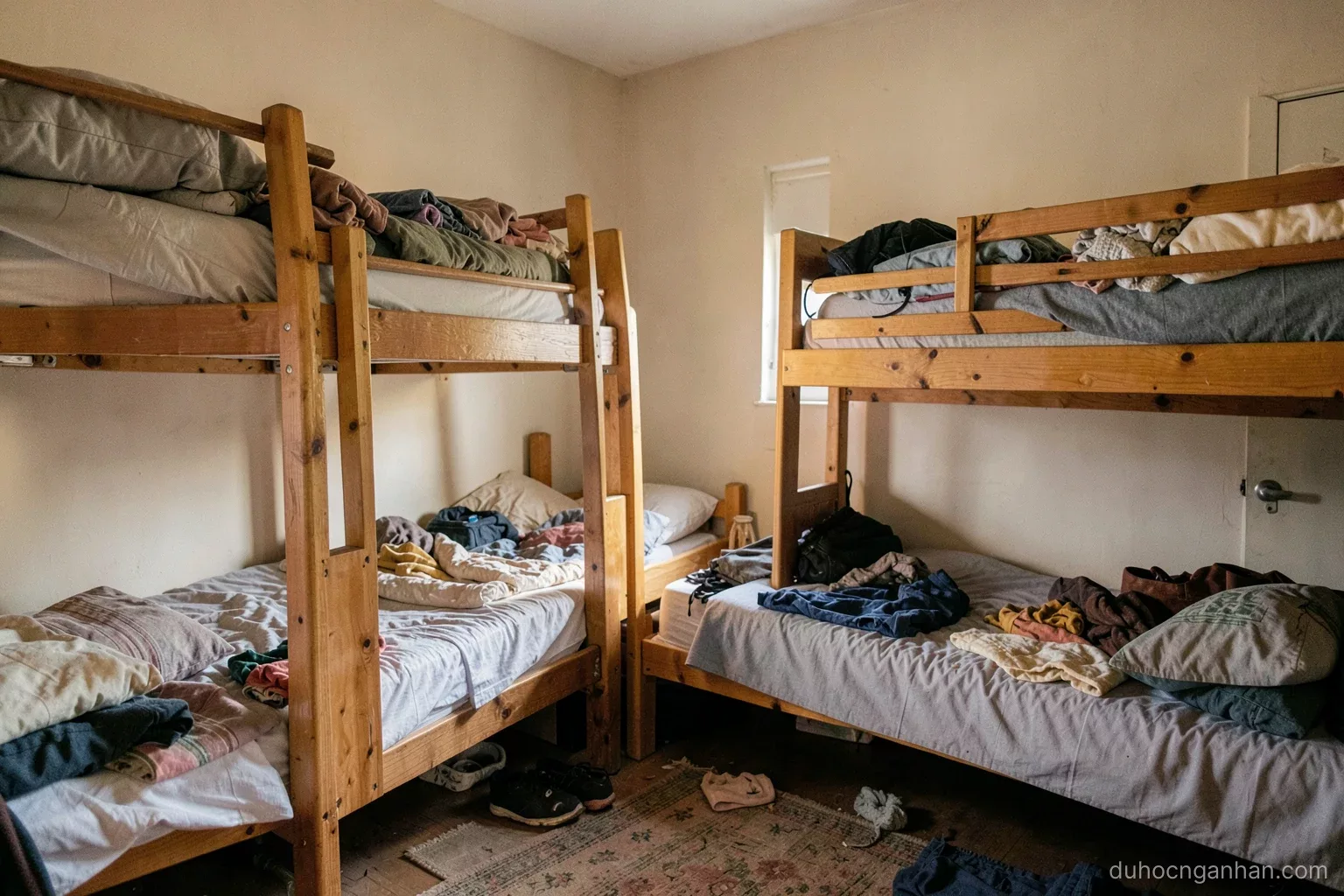
The person your child sees most outside lessons is the dormitory manager — some camps call them a house parent, dorm manager or floor supervisor. This person takes the evening roll call, checks rooms after lights out, reminds the children of timings, sorts out problems between roommates and keeps the spare keys. At night, this is the adult closest to your child.
That is why the most important question parents should ask about a camp is: who is in the building with the children at night, in which room, and how do the children call that person? A good camp answers clearly: which room on which floor the night staff sleep in, whether there is a bell or an internal phone number, and who takes over when the night staff have to leave.
At some camps, the dormitory manager shares the nationality of the largest group of pupils, for example Korean, with additional managers for each other nationality group. If the Vietnamese group is large enough, there may be a Vietnamese speaker on duty in the dormitory; if not, the group leader plays that role. Ask in advance so you know whom your child should call if they need to speak Vietnamese at night.
The Vietnamese group leader: what they do and do not do
They are a bridge. The group leader passes information between the camp and the parents, explains the rules to the children in Vietnamese, and reports when a child is ill or something happens. They are also the person the children go to with things that are hard to say in English.
They cannot replace the camp's duty staff. A group leader travelling with many pupils cannot be beside each child day and night. Supervising the children on campus is still mainly the job of the camp staff. The group leader adds to that; they do not replace it.
They do not make decisions on the camp's behalf. Changing classes, changing rooms and dealing with breaches of the rules are the camp's responsibility. The group leader suggests, explains and accompanies, but cannot grant your child exceptions on their own.
They are the first person parents ask. When worried, parents message the group leader first. They know how your child looked today, and know whom in the camp to pass the question on to.
Their working hours need to be respected. Group leaders need to sleep too. Non-urgent questions should be gathered and sent in the agreed time slot; the emergency number is kept for real emergencies.
Safety boundaries a good camp always keeps
Organisations working with children usually have a child protection policy, setting boundaries between adults and children. Below are common boundaries; parents should ask whether the camp has a written policy and talk with their child about them:
- Adults are not alone with a single pupil in a closed room; when a private conversation is needed, it takes place where others can see.
- Staff have their backgrounds checked before working with children, according to the rules where the camp operates.
- Adults do not contact pupils privately through personal social media accounts.
- Adults do not give individual gifts or keep personal secrets with a pupil.
- Male staff do not enter the girls' dormitory and vice versa, except in emergencies following a procedure.
- There is a channel for pupils to report behaviour that makes them uncomfortable, including behaviour by adults.
Tell your child in simple words: no adult at camp is allowed to ask you to keep secrets from your parents, and if anyone makes you feel uncomfortable, you are allowed to tell — to tell many times — any adult you trust.
How to address adults at camp
In the Philippines, pupils usually call teachers "Teacher" followed by their first name, for example "Teacher Ana", unlike the surname-based forms used in many other English-speaking countries. Service staff, security guards and drivers are usually addressed politely as "Sir" or "Ma'am", forms of address that are very common in everyday life there. Young staff often call each other "Kuya" for an older brother and "Ate" for an older sister, and many children pick this up very quickly.
Knowing how to address people helps your child start a conversation more easily. A ten-year-old standing in front of an unfamiliar adult, not knowing what to call them, usually chooses silence. Teach your child a few forms of address and an opening line in advance, such as "Excuse me, Ma'am, can you help me?", and they have a way in.
Filipinos generally value politeness towards elders. A child who greets people, says thank you and asks permission before doing something will be liked, and will also find it easier to get help when needed.
When parents are worried: whom to ask, and in what order
Parents far away tend to ask everyone at once: messaging their child, the group leader, calling the organiser's office in Vietnam, even messaging other parents. Information arrives from many directions, each with a fragment, which can easily make the worry bigger than the reality. A clear order makes everything simpler.
For everyday matters such as your child feeling sad, eating little or being upset with a friend, the first point of contact is the group leader. They are near your child, can see your child, and can answer the same day. If there is no group leader, the point of contact is the camp's international student coordinator through the channel you were given.
For academic matters such as class placement, teachers and reports, the group leader passes the question to the academic staff. For health matters, the group leader and the medical staff report together, with information on where your child was seen and what medicine they are taking.
Only when you cannot reach anyone for an unusually long time, or when something serious seems not to have been handled properly, should parents go higher: the organiser's office or the camp's management. Write down the times and content of each exchange so the situation can be explained clearly.
Practise finding the right person before leaving
A short game at home helps your child remember the map of adults better than any amount of advice. Parents describe a situation, and your child says whom they would look for and what they would say:
- In the middle of the night you have a stomach ache, and your roommate is asleep.
- You do not understand the lesson in your one-to-one class; the teacher is talking too fast.
- An older pupil has taken your snacks two days in a row.
- You get separated from your group at the shopping centre on the Saturday outing.
- You miss home terribly and want to talk to someone in Vietnamese.
- An adult at camp messages you privately and tells you not to tell anyone.
The answers do not need to be perfect; what parents want to hear is that your child has the name of a person to look for and believes they are allowed to look for them. For the last situation, the only right answer is to tell the group leader straight away or call home to their parents.
Frequently asked questions
Are the teachers at English camps in the Philippines native speakers?
Most are Filipinos who speak English fluently and are trained by the school to teach foreign students. Some schools also have teachers from native English-speaking countries for a few classes. Ask the school specifically if this matters to your family.
How many pupils does one manager look after?
Each camp has its own ratio, which differs between lessons, bedtime and outings. Ask for the specific figure for each time of day, especially at night and when going out. A clear answer matters more than the number itself.
Should my child go to a camp without a Vietnamese group leader?
Older children who are used to being away from home and speak English fairly well can still go, if the camp has night staff and a clear channel of contact with parents. Young children, or those away from home for the first time, usually find it easier with a Vietnamese speaker beside them.
How can I know whether camp staff have had background checks?
Ask whether the camp has a written child protection policy and which rules staff background checks follow. A camp that takes working with minors seriously will answer this question without hesitation.
What if my child is too shy to talk to adults?
Practise a few opening lines at home, tell your child the name of the person to look for, and remind them they can bring a friend along when going to see an adult. Tell the group leader in advance that your child is shy so they take the initiative to check in.
Can parents contact their child's teacher directly?
Parents usually make contact through the group leader or the academic staff, not directly with the teacher. This keeps information going through the right channel. If you want to discuss your child's learning, ask through that point of contact to arrange it.