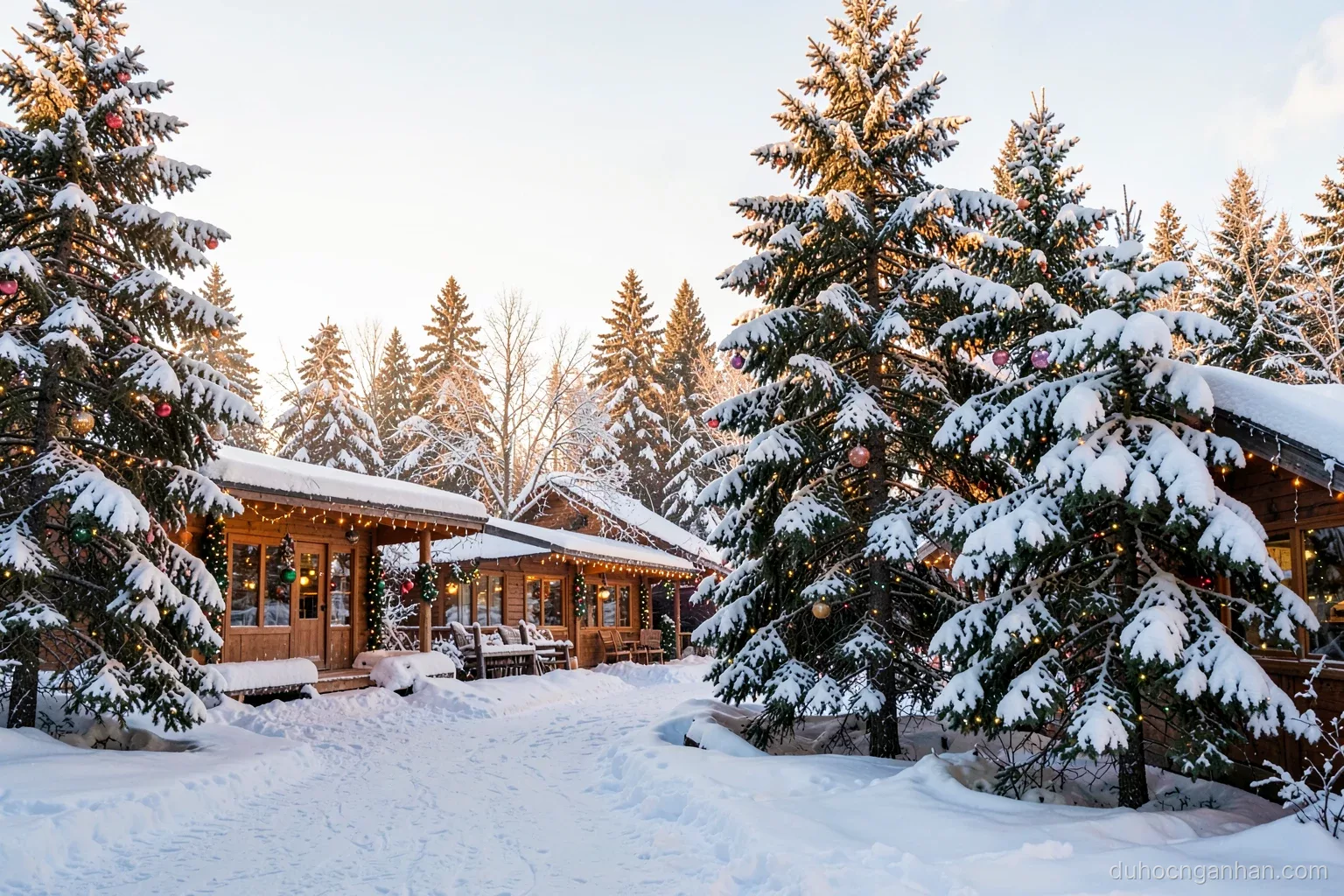
December to February is the most pleasant time of year to study in most of the Philippines: the northeast monsoon brings drier and cooler air, and rain eases in many areas, but this is also the country's longest festive season and the season when Korean and Japanese pupils come to study. These three factors together shape a winter camp season: favourable weather, a class schedule with a few public holidays, and busier classes with a different nationality mix from summer.
This page does not repeat the mid-year rainy and typhoon season, and focuses only on what is specific to the last months of the year and the first months of the next: what the weather is really like by region, how the festive season affects the class schedule and daily life, who your child's classmates will be, and what families need to prepare differently from a summer trip. Official weather information for the Philippines is published by the meteorological agency PAGASA; check its forecasts before travelling.
The northeast monsoon and the real weather
Filipinos call the northeast monsoon the amihan. The meteorological agency PAGASA usually declares the start of this monsoon around October or November, and it lasts until around February or March. The monsoon brings cooler, drier air down from the north, so in these months the Luzon region, where many language schools take young pupils, usually has pleasant weather: warm and sunny by day, cool in the early morning and evening, with lower humidity than in the middle of the year.
Cool here means by tropical standards. In the lowlands, daytime temperatures can still be close to thirty degrees; early mornings and nights are more pleasant, and air-conditioned rooms can sometimes feel cold. In the highlands such as Baguio, early mornings in January can be quite cold and real warm clothes are needed. The eastern coasts of the islands face the northeast wind directly and still get rain in this season, while the west is drier.
The main typhoon season in the Philippines is mid-year, but storms still pass through in November and December, mainly in the central and southern regions. The probability is lower than in the main season, but not zero. Asking the school about its procedure when there is a typhoon warning is worth doing whichever month you go.
Asia's longest festive season and the class schedule
The Philippines is famous for celebrating Christmas early and long: decorations, festive music and fairs can appear from September. The festive season peaks at the end of December, with Christmas, Rizal Day on 30 December, New Year's Eve and New Year. Some days around then are usually declared special non-working days by the government. The list of holidays is issued every year, so the specific dates must be checked for the year you go.
For residential language schools, the festive season usually means a few study days are replaced by special activities, or made up on other days. Many schools hold an end-of-year party, a talent night, or a gift exchange between students. For pupils, it is usually a happy memory. For parents, what you need to know is that the total number of study hours in the session may be lower than in a session of the same length in summer.
Outside the school, the festive season makes shopping centres, airports and streets much more crowded. Weekend excursions may be rescheduled because of traffic jams. On New Year's Eve in the Philippines there is a custom of setting off firecrackers and fireworks; the country's health authorities monitor firework-related injuries around the New Year every year. A camp with good supervisors will keep the children on campus that night, but it is still worth asking in advance.
How winter differs from summer at an English camp in the Philippines
At the same school, your child's experience can differ between the two seasons. The table below shows general tendencies, not rules for every school:
| Aspect | December to February | June to August |
|---|---|---|
| Weather in Luzon | Dry, cooler, little rain in many areas | Rainy season, southwest monsoon, typhoons |
| Outdoor activities | Favourable, rarely cancelled because of weather | Often have to move indoors |
| Number of students | Usually busy, coinciding with the winter break in Korea, Japan and Taiwan | Busy at the peak of other countries' summer |
| Nationality mix | A high share of Northeast Asian pupils | More varied, with more Vietnamese and Middle Eastern pupils |
| Public holidays in the session | Many: Christmas, Rizal Day, New Year | Few major holidays |
| Fit with the Vietnamese calendar | Needs time off school or combining with Tết | Coincides with the summer holiday, easy to fit |
Reading this table alongside your child's holidays shows why many Vietnamese families choose summer over winter for a first trip, even though the winter weather is more pleasant. For families whose children attend international schools with a Christmas break, winter is a very natural choice.
Winter classmates: the good side and what to ask
Korean and Japanese pupils are usually numerous. The long winter break of Korean pupils lasts until about February, and the Philippines is a familiar destination for English study for many Korean families. Japanese pupils go for shorter periods, around the New Year. The result is that many winter classes have a high share of Northeast Asian pupils.
The good side. Your child meets friends with disciplined study habits who are used to a busy timetable. Communication between the children has to be in English because they do not share a mother tongue, unless there are too many pupils from one country in the class. Many parents say their child came home having picked up a few phrases of Korean and kept in touch with friends for a long time.
What to ask. If one nationality makes up most of a class, those pupils easily speak their mother tongue together outside lessons, and your child may be left out. Ask the school how dormitory rooms are assigned, whether there is a rule on speaking English on campus, and whether there is a system for mixing groups during activities.
The age gap. Winter is also when many university students and working adults come to study. A good school keeps the area and classes for pupils under eighteen separate. This is a compulsory question for any programme that accepts minors.
Preparation specific to a winter session
Compared with a summer trip, a winter session has a few small differences in luggage and documents:
- An extra thin jacket or sweatshirt for early mornings and air-conditioned rooms; if the programme includes a trip to the highlands, a proper warm jacket too.
- Long-sleeved nightwear; many dormitories set the air conditioning quite cold.
- A few small Vietnamese gifts for the end-of-year gift exchange, if the school holds one.
- Check that year's list of Philippine public holidays to know which days there are no classes and what replaces them.
- For children under fifteen travelling without their parents, check the Philippines' entry requirements for minors through the country's immigration authority or the organiser, as the requirements may change from year to year.
- If the trip is close to Tết, prepare your child emotionally for seeing in the Lunar New Year away from home.
This list adds to the usual packing; it does not replace it. The general items — personal belongings, medicine, money and phone — still need to be prepared as for any trip.
Weekends in the dry season: common activities and what to tell your child
Residential camps in the Philippines usually set aside weekends for off-campus activities, and the dry season is when these are least often cancelled. Common outings are beach trips, visits to nature reserves, gentle hill walks, craft villages, or an afternoon at a shopping centre. In Central Luzon, many camps organise trips to the beaches on the west coast, where the sea is usually calmer in this season than mid-year.
A calm sea does not mean absolute safety. The dry-season sun is still fierce at midday, and children playing in the water very easily forget to reapply sunscreen and drink water. Ask the school about the ratio of supervisors in the water, whether there are buoyancy aids, and whether the children may swim outside the designated area.
Shopping centres are packed in the festive season. For a group of pupils going together, this is where getting lost is most likely. Experienced camps divide the children into small groups with one adult in charge, set a specific meeting point and time, and require the children to carry a card with the camp's name and the supervisor's phone number. Parents should also tell their child: don't carry too much cash, keep your phone in a closed pocket, and don't go off alone, even just to the toilet.
Finally, shopping. The festive season has many sales, and children away for the first time easily spend all their pocket money in the first week. Agreeing a weekly spending limit with your child in advance, and how to keep the money, is a small lesson in self-management that a winter trip teaches very naturally.
Choosing a week within the winter
Within the three winter months, there are three periods of quite different character. Early December is before the peak festive season: classes are not too full yet and the weather is already cool. Mid-December to early January is the height of the festive season, with many fun activities but also many days off and crowds. Mid-January to February is when classes have the most Northeast Asian pupils and the rhythm of study returns to normal.
For families who want their child to get the most study hours, the third period is usually sensible, if it can be fitted with the Tết holiday or an international school's break. For families who want their child to have a fun, low-pressure experience, the second period has many special activities. The first period suits pupils at international schools whose holidays start early, or families who want to avoid the peak.
Whichever period you choose, the final question is still supervision: who looks after the children in the evenings, at weekends and on public holidays? Winter has many public holidays, which means many days without lessons, and those are exactly the days when supervisors matter most. For the next session and the specific supervisors this season, families can ask the site's advisers directly.
Frequently asked questions
Are there typhoons in the Philippines in January?
January is outside the main typhoon season, and the chance of a typhoon is much lower than mid-year. Even so, in some years late tropical depressions or typhoons affect the central and southern regions. Follow the forecasts of the meteorological agency PAGASA and ask the school about its procedure when a warning is issued.
Do English camps in the Philippines close over Christmas?
Many schools stay open during the festive season but close or change their schedule on the main holidays such as Christmas, Rizal Day and New Year. Some schools hold activities instead of lessons. The specific schedule varies, so ask the school how many actual study days there are in your child's session.
Does my child need warm clothes for winter in the Philippines?
In the lowlands, your child only needs summer clothes plus one or two thin jackets for early mornings and air-conditioned rooms. If the programme includes a trip to the highlands such as Baguio, a proper warm jacket is needed because early mornings can be quite cold. Long-sleeved nightwear is also worth packing.
Is a winter class with many Korean pupils a good or bad thing?
Neither in itself. Your child gets the chance to study with hard-working friends and has to use English to communicate. What to avoid is a class with so many pupils from one country that they speak their mother tongue together. Ask the school how classes and rooms are assigned and what the language rules on campus are.
Is it safe to go to the Philippines over New Year?
Generally yes, if the camp has supervisors and keeps the children on campus on New Year's Eve. The main risks at this time are firecrackers, crowds and traffic jams. Ask the school about its specific plan for New Year's Eve and the holidays, and tell your child not to go out on their own without an adult's permission.
Should we choose a winter camp in the Philippines instead of a summer camp?
If your child's holidays allow it, winter has more pleasant weather and outdoor activities are cancelled less often. In return, there are more public holidays and a different class make-up. State school pupils usually find it harder to fit a winter session into their calendar; pupils at international schools with a Christmas break find it easier.