Most children skiing for the first time at a winter camp learn the basic steps on the beginners' slope after one or two sessions, as long as they learn with an instructor, wear a helmet, dress properly and do not go onto harder runs on their own. The most common injuries are sprains and knocks from falling; serious cases are rarer and are mostly linked to speed, collisions or going outside the permitted area. Knowing this in advance helps parents ask the right questions and helps your child enjoy the snow instead of fearing it.
This article is for families considering a winter camp with snow activities in South Korea, Japan or Europe. It covers how a children's ski lesson usually goes, protective gear, the risks specific to snow, insurance, and the questions to send the organiser. It is not a guide to ski technique; technique is the instructor's job on the spot.
How a beginners' ski lesson works
At ski resorts with lessons for children, the first session usually starts on flat ground: getting used to stiff, heavy ski boots, practising walking, and practising getting up after a fall. Then the children go up a very gentle beginners' slope, usually with a conveyor belt instead of a chairlift, and practise slowing down and stopping by bringing the ski tips together. Most of the first session is falling and getting up again, which is completely normal.
Children's lessons are usually divided into small groups by age and level, each with an instructor. In South Korea and Japan, large ski resorts have instructors who teach in English, but not always; many groups bring an interpreter or choose lessons just for their group. Asking about the teaching language in advance keeps your child from feeling lost in the first lesson.
A sensible programme for beginners is usually two to four ski sessions, none of them too long, alternating with other activities. Skiing is more tiring than children expect: heavy boots, cold weather, lots of falls. A tired child is a child more likely to get hurt. An itinerary that has children skiing from morning to afternoon on the very first day is a signal to ask again.
Minimum protective gear and clothing
Most specialist equipment can be hired at the ski resort; there is no need to buy it. The minimum list for a ski session:
- Ski helmet: many ski resorts strongly recommend or require one for children. The helmet must fit the head and have the strap fastened securely.
- Ski goggles: protect the eyes from wind, flying snow and reflected sunlight.
- A waterproof ski suit: usually available to hire; underneath, wear a thermal base layer and a warm middle layer.
- Waterproof gloves: wool gloves get wet quickly in the snow, so use specialist gloves.
- Thick, long socks: one pair, not two pairs on top of each other, which makes boots tight and feet colder.
- A neck tube: instead of a long scarf, which can get caught in equipment.
- Sunscreen and lip balm: sun on the snow is stronger than children think.
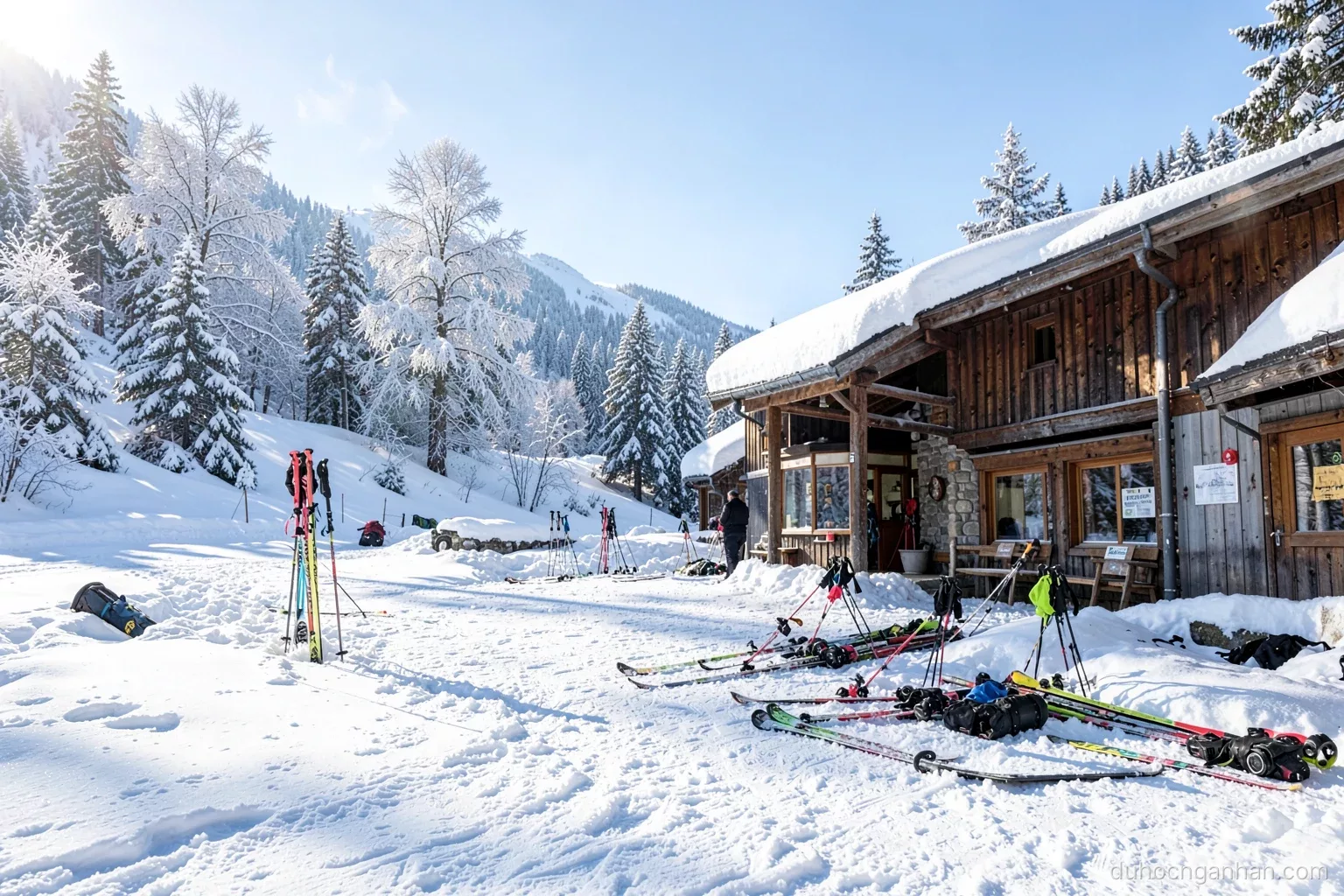
- Ski boots and skis: hired on the spot, with staff adjusting them to your child's weight and level.
If hiring equipment, ask in advance which sizes and weights need to be declared. Ski boots that do not fit are a common reason for children's feet hurting and giving up after the first session.
Risks specific to snow
Reflected sunlight. Snow reflects most ultraviolet light, and at high altitude UV is even stronger. A child who skis for a whole session without goggles may have sore, watering eyes and blurred vision by the end of the day; facial skin can get sunburned even in the cold. Goggles and sunscreen are essential, not optional extras.
Falls and collisions. Most injuries in children are sprained wrists and knees and bumps. The risk is higher when children ski too fast, ski on runs unsuited to their level, or collide with other people. The basic rules: ski within your ability to control yourself, the person below you on the slope has priority, and stop at the edge of the run, not in the middle.
Cold and wet. Frequent falls cover clothes in snow; if the clothes are not waterproof, children get wet and cold quickly. Fingers, toes, ears and cheeks are the places to watch. A break in a warm room partway through the session helps children recover.
Going outside the permitted area. Ski resorts have clear boundaries. Beyond them is snow that has not been checked, which may hide holes, rocks or fallen trees. Curious children are easily drawn along tracks leading outside. Tell your child never to leave the marked runs.
Insurance and what happens if there is an injury
Many standard travel insurance policies exclude or limit cover for winter sports, or require extra cover to be bought. This is a point parents often miss when they only read the general medical benefits section. Before going, read the policy's exclusions and ask the insurer directly whether skiing is covered and whether extra cover is needed.
When a child is injured at a ski resort, the resort's ski patrol gives first aid and brings them down. In some places the cost of mountain rescue is charged separately, not included in the cost of medical treatment. The organiser should have a procedure: who goes with your child to the medical facility, who contacts the insurer, who informs the family and within how long.
Also ask what happens if your child does not want to ski again after the first session, out of fear or because of pain. A good programme has alternative activities such as playing in the snow, sledging, building snowmen or sightseeing, instead of making children carry on on the slopes.
Playing in the snow without skiing
Not every winter camp includes skiing, and not every child enjoys it. For many Vietnamese children, just touching snow, building a snowman, having snowball fights and sledging on a gentle slope is already a memorable experience. These activities are gentler, carry less risk of injury and suit younger children.
There are still a few things to remind them of: don't throw snow in friends' faces, because packed snow can be as hard as ice; don't eat snow; don't play near the edge of slopes or frozen lakes; change wet gloves straight away. Frozen lakes and rivers are places children are curious to walk onto, but the ice may not be thick enough, and this is a risk children from the tropics have no idea about.
If the main goal of the trip is language study, a programme with one or two snow-play sessions in the whole session is usually enough for the experience without taking up much study time. If the goal is a winter experience, ask the programme about the balance of time outdoors and indoors.
Getting fit in the weeks before departure
Skiing uses the thigh and core muscles and balance a great deal, which a pupil who sits in class all day rarely uses. Children with good fitness learn faster, tire less and fall less from tiredness. No specialist training is needed; three or four weeks before the trip, activities such as cycling, swimming, football or skipping a few times a week help a lot.
A few simple exercises at home are also useful: standing on one leg to balance, wall sits, lunges. Fifteen minutes each evening, done together with parents, both prepares the body and becomes a countdown game to departure day. Children with joint or heart problems, or who are recovering from an injury, should ask a doctor before taking part in skiing.
Mental preparation matters just as much. Tell your child that they will fall a lot in the first session, that everyone does, and that falling is part of learning. Children who know this in advance are less discouraged than children who think they will glide away straight away like in the videos.
A day at the ski resort with a group
A typical day starts early: a big breakfast, putting on the base layers at the accommodation, travelling to the ski resort, hiring and trying on equipment. Hiring for a whole group often takes a long time, especially when boots have to be adjusted for each child. Experienced groups send a list of heights, weights and shoe sizes in advance to shorten this step.
The morning is a lesson with an instructor. At midday, the group goes into the lodge at the resort for lunch, changes gloves and socks if they are wet and warms up. The afternoon may be a second lesson, supervised practice time on the beginners' slope, or playing in the snow. The group returns to the accommodation in the late afternoon, as it starts to get dark and colder.
The group's supervisors need to know which group each child is in and with which instructor, and have a fixed meeting point in case a child is separated from their group. Phone batteries can run down quickly in the cold, so the meeting point and time matter more than phone calls. Tell your child to remember the meeting point and always stay with at least one friend.
The end of the day, when the children are tired, is when incidents are most likely: a hurried last run, one more go even though their legs are shaking. A good group finishes a little early rather than using every last minute, and makes time to return hired equipment and count heads before boarding the coach home.
Questions to send the organiser before confirming
Five questions help parents assess the snow activities of a winter camp:
- Who teaches skiing: the ski resort's instructors or the camp's staff, in which language, and how many children in each group?
- Protective gear: are helmets and goggles compulsory, are they included in the hire price, and are small sizes for young children available?
- The ski session schedule: how many sessions, how long each, and is there a break in a warm room partway through?
- If there is an injury: what is the procedure for getting medical care, who goes with the child, and does the programme's insurance cover winter sports?
- If my child does not want to ski: is there an alternative activity, and who looks after my child at that time?
Five specific answers are a sign that the programme has organised snow activities for children many times. A general answer like "it's very safe, the children love it" is not enough to confirm.
Frequently asked questions
At what age can children learn to ski?
Many ski resorts have lessons for children from about four or five, but for winter camps without parents, the minimum age is usually higher. Children aged eight and over usually keep up better in group lessons and manage their own equipment. The specific age is set by each ski resort and each programme.
Do I need to buy ski gear for my child in advance?
Usually not. Skis, boots, poles, helmets and even waterproof suits can be hired at the ski resort. The family only needs to prepare thermal base layers, warm layers, thick socks, waterproof gloves, sunscreen and lip balm. Ask in advance which items the programme already includes.
Does my child need to wear a helmet when skiing?
They should. A helmet reduces the risk of head injury in a fall or collision, and many ski resorts strongly recommend or require helmets for children. The helmet must fit and have the strap fastened securely. If a programme does not require helmets, that is something to ask about.
Does ordinary travel insurance pay out if my child is injured while skiing?
It depends on the policy. Many standard policies exclude or limit cover for winter sports, or require extra cover. Read the exclusions carefully and ask the insurer directly before going, and also ask whether the programme has its own insurance for this activity.
What if my child is scared and does not want to ski?
This is quite common after the first session, especially when children fall a lot. Do not force them. A good programme has alternative activities such as playing in the snow, sledging or sightseeing, with a supervisor looking after your child during that time. Many children try again in a later session once they have seen their friends manage it.