Most healthy children from the tropics adapt to a northern winter within the first few days, provided they dress properly, sleep enough, drink enough water and know how to recognise the signs that their body is getting too cold. What children usually find most uncomfortable is not the cold outdoors but the contrast between the cold outside and the dry heated rooms inside, together with short days that throw their sleep out of rhythm. These things can be prepared for before leaving.
This article is written for parents whose child is going to a winter camp for the first time in South Korea, Japan, northern China, Europe or North America. The content is general knowledge about how the body reacts to cold and practical experience from these trips; for children with underlying conditions such as asthma, eczema or heart conditions, the family needs to ask the treating doctor before the trip.
How the body reacts to cold
When it meets cold, the body narrows the blood vessels in the skin and the hands and feet to keep heat in the internal organs. That is why fingers, toes, ears and the nose get cold first. When it gets colder, the body shivers to generate heat. Shivering is a normal signal, but prolonged shivering is a sign to go somewhere warm. Young children lose heat faster than adults because their skin surface is large relative to their body mass.
Children who grow up in hot places have no significant built-in disadvantage, but they lack experience. They are not used to wearing hats and gloves, and do not know that sitting still outdoors for fifteen minutes is much colder than walking. They also tend to take off their coat when they feel hot while running around and then forget to put it back on. Most small incidents at winter camps come from habits, not from the weather.
Wind makes the cold feel much stronger. A windy day at minus five degrees feels colder than a still day at minus ten. When reading the weather forecast for the destination, look at the "feels like" temperature as well, or ask the school about wind conditions at the camp site, rather than only looking at the average temperature.
Dressing in layers: a simple principle that children often get wrong
The innermost layer keeps you dry. The layer next to the skin should wick moisture away, like thin wool or synthetic fibre, not a thick cotton T-shirt. Cotton soaked with sweat holds water against the skin, and becomes very cold when standing still. Children are very active at winter camp, so they especially need this layer to be the right material.
The middle layer keeps you warm. Fleece, wool or a thin down jacket creates a layer of air that holds heat. Two thin layers are usually better than one thick one, because it is easy to take one off when going into a heated room.
The outer layer blocks wind and water. The outer coat needs to be windproof and lightly waterproof if there is snow. This layer does not need to be thick if the two inner layers are warm enough. Lined trousers, or thermal leggings underneath, for long periods outdoors.
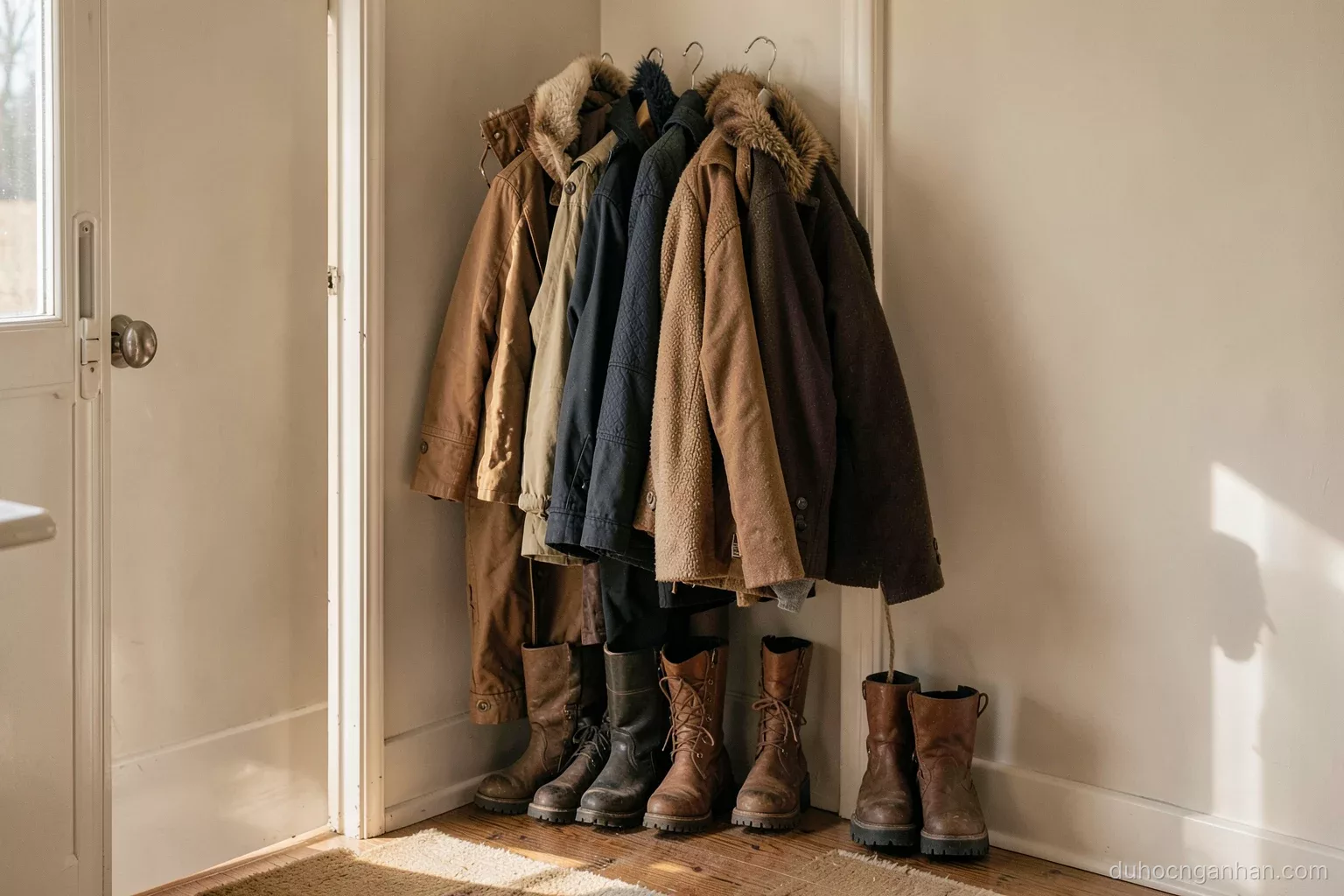
Head, hands and feet are the three places easily forgotten. A wool hat that covers the ears, gloves, thick socks and closed shoes with good grip are the minimum set. Children often lose gloves; packing a spare pair is the practical experience of many families.
Take layers off when going inside. Classrooms, dining halls and heated dormitories are usually warm. Wearing full outdoor clothing indoors makes children sweat, and then when they step outside they get suddenly cold. Teach your child the habit of taking off their coat on coming in and putting it back on before going out.
Dry air and heated rooms
Winter in many northern places has low humidity, and indoor heating dries the air further. For children used to Vietnam's high humidity, the first few days often bring cracked lips, dry rough hands, a dry nose, sometimes a mild nosebleed, and a sore throat on waking. Most of this is uncomfortable rather than dangerous, but it makes your child sleep badly and become irritable.
Preparation is simple: lip balm, unscented moisturiser, a personal water bottle to drink from throughout the day, and if possible a damp towel hung in the bedroom. Some camps have humidifiers; you can ask in advance. Children with eczema or allergic rhinitis should bring all their prescribed medicines and ask the doctor how to deal with worsening dry skin.
Drinking water is what children forget most in cold weather, because they do not feel thirsty. Mild dehydration makes children tired, gives them headaches and makes them feel the cold more. Reminding your child to carry a water bottle and drink at every break is a small but effective habit.
Showers that are too hot and too long also dry the skin further, even though children love them after a cold day. A moderately warm shower, patting dry and then applying moisturiser while the skin is still slightly damp is how many families in cold countries keep skin from cracking every day. Tell your child this before leaving, because at camp nobody reminds each child.
Short days, early darkness and sleep
In midwinter, in many northern places the sun rises late and sets early, in some places by about five in the afternoon. The further north, the shorter the days. For children used to long, bright days, the lack of light makes them sleepy early and hard to wake in the morning, and sometimes listless for no clear reason. Combined with jet lag on long flights, sleep is what is most easily disrupted in the first week.
Practical ways to help: go outdoors in the morning, even when it is cold, so the body receives natural light; keep bedtimes and wake-up times as regular as the camp schedule; limit screens in the evening; and avoid very long afternoon naps. Most camps have strict schedules that already do half of this for parents; the rest is telling your child not to stay up late messaging home on Vietnam time.
For South Korea and Japan the time difference is only two hours, so jet lag is almost negligible. For Europe and North America, jet lag plus short days can make children tired for the first two or three days. Choosing a programme with a few gentle days at the start is worth asking about.
Signs to report to the supervising adult immediately
Children do not always realise for themselves that they are too cold. Teach your child — and ask whether the school teaches — the signs below. At any of these signs, go somewhere warm and tell an adult:
- Shivering that does not stop even after moving around.
- Fingers, toes, ears or cheeks that are numb, pale, stiff or have lost feeling.
- Slurred speech, clumsiness, or unusual sleepiness while outdoors.
- Clothes, socks or gloves that are wet and cannot be changed.
- Chest pain, difficulty breathing or heavy coughing in cold air, especially in children with a history of asthma.
- A nosebleed that does not stop after a few minutes.
Most of these signs go away on their own once the child is warmed up and in dry clothes. What matters is that your child is not afraid to report them for fear of seeming weak, and that the camp has adults who know first aid for children who are too cold.
The first three days: a suggested rhythm for adapting
Many camps have their own schedule for the first week. If not, here is a rhythm that the supervisors and parents can remind your child of together:
- Arrival day: eat lightly, have a warm shower, lay out clothes in layers so they can be put on quickly in the morning, and go to bed at local bedtime even if not sleepy yet.
- Day one: go outdoors in the morning for at least half an hour, wearing enough layers; practise taking off the coat when going into a room and putting it back on when going out; drink water regularly and use lip balm.
- Day two: take part in longer outdoor activities, watch whether hands and feet go numb with cold, and change socks straight away if they get wet; in the evening, tell the supervisor which parts of the body feel uncomfortable.
- Day three: most children have settled into the rhythm; if your child is still sleeping badly, has lost their appetite, is coughing a lot or is unusually tired, the supervisor should inform the family and consider a visit to the doctor.
These three days are not a medical rule, just an arrangement that helps a child from a hot place get used to things gradually instead of being thrown straight into a busy schedule. Camps with experience of tropical pupils usually do something similar without anyone having to remind them.
What parents at home can do
When your child is far away, you cannot dress them, but you can do three things. First, prepare very thoroughly in advance: have your child try on the layered outfit at home, wear new shoes a few times so they do not get blisters, and write them a small reminder card of the signs to report to an adult. A child who has tried the clothes on once will be much more confident standing outside in sub-zero temperatures.
Second, ask the right questions when you call. Instead of asking generally "are you cold?", ask specifically how many layers they wore today, how many hours they slept last night, how many bottles of water they drank, whether their hands and feet are cracked. Specific questions help your child check on themselves, and help parents notice early when something is wrong.
Third, stay calm about small complaints. Cracked lips, dry skin and missing home cooking happen to almost every child on their first winter trip. An overly anxious reaction makes your child think something serious is going on. Listening, reminding them how to deal with it, and contacting the supervisor if you feel it is needed, is enough.
Eating and exercise in the cold season
The body uses more energy to stay warm, so children usually get hungry faster at winter camp. Meals in northern countries in winter usually include plenty of carbohydrates and hot dishes, which most children like. A few familiar snacks from home, such as biscuits and packaged dried nuts, give your child energy between activities, as long as the destination allows them to be brought in and the school does not ban food in rooms.
Exercise is the most natural way to stay warm. A good winter camp has physical activity every day, both indoors and outdoors. If the programme is so study-heavy that there is almost no time outside, your child will easily get tired and feel cooped up. Ask the school about the balance between classroom time and physical activity, especially for younger children.
Icy streets and school grounds are a common cause of slips and falls. Shoes with good grip and the habit of walking slowly, with hands out of pockets on slippery paths, reduce the risk. It is a skill children learn in a day or two if adults remind them right from the start.
Frequently asked questions
My child has never experienced winter. Should they go to a winter camp in a cold country?
They can, if your child is healthy and the programme has supervisors who know how to look after children in cold weather. Most children adapt within a few days. Prepare the right clothing, teach your child to dress in layers and the signs of getting too cold, and for a first trip choose a programme that is not too heavy on outdoor activities.
Do I need to buy my child a very thick down coat?
Not necessarily. Dressing in layers properly is usually more effective than one very thick coat, because it is easy to adjust when going into heated rooms. A windproof outer jacket, one or two warm middle layers and a moisture-wicking base layer are enough for most winter camps in South Korea and Japan.
Should I worry if my child has a nosebleed at winter camp?
Mild nosebleeds caused by dry air are quite common in children from humid places and usually stop on their own after a few minutes of sitting upright, tilting the head slightly forward and pinching the soft part of the nose. If the bleeding lasts a long time, happens repeatedly or comes with other symptoms, the supervisor needs to take your child to a doctor.
What should a child with asthma prepare for a cold country?
Cold, dry air can trigger asthma attacks in some children. Ask the treating doctor before the trip, bring all prescribed medicines with the doctor's documents, and tell the school about your child's condition and the plan for handling an attack, so the supervisors know where the medicine is kept and when your child must be taken to a doctor.
Is it normal for my child to go to sleep early and feel tired at winter camp?
In the first few days it is a fairly common reaction to short days, cold weather, lots of activity and possibly jet lag. It usually improves after about a week as your child gets used to the rhythm. If your child stays tired for a long time, stops eating, has a fever or is clearly low in mood, talk with the supervisor so they can keep an eye on them.