December and January are midsummer in Australia and New Zealand, and also the long summer holiday for local pupils, so short programmes for Vietnamese pupils at this time are language courses at schools for international students or holiday programmes, not sitting in on lessons with Australian pupils. Going at this time, your child gets sunshine, plenty of outdoor activities and the festive atmosphere of the end of the year; in exchange come very strong UV, a risk of bushfires in many areas, and a dense run of public holidays.
Many families who hear "winter camp" when the destination is Australia are surprised when they look at the weather forecast. This article explains why opposite seasons matter for a short course, what changes when local schools are on holiday, the issues of sun and water, the time difference, and how to choose a programme for the right season. For visitor visas, the family should check directly with the destination's immigration authority.
An opposite-season summer and the local pupils' holiday
Australia and New Zealand are in the southern hemisphere, so their summer falls roughly from December to February. Their school year also almost matches the calendar year: pupils start the school year around late January or early February, and the longest summer holiday is about six weeks, from around mid-December to late January. In Australia each state has its own calendar, a few days apart.
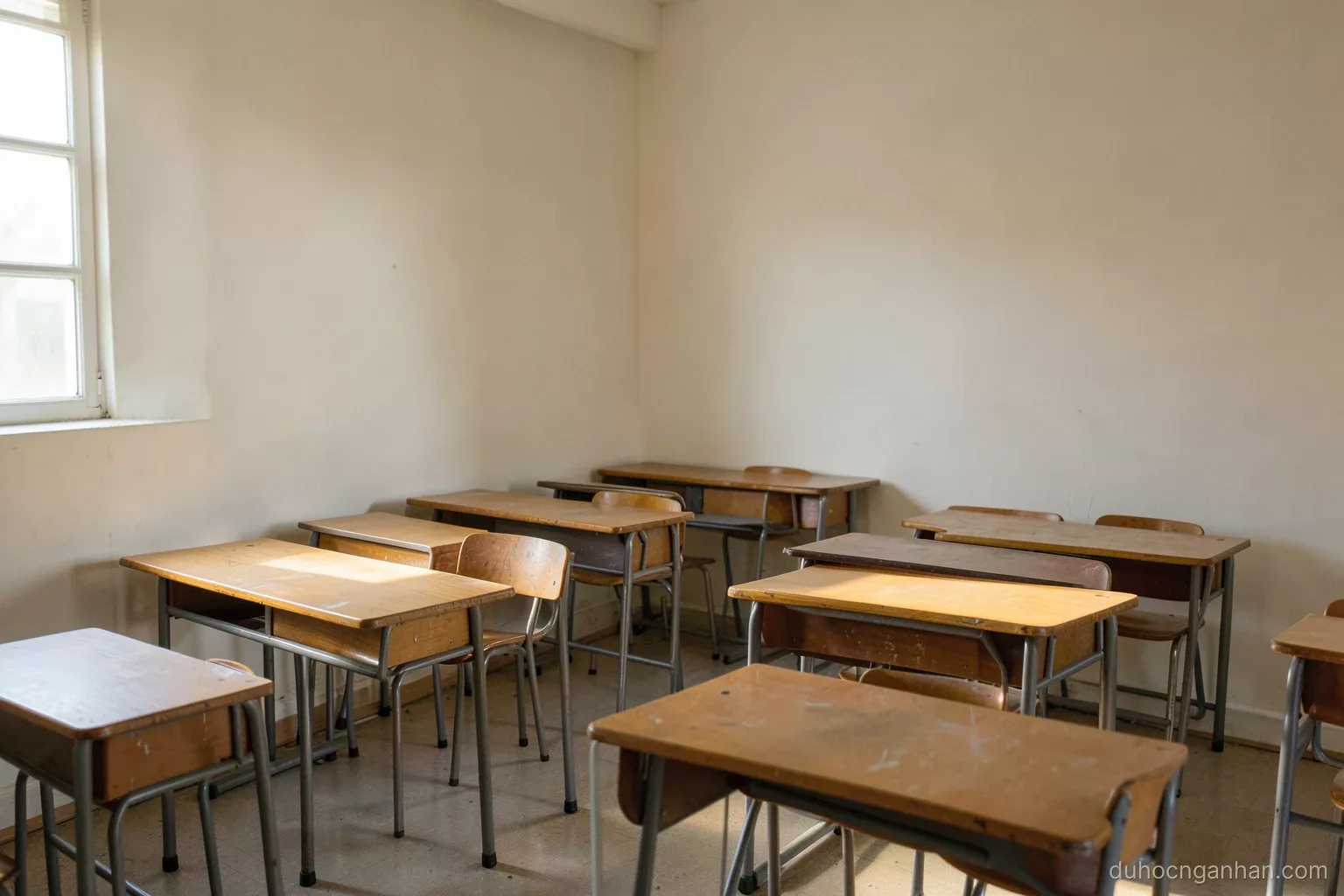
The direct consequence: in December and January, local schools are closed. Programmes offering "studying in class with Australian pupils" or "sitting in at a New Zealand school" usually do not run during this period. If a year-end programme promises this, parents need to ask exactly where and with whom their child will study.
On the other hand, English schools for international students stay open, and many have their own holiday programmes for teenagers, combining morning language classes with afternoon activities. Classmates are international students, possibly including pupils from Asian countries on their winter break. Your child is more likely to meet local young people in parks, on beaches and at community activities than in class.
Sun, UV and heat
UV in the Australian summer is very high. Australia has one of the highest rates of skin cancer in the world, and its health authorities campaign hard on sun protection. The familiar message from Cancer Council Australia is to cover up with clothing, put on sunscreen, wear a hat, seek shade and wear sunglasses. Schools in Australia often apply a "no hat, no play" rule.
Vietnamese children tend to be complacent. Being used to hot weather does not mean being used to strong UV. The air in Australia is clearer and drier, and the heat sometimes feels more pleasant than in Vietnam, so children pay little attention and only notice their sunburned skin in the evening. Broad-spectrum sunscreen, a thin long-sleeved shirt and a wide-brimmed hat are the minimum set.
Heatwaves. Summer in many parts of Australia brings severe heatwaves, with temperatures that can exceed forty degrees inland. Experienced schools adjust outdoor activities on those days. Ask about the rule in advance and remind your child to drink water regularly.
Bushfires. Summer is also bushfire season in many parts of Australia. Most urban areas where language schools are located are rarely directly affected, but excursions into forests and national parks may be cancelled, and smoke may affect air quality. Children with asthma need to bring enough medicine.
Sea and water: skills your child needs before going
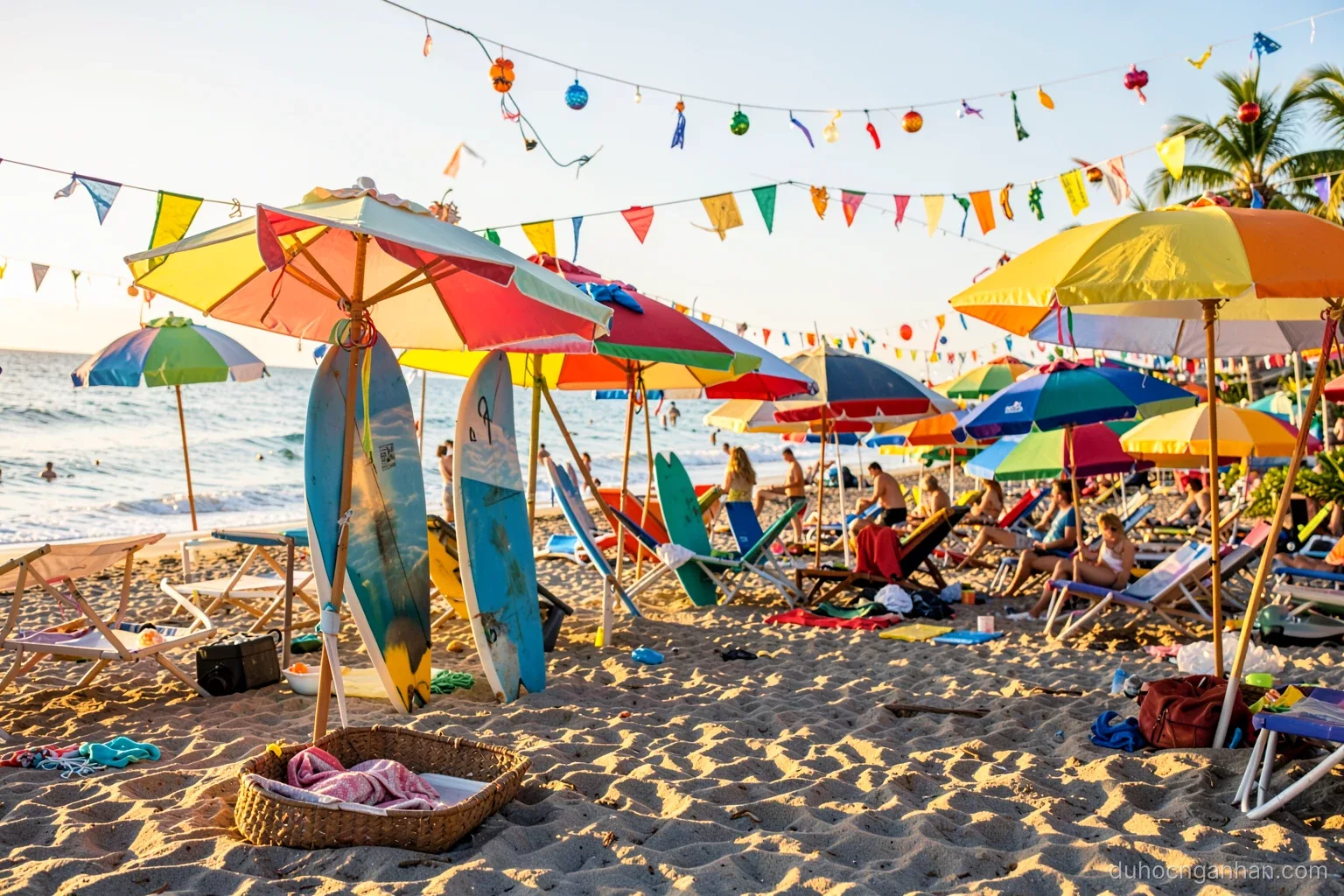
Summer in Australia and New Zealand is tied to the beach, and many holiday programmes include beach trips, surfing and paddling. The sea here is beautiful but has strong rip currents, which local people are taught to recognise from a young age. The most common safety rule on Australian beaches is to swim only between the red and yellow flags, where lifeguards are watching.
Vietnamese children who can swim in a pool are not necessarily used to swimming in the sea with waves. Before the trip, ask what water activities the programme includes, whether swimming skills are tested first, what the ratio of supervisors is in the water, and whether there are staff with lifesaving qualifications. If your child cannot swim yet, tell the school so they can take part in other activities.
Parents should also tell their child one simple thing: if you are carried away from the shore, do not try to swim straight back against the current; stay calm, float and raise your arm to signal. This is common safety advice in countries with many beaches, and many children have never heard it.
Public holidays and time zones: small details that affect the trip
The end of the year in Australia and New Zealand has many public holidays, and in summer most Australian states use daylight saving time. The table below gives an idea; check the specific dates for the year:
| Place | Public holidays around the break | Difference from Vietnam time during their summer |
|---|---|---|
| Sydney, Melbourne, Canberra | Christmas, 26 December, New Year, Australia Day on 26 January | Four hours ahead because of daylight saving |
| Brisbane | As above | Three hours ahead; Queensland does not use daylight saving |
| Perth | As above | One hour ahead |
| Auckland, Wellington | Christmas, 26 December, the first two days of the New Year, Waitangi Day on 6 February | Six hours ahead because of daylight saving |
The time difference affects when your child can call home. For New Zealand, your child's evening is late at night in Vietnam, so agree on calls in the morning or at midday local time. Public holidays affect the class schedule, public transport and shop opening hours.
Staying with a homestay over Christmas and New Year
For many Australian and New Zealand families, Christmas is the biggest family gathering of the year, often an outdoor lunch, a barbecue, a trip to the beach, meeting relatives. A pupil in a homestay at this time has the best chance to see local family life, but may also feel lost in a gathering of strangers.
Some homestay families go away on holiday at the end of the year and do not take students for a few weeks. The school may move your child to another family or to a dormitory during that time. What parents should ask in advance is whether their child will stay in the same house throughout the stay, and if they have to move, how much notice they will be given and who will take them to the new home.
Prepare a small gift for your child to give the host family, a few greetings in English and a short story about how Vietnamese people celebrate the new year. These small things help your child find a place at the party rather than just sitting and watching. Remind your child also to ask the host family about the household rules over the holidays: what time to be home, going out with the hosts' children, and using phones at mealtimes.
A long flight and the first two days
From Vietnam to the major cities on Australia's east coast usually takes about eight to ten hours of flying, and to New Zealand even longer, with many routes needing a connection. The end of the year is peak travel season in both directions, with crowded airports and full flights. Children travelling with a group and a supervisor are less of a worry; children travelling alone need the airline's unaccompanied minor service, and that policy differs from airline to airline.
Overnight flights, a time difference of three to six hours and fierce sun immediately on landing tire many children for the first two days. Programmes that understand this usually keep the arrival day and the day after light: checking in, a walk around, the placement test, and only then the full timetable. Ask in advance about the schedule for the first two days, and if it is too full, ask for it to be adjusted or consider another programme.
Choosing a year-end programme for the right season
Four questions help filter year-end programmes in Australia and New Zealand:
- Where will your child study, and with whom: a language school for international students, a holiday programme for teenagers, or a local school? If it is a local school, ask why it is open during the summer holidays.
- Where will your child stay: a homestay or a dormitory? In the year-end holiday season many local families go away, so there may be fewer homestays; ask how the school vets and chooses families.
- Are outdoor activities planned with the heat in mind: the times for going outside, rules on hats, sunscreen and drinking water, and the plan when there is a heatwave or bushfire warning?
- Who looks after the children on public holidays: on days when classes are cancelled, what do the children do, where, and with which adults?
If all four questions have concrete answers, the programme has prepared for its own summer. If the family's goal is for your child to sit in at a local school, save it for the Vietnamese summer holiday, when Australian schools are in term.
Who suits a year-end trip to the southern hemisphere
This trip suits children who love being active and outdoors, cope well with sun and are disciplined enough to put on sunscreen and wear a hat. It also suits families whose children attend international schools with a long Christmas break, or families who want to combine a holiday with a short language course for their child.
It suits less well children prone to heatstroke, children with severe asthma in areas at risk of bushfire smoke, or families whose main goal is to experience a local school. In those cases, the Vietnamese summer — which is Australia's winter — is the more sensible choice.
Whichever time you choose, a short course in Australia or New Zealand means a long flight and a significant time difference. Allow a day or two at the start for your child to recover, and a day or two after coming home before going back to school. It is a small detail, but it greatly affects whether your child can enjoy the trip.
Frequently asked questions
If we go to Australia in December, can my child study with Australian pupils?
Usually not, because it is the Australian pupils' long summer holiday and local schools are closed. Programmes at this time are mainly English courses at schools for international students or holiday programmes. If you want your child to sit in at a local school, choose a time when schools are in term.
What does my child need for sun protection in Australia?
Broad-spectrum sunscreen, a wide-brimmed hat, a thin breathable long-sleeved shirt, sunglasses and a personal water bottle. Remind your child to reapply sunscreen after swimming or sweating a lot, and to find shade in the middle of the day. Many schools in Australia require hats outdoors, so your child should get used to it beforehand.
What is the time difference between Australia, New Zealand and Vietnam in summer?
It depends on the place. During their summer, Sydney and Melbourne are usually four hours ahead of Vietnam, Brisbane three hours, Perth one hour, and New Zealand six hours. Daylight saving starts and ends on specific dates each year, so check again before agreeing call times.
Should my child take part in beach activities in Australia if they are not a strong swimmer?
Tell the school in advance. Australian beaches have strong rip currents, unlike a swimming pool. A good programme will test swimming skills before letting children into the water, only swim in lifeguarded areas between the red and yellow flags, and have alternative activities for children who cannot swim yet.
Will bushfires in Australia affect my child's course?
Most language schools are in urban areas and are rarely directly affected. However, excursions may be cancelled and smoke may lower air quality on some days. Children with asthma or respiratory conditions need to bring enough medicine and tell the school about their health condition in advance.