When something happens to your child at camp abroad, travel insurance is used in one of two ways: calling the assistance line so the insurer guarantees and pays the hospital directly, or the family or camp paying first and filing a claim after returning home. Either way, you need to keep all original documents from the first day of the incident, because missing paperwork is the most common reason claims are returned.
This article does not discuss choosing a policy or comparing benefits; it deals with the moment after something has happened: who calls the insurer, when, what to say, which documents to photograph and keep, and how to file the claim once home. Every policy has its own terms; everything below is general practice, always to be checked against your child's own policy.
Two ways insurance pays
Understanding the difference between these two helps the family know when to call the insurer immediately and when it is enough to keep the receipts:
| Direct payment guarantee | Pay first, claim back later | |
|---|---|---|
| Usually used for | Hospital admission, emergencies, large costs | Outpatient visits, buying medicine, small costs |
| Who pays the hospital | The insurer or its assistance company | The family, the camp or the group leader pays upfront |
| Conditions | You must call the assistance line and get approval first, except in emergencies with no time | Keep all original documents and claim within the policy's deadline |
| Advantage | No need to pay large sums upfront abroad | Flexible, no need to wait for confirmation |
| Risk | If the hospital has not yet received the guarantee, it may still ask for a deposit | One missing document and the claim is returned; a long wait for the money |
On a short camp, most incidents fall into the right-hand column: one doctor's visit, buying medicine, an X-ray of a sprain. Hospital admissions are rare, but when they happen the costs in many countries can be very large compared with Vietnam, and at that point the assistance line is the most important part of the whole policy.
The assistance line: who calls, and when
Almost every international travel insurance policy has a 24-hour emergency assistance number, usually run by a global assistance company on behalf of the insurer. The number is printed on the insurance card or certificate. Before your child flies, make sure three people have it: the group leader, the parents, and your child if old enough.
In practice, the person who calls is usually the group leader or a member of camp staff, because they are with your child and can speak directly to the hospital. Parents at home can also call, especially when the group leader is busy looking after your child. What must be avoided is nobody calling because everyone thinks someone else has.
Call before hospital admission or a major procedure, except in an emergency that cannot wait. Many policies state clearly that inpatient costs must be approved in advance by the assistance company, otherwise they may be refused or only partly paid. In an emergency, the priority is getting your child to hospital; calling the insurer is done as soon as possible afterwards.
When you call, have ready the policy number, your child's full name and date of birth, the country and hospital name, a short description of what happened and a phone number for the assistance company to call back. Note the name of the person who answered, the time of the call and the case reference they give you. These small details are very useful when you need to check things later.
Minor visits: documents to keep
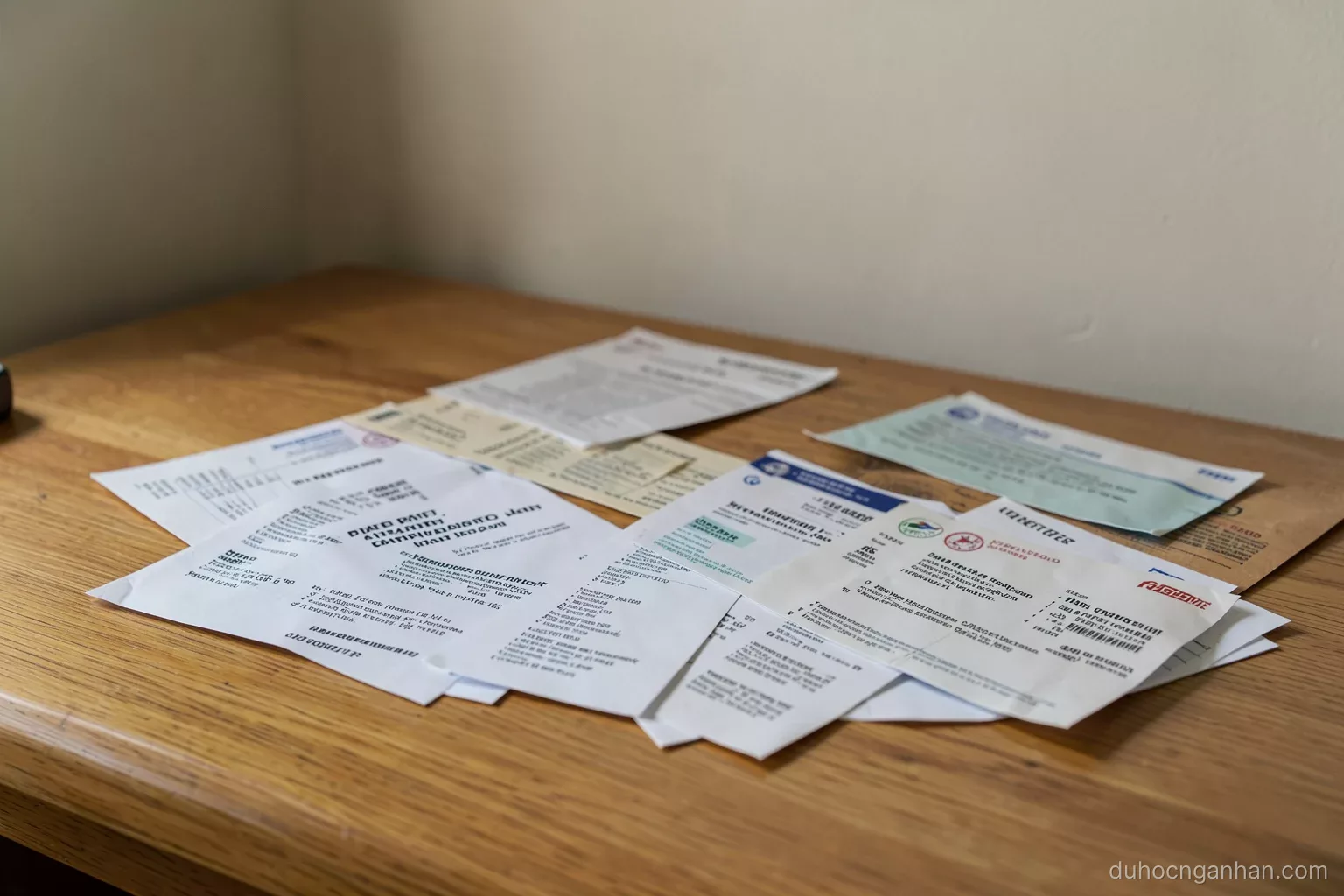
For outpatient visits, the family or camp usually pays on the spot. These are the documents to ask for and keep, with a note for the group leader to bring the paper copies home:
- The original invoice or payment receipt, clearly showing the patient's name, date, amount and the name of the medical facility.
- The medical certificate or report stating the diagnosis, symptoms and the doctor's instructions.
- The prescription and a separate receipt for medicines, if bought from an outside pharmacy.
- Test results, X-rays or imaging reports if any.
- Receipts for related transport if the policy covers it, such as a taxi from the camp to the hospital.
- A short note from the group leader: when and where it happened, and who witnessed it.
A practical tip: use a separate envelope for each visit, write the date on the outside, and photograph every document on the spot and send it to the family chat. If documents are in the local language, ask whether the medical facility can issue an English version; many insurers accept English but require translation for other languages.
When your child has to be admitted to hospital
Hospital admission is when a direct payment guarantee shows its value. Once the group leader or parents have called the assistance line, the assistance company usually contacts the hospital to confirm the medical information and send a written guarantee of payment. This can take a few hours or longer, depending on the place and the time of day.
While waiting, the hospital may ask for a deposit. The organiser should have prepared the group leader with an emergency financial arrangement, such as the organiser's credit card or a cash advance, so that treatment is not delayed by money. Parents should ask clearly about this arrangement before the trip.
Hospitals abroad usually ask who the legal guardian is, with the right to consent to treatment for a child under 18. An emergency treatment consent or authorisation signed by the parents before the trip, with an English version, speeds this step up. For major procedures, the hospital may still want to speak to the parents directly.
Some policies cover flights and accommodation for one relative to come and look after your child when they are in hospital for more than a certain number of days, or the cost of bringing your child home with medical staff when a doctor advises it. These benefits usually have to be arranged and approved in advance by the assistance company; a family that buys tickets itself and then claims them back may not be reimbursed.
Lost belongings, delayed luggage, cancelled flights
Besides medical cover, many travel insurance policies also have benefits related to luggage and the journey. Each benefit has its own conditions, but what they have in common is that documents must be obtained on the spot, because once you leave the place where it happened they are almost impossible to get afterwards.
Checked luggage lost or delayed: you need a property irregularity report made by the airline or ground handling agent at the airport before leaving the baggage hall, together with the baggage tag and ticket. If you have to buy essentials while waiting, keep the receipts.
Belongings stolen in a public place: many policies require a report from the local police within a short time after the incident. Belongings lost at camp: you need confirmation from the camp. Items forgotten or lost through carelessness are usually not covered. High-value items such as phones and tablets usually have their own limit or are excluded.
A flight cancelled or heavily delayed because of weather or other reasons: keep the airline's confirmation of the cancellation or delay and its reason, plus receipts for extra meals and accommodation. For camp groups, the organiser usually handles this for the whole group; parents should ask which parts the family needs to claim for itself.
Filing a claim after returning home
After your child is back in Vietnam, the family or the organiser files a claim for costs paid upfront. A tidy sequence:
- Reread the benefits section and the claims deadline in the policy; many policies limit the number of days from the incident or from your return.
- Get the claim form from the insurer or from the organiser that bought the group's insurance.
- Arrange documents by incident: one set for each visit, one for each loss.
- Photograph or copy everything before submitting the originals.
- Include a copy of the passport pages with entry and exit stamps, or the flight tickets, to prove the time spent abroad.
- State the bank account details for payment clearly; for minors, ask whether an account in a parent's name is accepted.
- Follow up on the claim and respond quickly to requests for more information; keep all correspondence.
If the organiser bought insurance for the whole group, it usually has someone experienced in handling claims with the insurer who knows the common mistakes. Parents should ask whether the organiser can help file the claim, and send the documents through it rather than doing it alone. Whoever files it, the family should still keep a full set of copies to refer to if there are questions.
Why claims are often refused or returned
Many of the reasons below can be avoided completely if you know them in advance:
| Reason | How to avoid it |
|---|---|
| Missing original invoice or medical certificate stating the diagnosis | Get everything at the medical facility, one envelope per visit |
| A pre-existing condition not declared, falling under an exclusion | Declare honestly when buying; ask clearly about the pre-existing conditions clause |
| Not calling the assistance company before hospital admission | Save the assistance number in three places, call as soon as admission is advised |
| Lost belongings with no police report | Report within the deadline the policy requires and get a confirmation |
| Filing after the deadline | File early, within the first few weeks after returning |
| An excluded activity | Read the list of excluded hazardous activities before letting your child take part |
Reading the policy carefully before departure takes about an evening, but saves a great deal of trouble if anything goes wrong. If the organiser buys group insurance for everyone, parents have the right to ask for the full policy wording, not just the summary of benefits.
Frequently asked questions
The organiser has bought insurance for the group. Does the family need to buy extra?
It depends on the group policy's benefits. Ask for the full wording to read the medical expenses limit, the exclusions and the luggage benefits. If your child has an underlying condition or the family wants a higher limit, you can consider buying extra, but ask how the two policies coordinate payment.
Will insurance pay if my child is seen in the camp's medical room?
The camp's medical room usually does not charge separately for basic care, so there is nothing to claim. It is when your child is taken to an outside clinic or hospital and there is an invoice that the insurer considers payment under the policy.
If invoices are in the local language, do they need translating?
Many insurers accept documents in English; for other languages they usually require a translation. Ask the medical facility for an English version at the time of the visit, and ask the insurer before departure about its translation requirements to avoid extra work later.
Will insurance pay if my child is so homesick they have to come home early?
Usually not, because this is not a medical reason or an unforeseen event listed in the policy. Some policies pay part of the cost of returning early for medical reasons on a doctor's advice. Read the cancellation or curtailment section of the specific policy.
Will we be compensated for a phone lost at camp?
Many policies exclude electronic devices or set very low limits, and usually do not pay if the item was forgotten or left unattended. Read the personal belongings section carefully before departure; if the device is valuable, consider not taking it or buying separate device insurance.
Who receives the compensation when my child is under 18?
Usually the parents or legal guardian, or whoever actually paid the costs if they have the receipts. If the organiser paid upfront, agree clearly who files the claim and where the money goes, to avoid duplicate claims.