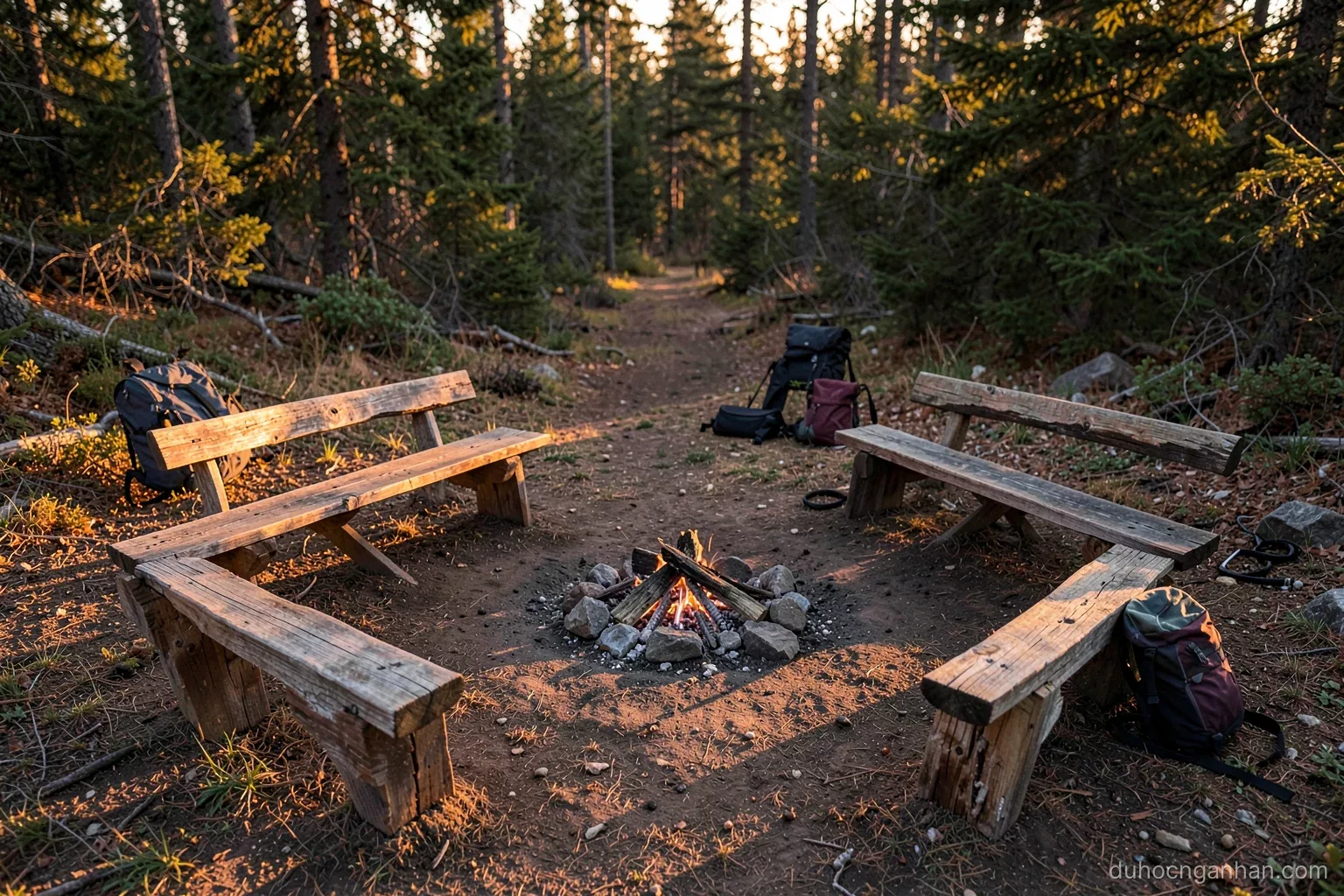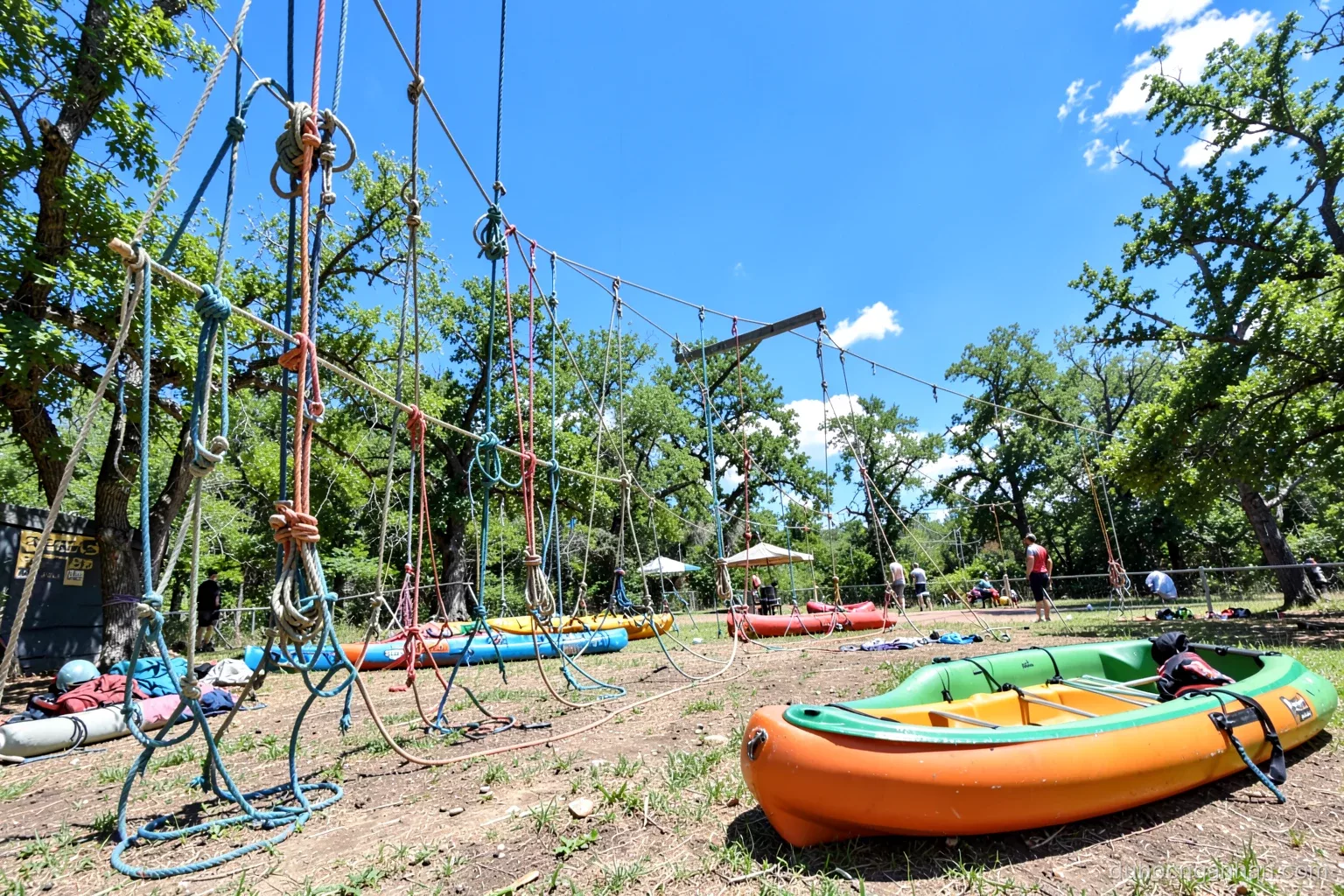
An outdoor summer camp abroad is a programme of one to three weeks in which your child spends most of the time outdoors: kayaking or canoeing, roped climbing, long-distance walking, mountain biking, pitching tents and cooking outdoors, learning navigation and basic safety skills, guided by people qualified for each activity. Many camps call this outdoor education: the activities are a means of learning teamwork, independence and how to cope with controlled hardship.
This kind of camp offers experiences that city children rarely have, and it is also the kind where you need to ask most carefully about safety. The sections below cover the common activities, the safety standards a properly run camp must have, instructor ratios, how to prepare physically and with equipment, and how an outdoor camp abroad differs from outdoor activities at camps in Vietnam.
Common activities and what to know about each
Each activity has its own risks and its own requirements for instructors, equipment and age. This table is a summary to help you read programmes faster.
| Activity | Minimum equipment | Instructor | Usual conditions |
|---|---|---|---|
| Kayaking, canoeing | A properly fitting buoyancy aid, a helmet when needed, an accompanying safety boat | A qualified paddlesport instructor | Passing a swimming test or a familiarisation session in shallow water |
| Roped climbing | Harness, helmet, ropes and an anchor system that has been checked | A qualified climbing instructor | The equipment's minimum height and weight |
| Long-distance walking | Walking boots, waterproofs, water, a first aid kit, communication equipment | A leader qualified for hill and mountain terrain | Fitness to walk for many hours |
| Overnight camping | Tents, sleeping bags rated for the temperature, a safe stove | Camp staff staying in the same area | Having had a few days to settle in at the main camp |
| Mountain biking | A helmet, a correctly sized and checked bike | A cycling instructor | Riding a bike confidently, with a test |
| Navigation, survival skills | A compass, the group's communication equipment | Activity staff | In groups, never alone |
When reading a programme, look for the words "with qualified instructors" attached to each activity, not just stated generally for the whole camp. A camp may have excellent climbing instructors but outsource its paddling.
Safety standards for adventure activities in some countries
In the UK, the regulation of adventure activities for under-18s has a history linked to an accident. In 1993, four pupils died on a canoeing trip in Lyme Bay. Afterwards, the UK passed a law on young people's safety at activity centres (in 1995) and set up a licensing system: providers charging a fee and running activities such as climbing, caving, hill walking and water sports for under-18s had to hold a licence and be inspected regularly. The scope and the way it is regulated have been adjusted over the years, so when choosing a camp in the UK, ask whether the camp falls under this licensing scheme and ask to see the licence.
In the US, many summer camps take part in the camp association's voluntary accreditation system, with a set of standards on staffing, health, activity safety and operations. Not every good camp takes part, but if a camp says it is accredited, that is something you can check. Other countries have their own rules, often linked to the federation of each sport, such as paddling or climbing.
The common point parents should grasp: a properly run outdoor camp has a written risk assessment for each activity, an emergency procedure, instructors trained by the professional body for that sport, and is willing to show the family these things when asked.
Instructor ratios and the right to stop an activity
The ratio varies by activity. On open water or a rock face, one instructor looks after far fewer pupils than for a game on a field. Ask the camp for the specific ratio for each activity, not one overall figure.
There is a second person. For water activities and mountain walking, there should be at least two adults with the group, so that while one deals with an incident, the other can still watch the rest of the children.
Who has the right to cancel. A good camp gives the instructor on the spot the authority to cancel or shorten an activity when the weather, the water level or the pupils' health make it unsafe, and has an alternative activity. A camp that insists on running an activity at any cost because it was promised in the programme is a bad sign.
Pupils have the right to say no. Good outdoor education camps encourage challenge but do not force it. A child who is afraid of heights may climb halfway up the wall and come down, and that is recognised as a step forward.
Communication far from the main camp. When a group walks or camps far away, ask what communication equipment is used where there is no mobile signal, and how long it would take for rescue to reach them.
How an outdoor camp abroad differs from outdoor activities at camps in Vietnam
Outdoor activities at camps in Vietnam are usually one part of the camp: a session on an artificial climbing wall, a campfire night, a short walk. An outdoor camp abroad usually sets its whole programme in nature: your child may stay near a lake, a forest or a coastline, go outdoors every day, and have a multi-day expedition at the end of the course.
The second difference is climate and terrain. Summer in temperate regions can be warm by day but unexpectedly cold at night or at altitude, and rain can last all day. Children used to a tropical climate often pack too few warm clothes and too little good rain gear. Lakes and mountain streams are also much colder than the central Vietnamese sea your child knows, so the camp may require thermal swimwear for water activities. In tropical places such as the Philippines, the risks are instead sun, heat, dehydration and the rainy and typhoon season. Read the camp's kit list carefully for the exact place your child is going.
The third difference is language in safety situations. Instructions such as "keep your distance", "stop" and "hold on to the boat" must be understood instantly in English. Many camps hold a session on hand signals and short commands before going on the water or up the wall, and that is the session your child needs to pay most attention to.
Preparing fitness and skills before leaving
An outdoor camp does not require your child to be an athlete, but it does require a certain level of fitness and a few basic skills. Preparing a few weeks ahead helps your child enjoy it rather than just endure it.
- Swimming. If the programme includes water activities, your child should be able to swim a short distance and float in deep water with a buoyancy aid. Learning to swim before leaving is the most important thing.
- Walking. Practise walking for a few hours with a light rucksack at weekends, on hilly paths if possible. New walking boots must be worn in beforehand, not worn for the first time at camp.
- Cycling. If there is mountain biking, your child needs to ride confidently, brake properly and handle gentle slopes up and down.
- Looking after their own things outdoors. Get your child used to packing their own rucksack, carrying their own water, changing out of wet clothes and putting on sunscreen by themselves.
- Declaring health fully. Asthma, insect allergies, fear of heights, fear of water: the camp needs to know in order to prepare, and specific health issues should be discussed with your child's doctor first.
If your child is completely unused to outdoor activities, a camp with rest days and indoor activities in between is a gentler choice than a camp that is outdoors all the time.
Equipment specific to outdoor camps
Besides the usual luggage, outdoor camps need a few other items. Always check against the camp's list, because every place has a different climate:
- Walking boots or trainers with good grip, already worn in; sports sandals with a back strap or water shoes for water activities.
- A genuinely waterproof jacket, not a thin windbreaker; quick-drying trousers.
- Several thin layers instead of one thick top, to add or remove as the temperature changes.
- A wide-brimmed hat, sunglasses, sunscreen and insect repellent suitable for children.
- A personal water bottle and a small rucksack for walking days.
- A waterproof pouch for a phone or important items if the camp allows them.
- Old clothes that can get dirty and torn; nice and expensive clothes are best left at home.
Many camps lend sleeping bags, tents, buoyancy aids and helmets. Ask in advance so you do not pack unnecessarily, but personal items such as footwear should be your child's own.
What your child learns from a season at an outdoor camp
Children coming back from outdoor camps usually talk about the hard moments: a rainy night in the tent, a slope they thought they could not climb, capsizing during a rescue exercise. That is exactly what stays with them. Outdoor educators call this controlled challenge: the risk is real enough for children to feel they have overcome something, but managed well enough to keep them safe.
Children also learn teamwork in a very concrete sense: when the whole group has to pitch the tents before dark, nobody has time to feel awkward about a friend of a different nationality. Many of the most lasting international friendships begin on camping nights like these.
One small change many parents notice after camp: their child is less afraid of going without comforts. A child who used to complain when the power went off for a few hours at home now tells the story of three days without hot water as a happy memory. Good camps also teach children to look after the places they pass through — carrying their rubbish back, not breaking branches, not disturbing wild animals — habits that follow them back to the city.
Parents looking for an outdoor camp suited to their child's fitness and age can ask the Du Học Ngắn Hạn advisers to send the programmes, risk assessments and instructor ratios of the camps currently taking registrations, to read against the criteria above.
Frequently asked questions
Can my child go to an outdoor camp if they cannot swim?
Possibly, if the camp has swimming lessons for beginners and lets your child take part in land activities until they pass the swimming test. But your child will miss most of the water activities. Learning to swim before leaving is the best way.
Are outdoor camps safe for young children?
Many camps take children from about 8–10 with adapted activities: low walls, shallow water, short distances and closer supervision. Safety depends on how the camp is organised and on the instructors, not only on age. Ask carefully about ratios and qualifications.
What happens if the weather is bad?
A good camp has alternative plans, and instructors have the authority to cancel an activity when it is unsafe. Your child may do indoor activities, learn skills or wait for the weather to improve. Cancelling because of the weather is a sign the camp is doing things properly, not a loss.
Will my child sleep outdoors for the whole camp?
Usually not. Most camps have a main building for accommodation, and overnight camping is only a few nights in the course, usually after the children have settled in. Ask for the specific schedule so you can prepare suitable sleeping gear.
Can phones be used at an outdoor camp?
Many places have weak or no signal, and many camps collect phones during activities for safety reasons. The family should agree with the camp in advance how news will be received, for example the camp sending updates on a schedule, rather than waiting for your child to call.
How is an outdoor camp different from a military-style boot camp?
Good outdoor education camps are based on challenge by choice: encouraging but not forcing, with no physical punishment or shouting. If a programme emphasises strict discipline and endurance at any cost, ask carefully about its methods before sending your child.