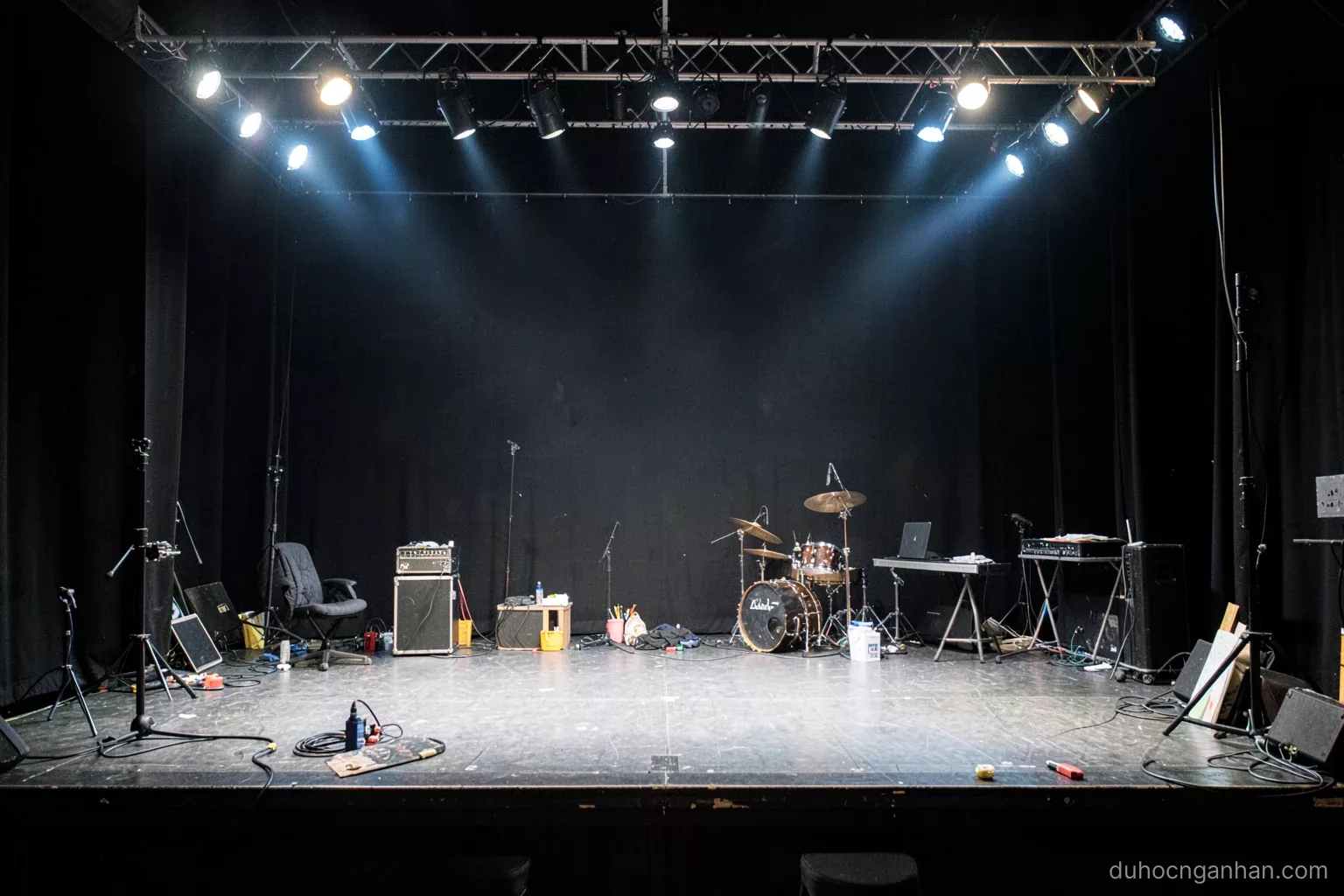
An arts summer camp abroad is a short programme, usually two to four weeks, in which your child studies one art form in specialist classes taught by artists or arts teachers, rehearses or creates work with friends from many countries, and finishes with a performance, an exhibition or a film screening in front of an audience. Common disciplines are instruments and choir, theatre and musical theatre, dance, visual art and design, photography, and short filmmaking.
What sets an arts camp apart from other camps is the end-of-course milestone: everything during the week builds towards a piece of work that has to be shown to others. That pressure, if guided well, is what helps children progress quickly and become more confident. This article explains the types of arts camp, the entry levels usually required, how to read a programme, and how to prepare so your child is not overwhelmed in the first week.
Types of arts camp and what your child does during the day
Music camps divide pupils by instrument and level, with individual or small-group lessons, orchestra or choir rehearsals, and individual practice time with practice rooms. Serious camps for children who have played an instrument for a few years often ask for a recording or an online audition. The end-of-course concert is the biggest milestone.
Theatre and musical theatre camps spend the mornings on skills — acting, singing, movement, improvisation — and the afternoons rehearsing a show. Children are cast according to their ability and also their wishes, but not every child gets a lead role. This is the first lesson in teamwork in the arts.
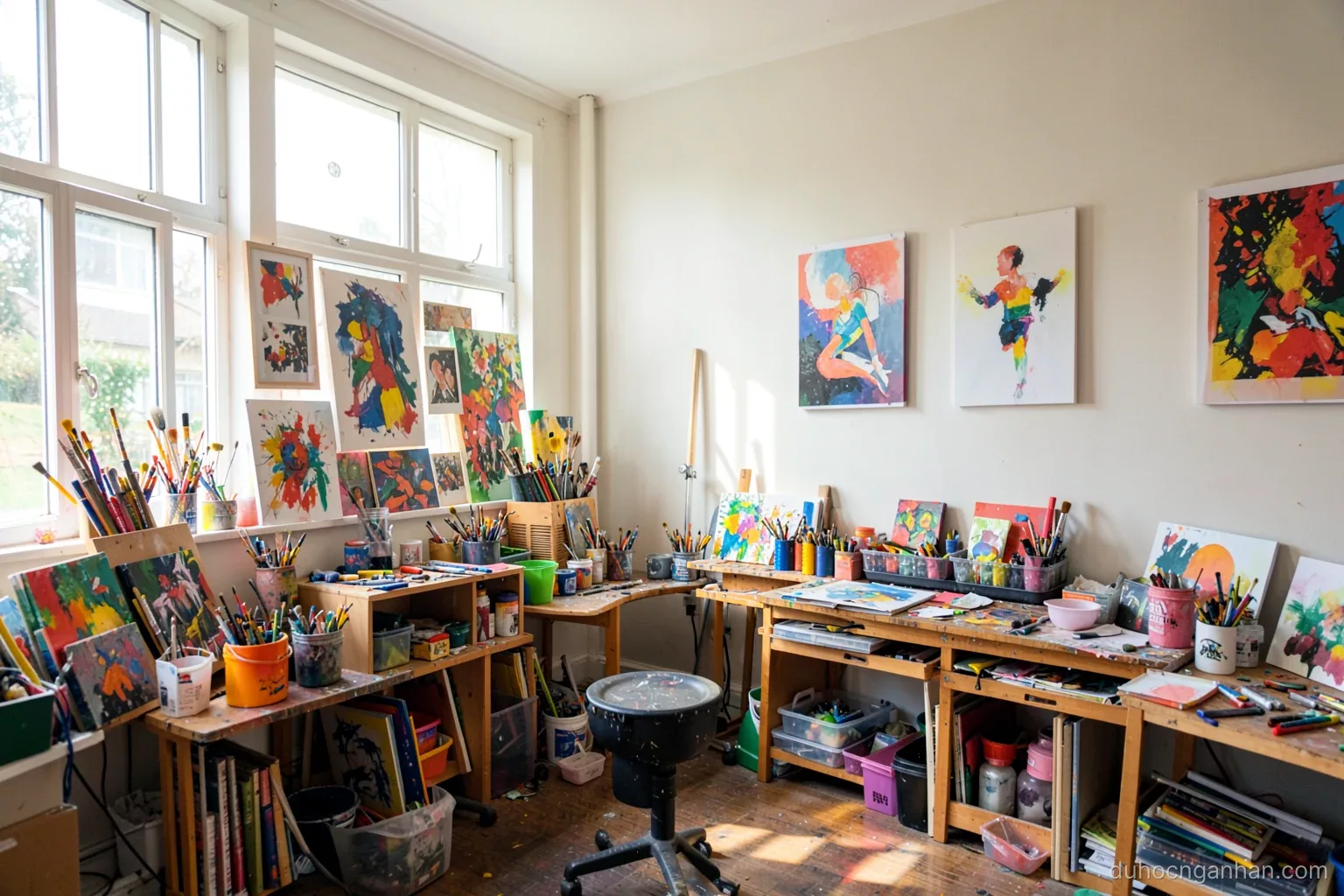
Visual art, design and photography camps are studio-based: sketching, watercolour, ceramics, printmaking, graphic design, photography and editing. Many camps take pupils to draw outdoors and visit museums. The final product is a body of work hung in an exhibition.
Filmmaking camps divide pupils into groups, with each group writing a short script, shooting it and editing it within one to two weeks. Children rotate through the roles of director, camera operator, actor and editor. The screening at the end of camp is usually the memory the children treasure most.
Entry levels and the standard of each type of camp
Arts camps vary greatly in their entry requirements. The following table helps distinguish camps for beginners from camps for pupils who already have a foundation.
| Type of camp | Usually for | Common entry requirement | Signs of an advanced camp |
|---|---|---|---|
| Multi-arts discovery camp | Beginners, young children | No experience needed | Not applicable — the subject changes every week |
| Instrumental and choir camp | Children who already study music | A recording, an online audition | Individual lessons, orchestras by level |
| Theatre and musical theatre camp | All levels, in groups | Sometimes an audition on the first day | A complete production, with its own director and choreographer |
| Visual art and design camp | All levels | Sometimes submitting a few works | Separate studios for each medium, critique sessions on the work |
| Filmmaking camp | Usually from age 12–13 | No experience needed, or a short video | Equipment for each group, a public screening |
If your child is learning an instrument or drawing at home, ask their teacher which level to choose. A group that is too easy will bore your child; one that is too hard will make them shy and withdrawn.
Reading an arts camp programme properly
The number of specialist hours each day. A real arts camp spends most of the day on the discipline. If there is only one hour of "arts activity" in the afternoon, it is a language camp with extra activities.
Who teaches. Working artists, the school's arts teachers, or camp staff with brief training. A good camp describes the roles and fields of its teachers, even if it does not give names.
Class size and grouping. An instrumental class of twenty children with one teacher is completely different from a class of five. For theatre, ask how many children are in a show and how many speaking roles there are.
Equipment and space. Are there enough practice room slots for every child, does the ceramics studio have a kiln, does each filmmaking group have its own camera or share one?
Who the final milestone is for. A performance that parents watch in person, a live stream, or a show only within the camp. This matters if the family wants to watch their child perform from a distance.
Language at an arts camp
Music and visual art have a shared language that needs no translation: notes, colours, shapes. Children with moderate English can still keep up in an instrumental or drawing class, because teachers point and demonstrate a lot. Harder is the feedback: when the teacher explains why a passage does not yet have the right feeling, or why a painting's composition is heavy on one side, your child needs to understand enough to correct it.
Theatre, musical theatre and filmmaking require much more English. Your child has to learn lines, understand the director's intentions and improvise with fellow actors. Camps usually give pupils with weaker English roles with fewer lines, and many children's pronunciation improves noticeably through rehearsing lines again and again. If your child wants to go to a drama camp, have them read English stories aloud every day for a few weeks before leaving.
At a filmmaking camp, writing the script and editing in English is a real challenge. A good camp forms groups so each has a child with stronger English to help, and assigns roles according to strengths.
A benefit rarely mentioned: the arts give children with weaker English a place in the group. A child who cannot yet speak fluently but draws beautifully, plays an instrument confidently or edits films skilfully will be sought out by friends from many countries for help. That feeling of being needed often makes a child bolder about speaking than any amount of encouragement.
Preparing your child before an arts camp
The following help your child start the first week without falling behind:
- Instruments: ask whether the camp lends instruments. Taking your own instrument on a plane means asking the airline about its baggage rules for instruments, a hard case and insurance. Bring the music your child is currently working on so the camp teacher knows where they are.
- Theatre: prepare a short monologue or song in English if the camp holds auditions. Comfortable rehearsal clothes and soft shoes.
- Visual art: bring the sketchbook your child is using and photos of a few works to show. Art materials are usually provided by the camp, but familiar pencils and erasers are worth bringing.
- Filmmaking: show your child a few short films and have them try shooting a clip on a phone at home, practising thinking in frames.
- Mindset: tell your child in advance that they will not always get the role or position they want, and that every role in a performance is needed.
Preparation is not meant to make your child stand out straight away, but to give them enough confidence to join in from the first day instead of spending the whole week settling in.
Who owns the photos, videos and your child's work
Arts camps create a great many images: photos of rehearsals, videos of performances, the short films the children shoot, paintings hung in the exhibition. Parents often only think about this when they see their child's photo on the camp's promotional page. It is better to read the image rights section of the registration form from the start.
The registration forms of most camps have a section for consenting or not consenting to the camp using photos and videos of your child in promotional materials. The family has the right to say no; a camp that does things properly has a way of marking this so staff do not post photos of your child. For performance videos, many camps send the recording only to the families of participating children, through a private password-protected link, rather than posting it publicly. That is a reasonable way of protecting children and worth asking about.
For artwork, ask whether your child can bring home their paintings, ceramics and film edits, and whether the camp keeps any to display. A short film made by a group is usually shared with every member. It is a lovely record for your child to look back on and show their teachers at home.
When your child does not get the lead role or does not like their own work
Arts camps have difficult moments for children: not getting the role they wanted, a painting that does not look as good as it did in their head, a filmmaking group that will not listen to their ideas. These are the moments when parents far away tend to want to intervene and call the camp to ask for their child's role to be changed. In most cases, that does not help your child.
A more helpful approach is to listen to your child, acknowledge their feelings, and then ask what they want to do with the role they have. Experienced arts teachers usually know how to give a disappointed child a meaningful task: a short solo, running the lighting, designing the poster for the show. If your child stays sad for several days, message the group leader or the camp's welfare officer so they keep an eye on them, rather than asking for a change of role.
Many children later remember an arts camp not because of the role they played, but because of the feeling of standing with friends from many countries on stage when the lights came up. That experience comes to children in supporting roles too.
Arts camps and the long road of studying the arts
For pupils who are seriously pursuing a discipline, a summer camp abroad is a chance to hear feedback from people outside the familiar system, to see the standard of peers elsewhere, and to try working in a professional group. But one summer is not the time to decide whether your child will pursue the arts long term. That decision needs years of study and many conversations with your child's teachers.
If the family wants to find an arts camp suited to your child's level and age, the Du Học Ngắn Hạn advisers can help read the programmes, entry requirements and rehearsal schedules of the camps that are open, according to the criteria above.
A small suggestion for a first summer: choose the discipline your child already has some foundation in and enjoys most, rather than the one the family thinks is useful. Children who go to an arts camp because they love it usually come home with a deeper interest; children who go because it was chosen for them often remember only the sightseeing. Your child's own interest is the most reliable measure for an arts camp.
Frequently asked questions
Can my child go to an arts camp if they have never studied the arts?
Yes, if you choose a multi-arts discovery camp or a theatre or visual art camp that groups pupils by level. Intensive instrumental camps need a foundation. When registering, be honest about your child's experience so the camp places them in the right group and they do not fall behind.
Can parents watch the end-of-course performance?
It depends on the camp. Some invite parents to watch in person, some live stream or send a video after the performance, and some perform only internally to protect the children's images. Ask in advance if the family wants to watch.
Is it difficult to take an instrument on a plane?
Small instruments such as violins and flutes can usually go in the cabin if they fit within the hand luggage dimensions; large instruments need to be checked in a hard case or have an extra seat bought for them. Every airline has different rules, so ask the airline before booking and insure the instrument.
Do arts camps give any certificate?
Most give a certificate of completion. Some music camps provide written comments from the teacher; some visual art and filmmaking camps let pupils take their work home. These are good records for further study, not professional certificates.
Does a shy child suit a theatre camp?
Many shy children actually make clear progress at theatre camps, because they practise step by step in small groups before going on the big stage. A good camp has non-speaking roles and backstage roles for children who are not ready. Talk with your child first, and do not push if they really do not want to.
Are there other activities at an arts camp outside the specialist hours?
Yes. Evenings and weekends are usually like other camps: games, light sport, excursions. Many arts camps take pupils to a concert, a play or a museum, treating it as part of the learning programme.