An international leadership summer camp is a programme of one to three weeks abroad, mainly for pupils aged about 13–17, in which your child learns and practises skills such as presenting, debating, negotiating, teamwork and project management through formats with clear rules: Model United Nations, formal debating, business simulations, or a community project carried out in a team.
The word "leadership" in a camp's name sounds grand, and for that very reason it is easily used loosely. Some camps have a tight curriculum, specialist teachers, pupils who really argue and receive real feedback; others are a series of sightseeing visits, talks and photo opportunities with an attractive name. This article explains the main formats, what your child actually does during the day, the level of English needed and how to tell the two kinds of camp apart.
Model United Nations: what your child does in a session
Model United Nations is an activity in which each pupil or small group plays the delegate of a country on a committee, for example a committee on the environment, health or children's rights. Before the session, your child has to research their country's position on the assigned topic, even if it is not their own personal view. In the session, delegates speak in turn, lobby, form alliances, and draft and vote on a resolution.
The value of this activity is that your child has to stand in someone else's shoes: understanding why a poor country and a rich country see the same problem differently, speaking persuasively within a time limit, and accepting compromise so that the document is passed. That is a skill they can use in any field later on.
A serious camp spends the first days teaching the rules of procedure, how to write an opening speech and how to draft the clauses of a resolution, and only then begins the simulation sessions. A camp that rushes puts pupils into sessions on the second day, so that those who are already experienced talk the whole time while newcomers sit silently all week.
Formal debating: how it differs from arguing
Debating at camp is debating with rules: two teams, one motion, limited preparation time, one turn to speak for each person with a fixed length, and judges scoring against criteria. Common formats in international schools include the two-team, three-speaker format and the four-team British Parliamentary format. What they share is that your child is assigned a side at random, and often has to defend a view they do not agree with.
That is precisely the learning: separating argument from emotion, finding the weak points in your own reasoning before the opponent does, and listening carefully so as to rebut in the right place instead of repeating a prepared speech. Good judges do not reward whoever speaks loudest or fastest, but whoever explains most clearly why their argument matters more.
For Vietnamese pupils, the biggest difficulty is usually not grammar but habit: in class, they are rarely encouraged to challenge teachers or classmates in front of everyone. A good camp creates a safe atmosphere for them to try, and holds a private feedback session after each round so your child knows what to improve.
Business simulations and start-up projects: what is learned beyond the word "start-up"
This kind of camp divides pupils into groups of four to six and gives them a problem: come up with a product or service for a specific group of users, ask real or simulated users for their opinions, estimate costs and revenue using assumed figures, and then present to a panel of judges playing investors. A few camps let the groups run a small stall on campus selling crafts or snacks, to collect real figures.
The most valuable part to learn from is usually not the idea but the group process: who does what, how to decide when two people disagree, who takes on the dull tasks such as the spreadsheet or tidying the stall. A good camp has facilitators who observe the groups and hold a review after each stage, helping the children put names to what happened: "our group lost a day because nobody made the final decision", "A said little but got the calculations right".
Parents should keep a clear head about claims such as "your child will become an entrepreneur" or "meet real investors". At ages 13–17, the value lies in problem-solving and teamwork in English, not in whether an idea gets funded. The question to ask the camp is: who guides the groups, and is there individual feedback on how each child worked?
Common formats of leadership and skills camps
Besides Model United Nations and debating, leadership camps come in many other forms. The following table compares them on the points parents should know.
| Format | Main skills | English level needed | Final product |
|---|---|---|---|
| Model United Nations | Research, speaking, negotiation, drafting documents | Good and above | A resolution put to the vote |
| Formal debating | Argument, rebuttal, public speaking | Good and above | Rounds of debate with feedback |
| Business simulation, start-up | Teamwork, calculation, pitching ideas | Intermediate and above | A pitch to a panel of judges |
| Community and service project | Planning, coordination, reflection | Intermediate | A project report, a sharing session |
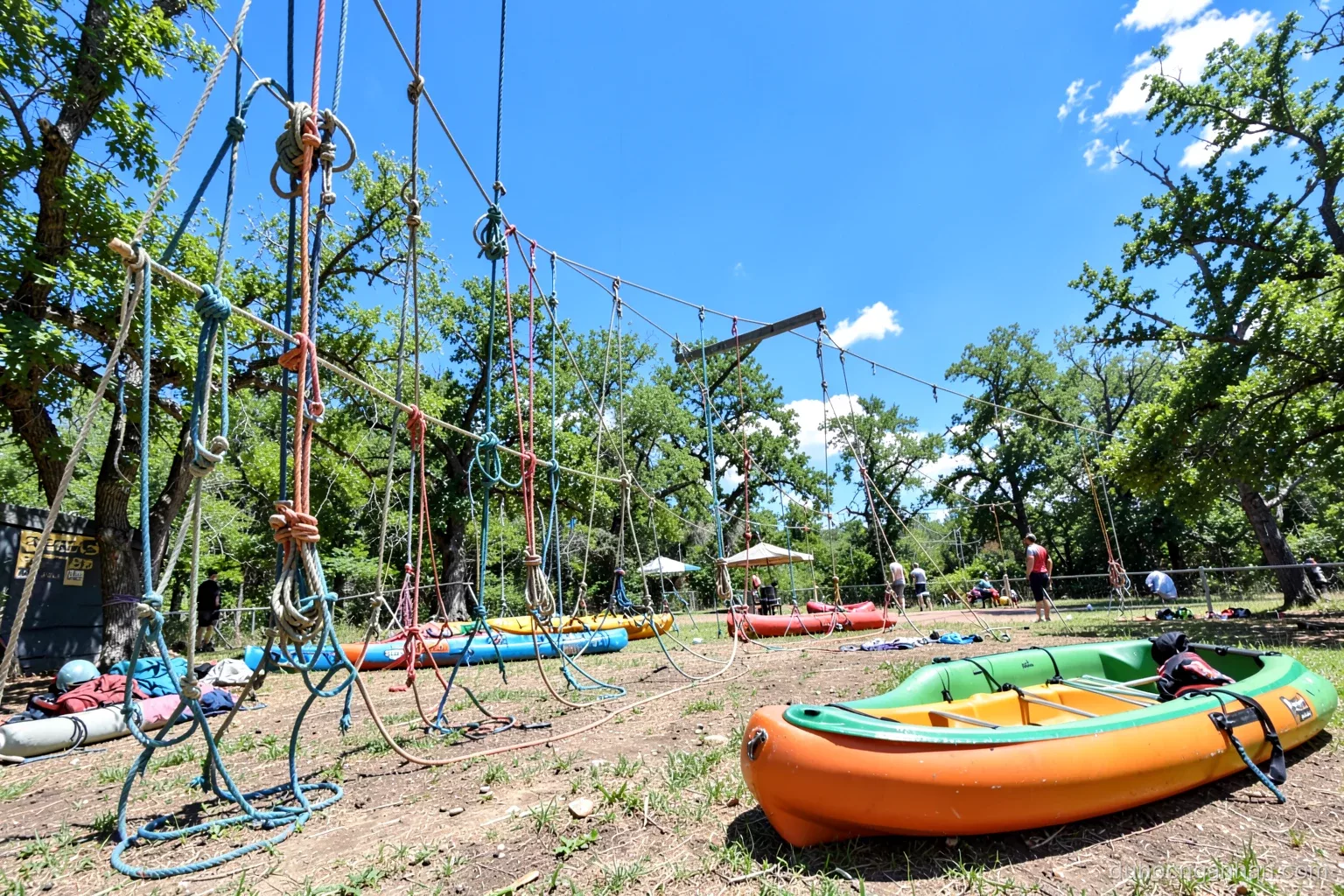
| Outdoor leadership | Group decision-making, assigning roles, working under pressure | Elementary to intermediate | Completing a group expedition |
The English levels in the table are relative estimates. Model United Nations and debating require reading documents and speaking continuously, so they are the hardest; outdoor leadership uses a lot of language but in short sentences, which suits children whose English has only recently become fairly good.
Signs that a leadership camp has only an attractive name
Leadership camps are easily sold through images: grand halls, famous universities, guest speakers with impressive titles. The following points need further questions:
- The weekly schedule is mostly sightseeing and listening to talks; your child sits and listens more than they speak.
- There is no session where your child receives individual feedback on their presentation or arguments.
- The camp promises "meeting leaders" or "studying at a famous university" but does not say who teaches every day.
- It does not say clearly which debating format or which simulated committee the programme uses, or who writes the topics.
- The certificate is emphasised more than the content, with hints that it will "make your application look good".
- Every pupil receives the same award or title, which makes the feedback meaningless.
A camp with substance is not afraid to tell parents that your child will have to prepare, will sometimes lose a debate round and will have their weak points pointed out by the judges. That is a good sign.
Who suits a leadership camp, and who is not ready yet
It suits children who already like to talk and argue. These children usually progress quickly because for the first time they are placed in a framework with rules, judges and evenly matched opponents.
It also suits children who talk little but think a lot. Model United Nations has roles in drafting, research and lobbying in small groups, which suit introverted children very well. Not every leader is the person who speaks loudest.
It does not yet suit a child whose English is only at the level of understanding short sentences. Your child will not keep up with the documents and the pace of debate, and may easily withdraw and lose confidence. A season at a language camp with light presentation activities is a more sensible first step.
It does not yet suit children under about 12. Most leadership camps target ages 13 and over, because the content requires abstract thinking and reading long texts. Young children learn group skills better through games and outdoor activities.
It does not yet suit a child who is going because their parents want it. A leadership camp demands initiative. A child who does not want to go will sit silently all week, and that feeling of failure may last longer than the summer.
Preparing your child before a leadership camp
Good preparation lets your child spend the first week learning rather than catching up.
- Read the materials the camp sends in advance carefully. For Model United Nations, the camp usually assigns the country and the topic a few weeks ahead. Research that country with your child: its location, population, economy and position on the topic.
- Practise speaking for two minutes on any topic. One topic every evening, in English, timed. Parents do not need to correct grammar; just ask one follow-up question: "why?".
- Watch a few rounds of student debates with subtitles. So your child can picture the pace and how judges give feedback.
- Practise taking quick notes. Debating requires noting the opponent's points while listening; your child can practise by listening to short news items and writing down the main points.
- Talk about losing in advance. Your child will lose a few rounds, and that is where they learn most.
There is no need to turn your child into an orator before leaving. The goal is for your child to walk into the meeting room on the first day with a little understanding and a little confidence.
A leadership camp is not an application-building step
Many parents hear that leadership camps "help study abroad applications". That way of thinking easily leads to choosing a camp by the name of the host university rather than by its content. A few weeks at camp is rarely the highlight of an application; what has value is what your child learns and goes on doing afterwards, for example starting a debating club at school, taking part in model conferences in Vietnam, or pursuing a community project.
Du Học Ngắn Hạn sees a leadership camp as an experience: the first time your child stands in front of friends from many countries to defend an opinion, the first time they find they can change someone else's mind through reasoning, and also the first time they learn to accept it when their reasoning does not win. If your family would like to read through the curricula of the leadership camps currently taking registrations together, the advisers can send the schedules and detailed descriptions to compare against the signs above.
Frequently asked questions
Is Model United Nations a competition?
There are conferences that give awards to outstanding delegates, but at a summer camp it is mostly learning and practice. A good camp emphasises feedback for each child rather than prizes. Parents should ask what their child learned rather than whether they won an award.
Can my child keep up if they have never debated?
Yes, if the camp has an introductory section and groups pupils by experience. Be honest when registering. Some camps have a separate group for beginners, teaching them how to structure a speech before they enter competitive rounds.
Will my child have to defend a view they disagree with?
Usually yes, because sides are assigned at random. This is the deliberate point of debating: practising understanding the other side's arguments. It does not mean your child has to change their beliefs; they are only practising presenting the strongest case for a position.
Are the topics at leadership camps sensitive?
Model United Nations discusses global issues such as climate, health, education and children's rights. Camps for younger pupils usually choose age-appropriate topics. If you are concerned, you can ask the camp for the list of topics in advance.
How is a leadership camp different from a life skills camp in Vietnam?
Life skills camps in Vietnam usually focus on independence, teamwork and basic survival. International leadership camps focus on argument, presentation and negotiation in English with friends from many countries. The two complement each other; one does not replace the other.
After camp, what should my child do to keep the skills?
Join or start a debating or Model United Nations club at school; read international news and practise giving a short opinion every week; attend student conferences in Vietnam. Speaking and argument skills need regular practice; one summer is only the starting point.