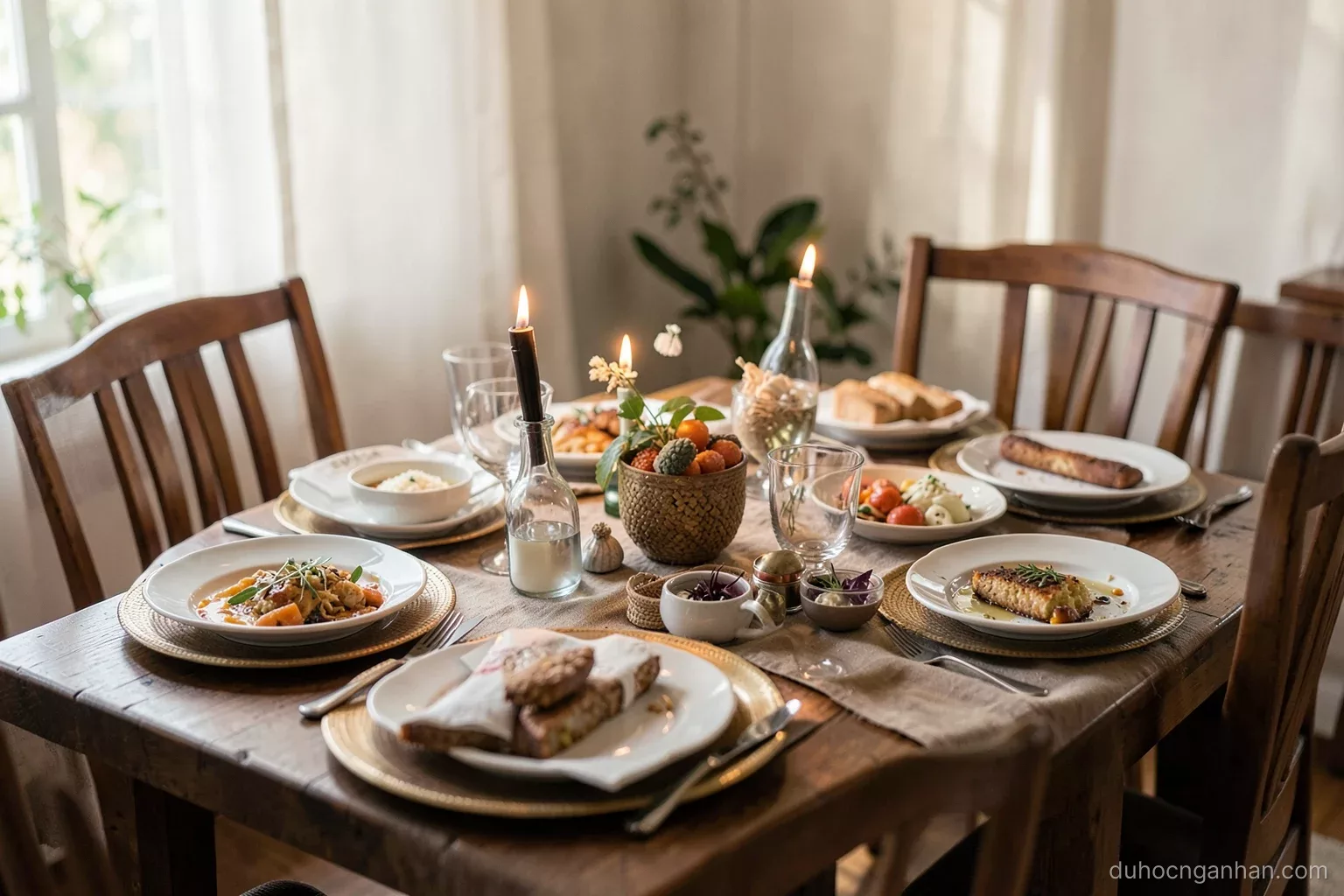
In a two-way exchange programme between two schools, after your child has been hosted by a family abroad, it is your family's turn to host a pupil from the partner school for a few days to a few weeks. Preparation has five parts: a private, quiet place to sleep, meals that respect the guest's dietary restrictions, a clear daily routine, the temporary residence registration for foreigners required by law, and a manageable plan for introducing Vietnamese life — there is no need to turn the whole stay into a sightseeing tour.
The hosting side is the other half of cultural exchange, and it is often prepared more casually than the travelling side. This article helps Vietnamese families prepare before the guest arrives and for the first days, balance the household's habits with the guest's needs, and understand the role of your own child — who now becomes the host.
Before the guest arrives: what to ask the school and the guest's family
The organiser or the school usually sends a short profile of the visiting pupil. If the information is not enough, the family should ask for more at least a few weeks in advance:
- Does the guest have allergies, chronic conditions or daily medicines? Who is their emergency medical contact?
- Does the guest have dietary restrictions: pork, beef, vegetarianism, alcohol?
- Does the guest practise a religion that needs particular times or a private space, such as daily prayers or weekend services?
- Has the guest been away from home before, are they afraid of dogs or cats, are they used to noisy places?
- What is the guest's timetable and activities at your school; which days is the family fully responsible?
- What are the programme's rules on curfew, going out alone, motorbikes and swimming?
- Who is the person in charge of the programme at your school, and how can they be reached outside office hours?
These questions are similar to what the host family abroad asked when hosting your child. Looking back at your child's experience on the travelling side is the quickest way to know what the guest needs.
Accommodation and meals: preparing just enough
The family does not need a large house or a beautiful room. The guest needs the basics to be clear, and a little privacy.
| Item | Should have | Notes |
|---|---|---|
| Sleeping place | A bed or mattress of their own, clean bedding, space for a suitcase and to hang clothes | Sharing a room with your child of the same gender is fine if the programme allows; never sharing with an adult of the opposite gender |
| Bathroom | Clear times for use, their own towel, instructions for the water heater | Many guests are not used to bidet sprays or bathrooms without a separate dry area; explain once |
| Drinking water | Bottled water or boiled and cooled water | Say clearly not to drink tap water |
| Meals | Light, not too spicy dishes; rice, vegetables, eggs and chicken are safe | Ask about dietary restrictions in advance; introduce street food gradually |
| Wi-Fi, charging | The password, suitable sockets or an adapter | Vietnamese sockets differ from those in many countries |
| Emergency information | A sheet of paper with your home address in Vietnamese and the family's contacts | For the guest to carry when going out |
Vietnamese food is usually well received by foreign guests, but fish sauce, fresh herbs, spiciness and street food can upset a stomach that is not used to them. Let the guest try one dish at a time, a little at a time in the first few days, and do not insist they finish everything as you might with children in the family.
Temporary residence registration for foreigners
Under the regulations on foreigners' residence in Vietnam, when a foreigner stays in a private home, the homeowner or the person managing the accommodation is responsible for registering their temporary residence with the police where the home is located. The registration can be done in person or through the online method that the local police explain; the procedure, documents required and deadline for registration may change from time to time.
In an exchange programme, the school or the organiser usually guides the family through this procedure, and sometimes helps do it for them. The family should ask clearly who is responsible for registering, whether copies of the guest's passport and visa are needed, and check again with the commune or ward police where they live according to the current rules — especially since the administrative system was reorganised from mid-2025.
Besides registration, the family should keep copies of the guest's passport, visa and insurance at home (the originals kept by the guest or by the school according to the programme's rules). If something happens, such as a lost passport or a hospital admission, these copies make things much quicker to deal with.
The first days: say the household habits out loud, don't leave them to guesswork
Introduce the family members and how to address them. How should the guest address your child's parents: by first name, "Mr. and Mrs.", or learning to say "cô" and "chú"? If grandparents live with you, show how to greet them. Many guests love learning Vietnamese forms of address.
Shared timings. What time breakfast and dinner are, who cooks, whether the whole family eats together, shower times, bedtime. Say it once, and remind gently when needed.
Things your household does differently. Taking shoes off at the door, having an ancestral altar in the house (explain that it is a place to remember the grandparents and that things on it should not be touched), afternoon naps, eating from shared dishes at a common table. A short explanation keeps the guest from feeling awkward.
Road safety. Vietnamese traffic is usually what foreign guests find most bewildering. Tell the guest not to cross busy roads alone until they are used to it, not to ride a motorbike themselves, to wear a helmet when riding pillion, and to keep bags on the inside when walking.
Ask what the guest needs. At the end of the first day and the first week, ask: "Is there anything you need?", "Is anything difficult for you?". Guests are usually as hesitant to speak up as your child was when staying in someone else's home.
Introducing Vietnam: real life rather than tourist sights
Host families tend to plan a packed schedule: sightseeing and restaurants every day. What exchange pupils remember most, though, are usually very ordinary things: going to the morning market with Mum, eating dinner from shared dishes with the grandparents, going to school with your child, watching the whole family wrap cakes, sitting at a pavement café, attending a death anniversary or a relative's birthday.
A balanced plan might include: weekdays following the school timetable, a few afternoons going to the market, cooking or playing sport with your child's friends, and at the weekend a trip somewhere nearby such as a museum, an old quarter, a craft village or a park. Leave a few sessions free for the guest to rest, call home and write a diary. Tiredness and jet lag are real, especially in the first week.
Your child is the most important person in this part. Your child knows what friends of the same age like, can introduce the guest to their group of friends at school, teach them a few phrases of Vietnamese and take them to places pupils usually go. When your child plays host, they learn something the earlier trip could not teach: seeing their own culture through someone else's eyes.
Grandparents, relatives and neighbours: the whole household hosts together
In many Vietnamese families, grandparents live with or near the family, relatives drop by often and neighbours know each other. For a foreign pupil used to living in a small family, this is both the most interesting thing and something that can be overwhelming. An evening with ten people asking questions, offering food and taking photos can tire the guest more than a whole day of sightseeing.
Parents should tell relatives in advance that there is a foreign guest in the house, and ask everyone to keep the questions moderate, not to press food on them, and not to ask personal questions about weight, family income or romance — questions Vietnamese people ask out of friendliness but which many cultures consider intrusive. Group photos with the guest need the guest's permission first, and should not be posted publicly without their agreement.
On the other hand, a gently prepared gathering with relatives can be a memorable experience: grandfather telling stories of the old days, grandmother teaching how to wrap cakes, the little ones teaching traditional games. Your child acts as interpreter and host, and at that moment will see clearly why the familiar things in your home are worth telling.
When there are difficulties: illness, homesickness, mismatched habits
Minor illnesses such as stomach upsets or sunstroke are common in the first days. The family should contact the programme coordinator straight away to agree on what to do, take the guest to a medical facility when needed, and inform the guest's family through the school's channel. Do not give medicine based on your own family's experience without appropriate advice, because the guest's constitution and insurance may be different.
Homesickness usually arrives around the end of the first week. The signs are the guest staying in their room a lot, eating little and talking little. Give the guest space, invite them to a light activity, and keep up a regular schedule of calls home. If it goes on, tell the programme coordinator.
Sometimes the guest and the family genuinely do not match: the guest needs quiet while the house is full of people, or the guest is vegetarian and the family is not used to cooking that way. Talking frankly and gently with the guest and the school early on, and finding ways to adjust together, is better than putting up with it until the end and leaving both sides exhausted.
The day the guest leaves: closing the stay properly
The day of goodbye also needs preparing, like the day of arrival. A thoughtful ending keeps the relationship between the two families and the two schools going for a long time:
- Check with the guest their luggage, passport, medicine, charger and gifts; remind them of the rules on bringing food into their country.
- Take the guest to the meeting point on time as set by the programme, and hand them over to the person in charge.
- Give a small gift with a story: a printed photo of the whole family, a handicraft, the recipe for a dish the guest liked.
- Write a few lines of feedback to the school about the stay: what went smoothly and what could be improved for next time.
- Send greetings to the guest's family through the school's channel, with a few photos the guest has agreed to.
- Talk with your child afterwards: what did you learn as a host, and how did your own culture look different through your friend's eyes?
Many families say that hosting made the whole household look again at their way of life: shared meals, the way of greeting grandparents, familiar dishes suddenly became worth talking about again. That is the gift in return that a two-way exchange brings to the host family itself.
Frequently asked questions
Can we host an exchange pupil if our home is small?
Yes, if there is a clean private sleeping place, a usable bathroom and a quiet space for the guest to rest. Sharing a room with your child of the same gender is usually acceptable when the programme allows it. Exchange pupils come to live the real life of a Vietnamese family; they do not need a hotel room.
Who has to register temporary residence when a foreign pupil stays in our home?
Under the regulations on foreigners' residence, the homeowner or the person managing the accommodation is responsible for registering temporary residence with the local police. In an exchange programme, the school usually guides or helps with this. The family should ask the school clearly and check the current procedure with the commune or ward police.
Can exchange pupils ride motorbikes in Vietnam?
Pupils who are under age and do not hold a suitable licence may not ride themselves. Riding pillion on an adult's motorbike requires a properly worn helmet and following the programme's rules — some programmes only allow travel by car or bus. Ask the school clearly before giving the guest a ride.
How should we plan sightseeing for an exchange pupil?
Prioritise real life: the market, cooking, going to school with your child, meals with the grandparents, a few weekend trips near home. Leave free time to rest, especially in the first week. A schedule that is too full tires the guest and makes them miss the most valuable part, which is living with a Vietnamese family.
What if the exchange guest cannot eat Vietnamese food?
Ask about dietary restrictions and preferences in advance, and prepare a few light, not-too-spicy dishes such as rice, eggs, boiled vegetables, chicken and fruit. Introduce new dishes gradually without pressure. If the guest eats too little for several days, talk with them and the school to adjust.
What should my child do when they become the host of an exchange friend?
Introduce the friend to their group at school, teach a few phrases of Vietnamese, take them to places pupils usually go, explain your household's habits, and notice when the friend is tired or homesick. This is when your child uses what they learned staying in someone else's home, in the opposite direction.