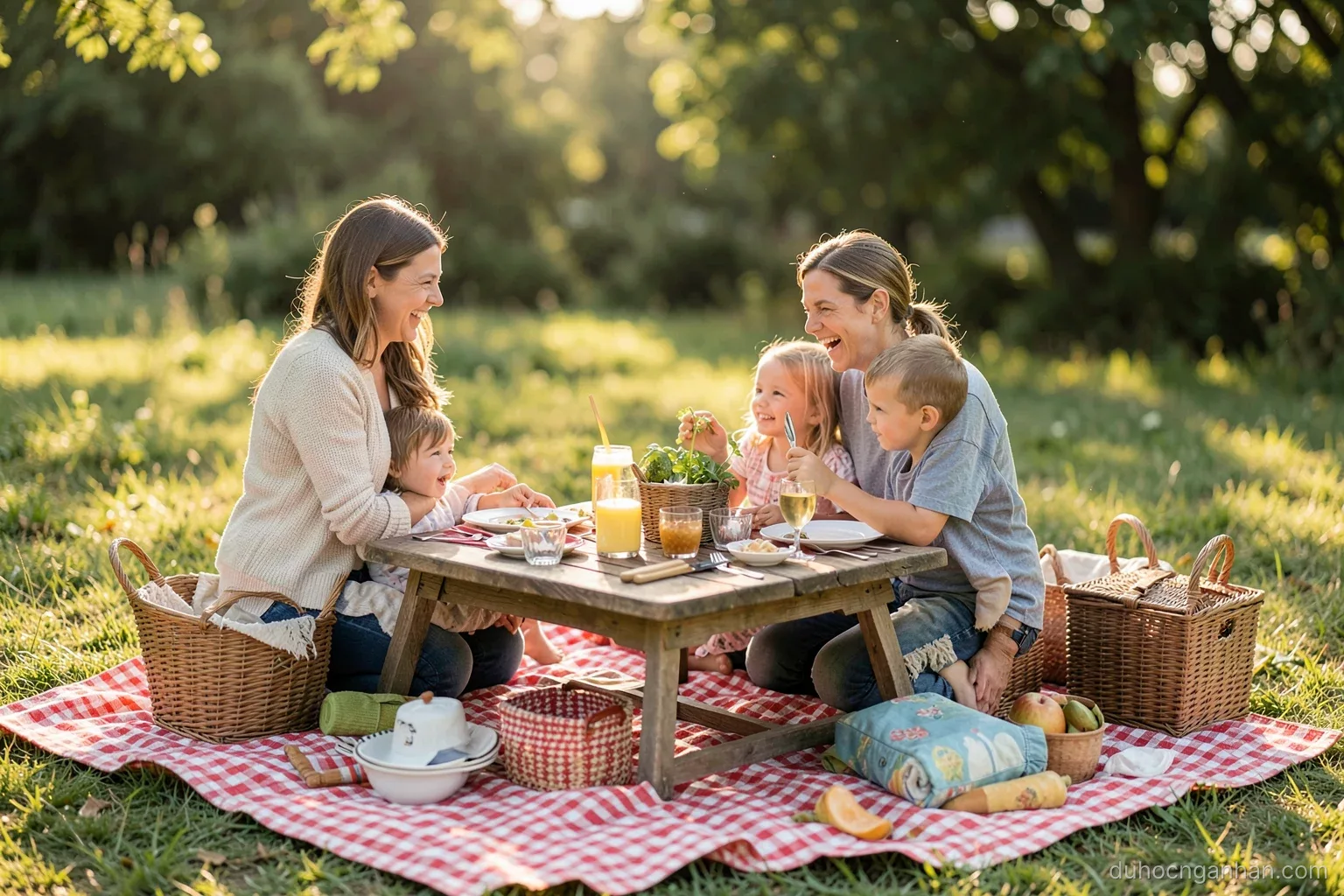
A family camp abroad is a short programme, usually from a few days to a week or two, in which parents and children take part together in a series of activities such as nature outings, life skills, sport, art or exploring local culture, with instructors and a shared schedule for the whole family. Unlike a family language course, where each person sits in a separate class, a family camp puts parents and children in the same activity, solving the same task, eating and sleeping at the camp together.
This kind of camp is common in countries with a long tradition of summer camps, and more and more Vietnamese families are looking into it as a trip with more depth than ordinary tourism. This article explains the types of family camp, how to read the camp schedule, who it suits and who it does not suit yet, the safety points to check, and how to make the camp really bring the family together rather than just being a holiday with added activities.
Common types of family camp
The names differ between countries, but most family camps fall into one of the groups below. Each group calls for a different level of fitness and comfort:
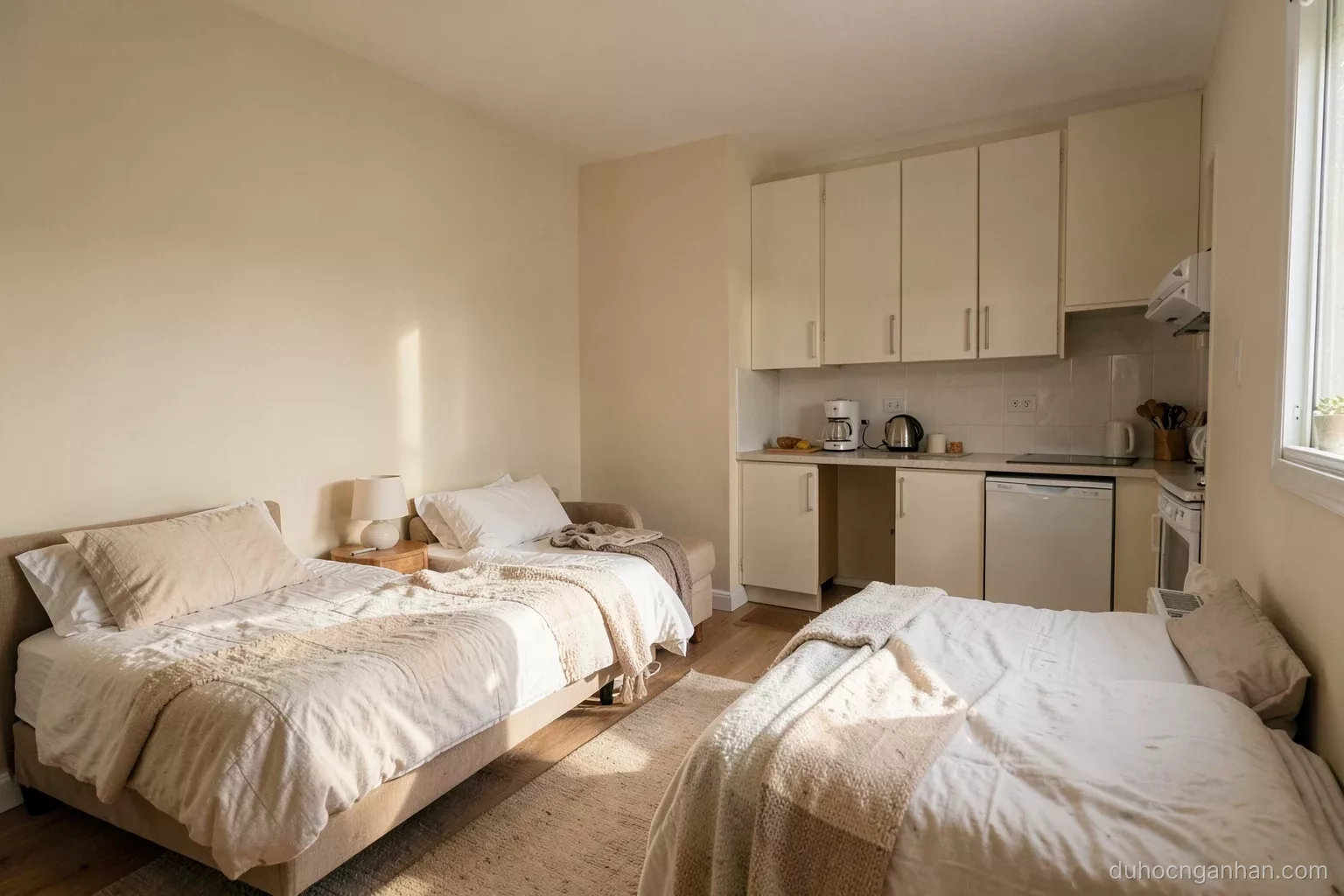
| Type of camp | What the family does | Typical accommodation | Suits |
|---|---|---|---|
| Nature and outdoor camp | Canoeing, forest hiking, camping, birdwatching, outdoor cooking | Wooden cabins, tents on platforms, shared lodges | Families who love the outdoors, children from about six |
| Farm camp | Looking after animals, gardening, baking, making cheese | Farm guesthouses | Families with young children who enjoy hands-on work |
| Sports camp | Learning one sport together: swimming, surfing, skiing, cycling | Hotels or resorts with sports facilities | Families with a base level of fitness, older children |
| Arts and crafts camp | Pottery, painting, film-making, music together | Guesthouses, study centres | Creative families who prefer less strenuous activity |
| Culture and language camp | Learning about local life, cooking, festivals, a few phrases of the local language | Local homes, guesthouses | Families who want to understand a place more deeply than tourism allows |
One camp may combine several types. What matters is looking at the day-by-day schedule to see what the family actually spends most of its time doing, and how many hours are shared activities and how many are time when parents and children are separated.
How a family camp differs from a family language course
A family language course puts language first: each person in a class by level and age, with the family meeting up again in the afternoon. A family camp has a different goal: the whole family doing something together that they rarely have the chance to do at home. A family of four paddling two canoes across a lake, pitching a tent together and cooking dinner over a fire have to talk to each other, divide the tasks and put up with each other when tired. That is what a family camp offers that a course can hardly provide.
English at a family camp is a tool, not a subject. Your child listens to the instructor explaining how to hold the paddle, asks children from other families about their food, and parents have to use English just like their child. For many families, it is the first time a child sees their parents also struggling with a language, having to ask again and laughing when they get it wrong. Children who see that usually become less afraid of making mistakes.
Another difference is how time is organised. Courses have fixed class hours every day; family camps usually have a more flexible schedule, mixing shared activities with free time for each family to do its own thing. Families used to a packed schedule may find the first few days a little strange.
Who family camps suit
Families who want quality time together. Parents who are busy all year and want a trip where the whole family really does things together, instead of everyone on their own screen in a hotel.
Young children not yet ready to go to camp alone. Children aged six to ten who want to try camp but are not used to being away from their parents. A family camp is good preparation before your child goes to a residential camp alone later on.
Families with several children of different ages. Many family camps mix age-based activities with shared ones, so older and younger children each have their own part while still being on the same trip.
Not yet suitable: families expecting clear progress in their child's English. If the main goal is your child's English, a course with regular class hours is a better fit. A family camp lets your child use English in daily life, but cannot replace classes.
Not yet suitable: parents who need to work during the trip. A family camp asks parents to take part almost all day. If one parent has to attend meetings or work remotely for many hours, the camp will be one person short and your child will feel it clearly.
What a day at a family camp looks like
At a typical nature camp, the day begins with a shared breakfast in the camp dining hall, where families from many countries sit at long tables. Then come morning activities in groups: sometimes the whole family is in one group, sometimes children are divided by age with their own instructors while parents take part in an activity for adults. This short separation is deliberate: children get the chance to make new friends on their own, parents get a few hours' rest, and at lunchtime the family meets up again with stories to tell each other.
Afternoons are usually shared family activities such as canoeing, trail walking, a craft project, or free time for each family to do its own thing. Evenings may be a campfire, storytelling, an outdoor film, or just a long dinner followed by an early night. Young children usually sleep very well at camp because they have been active outdoors all day.
This rhythm is quite different from a holiday: less travel, fewer sights, more time in one place. Families used to holidays that cover many places may find it slow for the first day or two, then usually realise it is exactly what they are missing at home.
Safety checks before registering
Family camps have many outdoor and water activities. Even with parents along, the following points should be asked about in advance:
- Instructors certified for each adventurous activity such as swimming, canoeing and climbing, and the ratio of instructors to participants.
- Life jackets and protective equipment in sizes for young children, not just adult sizes.
- Minimum age rules for each activity, not just for the camp as a whole.
- Distance to the nearest medical facility, especially for camps in remote areas, and whether a first-aider is on duty.
- Bad weather plans: which activities are cancelled in storms, heat or thunderstorms, and what replaces them.
- The family's insurance, and whether it covers the camp's sports and adventure activities, because many ordinary travel policies exclude them.
Parents being present does not replace a qualified instructor. In water or mountain activities, follow the instructor, even if you think you know how.
Making the camp really bring the family together
However well a camp is organised, the bonding still depends on how the family takes part. A few suggestions from the experience of families who have been:
- Put phones away during activities. Take a few photos, then put the phone away. Children notice very clearly when parents are paddling and answering messages at the same time.
- Let your child lead a part. Let your child read the trail map, choose where to pitch the tent and divide up the cooking. Children given real responsibilities are far more enthusiastic.
- Accept the moments that are not fun. Rain, a capsized canoe, a child crying from tiredness: those moments are part of camp. How the parents react is a lesson children remember for a long time.
- Get to know other families. Family camps have many families from many countries. Your child plays with other children, parents chat with other parents, and English is used naturally.
- Look back together every evening. For a few minutes before bed, everyone shares one thing they liked most that day. Children often take this small ritual home and keep it for a long time.
After the camp, many families keep up one activity they do together at home, such as a weekend walk, cooking a dish they learned, or camping outside the city. That is how the camp lives on after you return.
Reading a family camp schedule properly
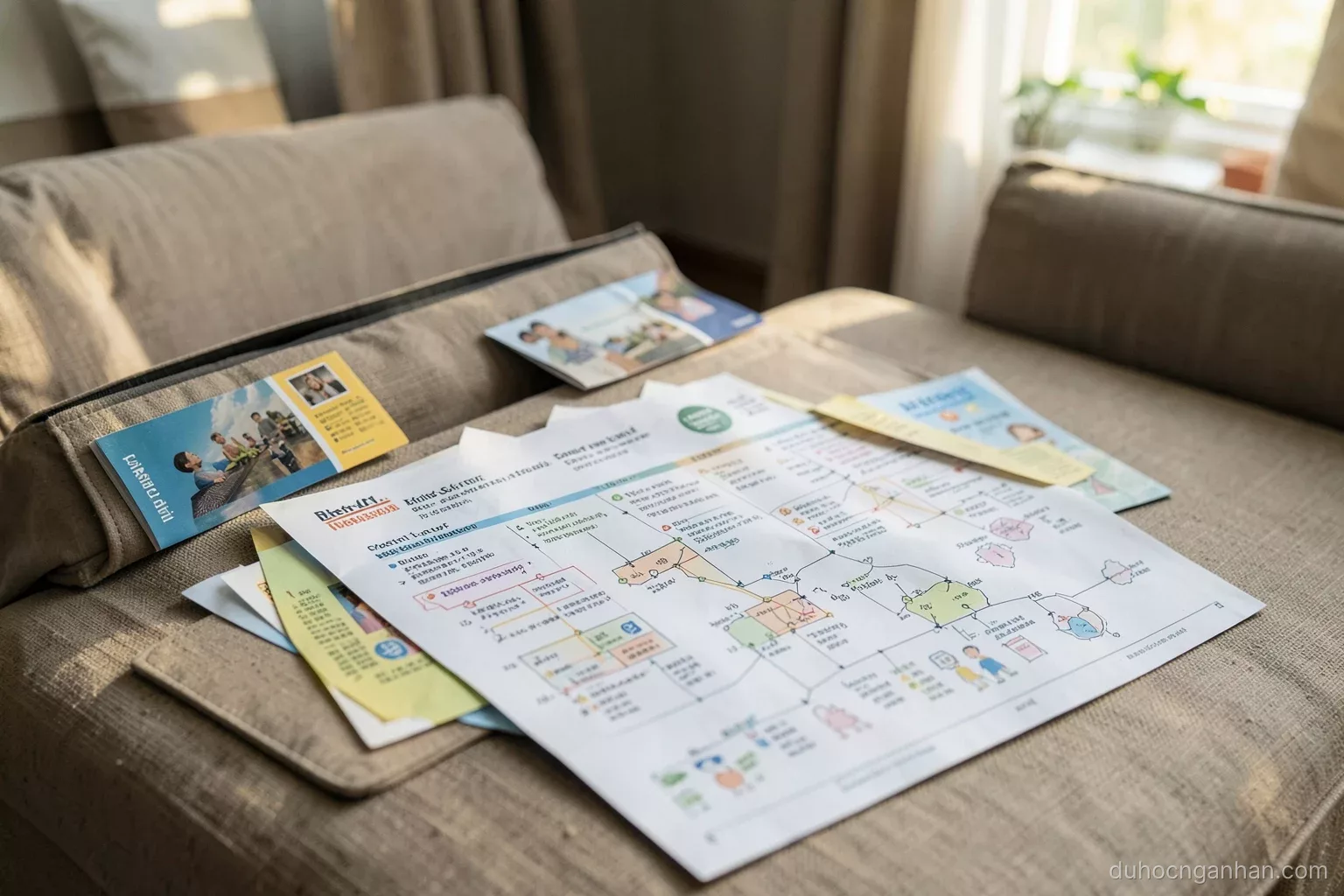
Family camp schedules are usually written very attractively, with many activities and lovely photos. What you need to read is the detail: what time each day starts and ends, which activities are compulsory and which optional, and how many hours are free time. A schedule packed from morning to evening may be fun for older children but exhaust younger ones after two days.
Ask the camp about the parts of the schedule that are not written down: whether meals are provided by the camp or the family cooks, whether there are menus for children or people on special diets, how laundry works, and whether there is somewhere for young children to nap. For camps in remote areas, also ask about phone signal and internet, so the family is prepared if it cannot contact home for a few days.
It is also worth asking whether the camp has an introductory session before starting, so the whole family knows the rules, which areas are allowed, the night-time quiet hours and how to call an instructor when needed. Camps with many families from many countries usually have shared rules on noise, bathroom times and sorting rubbish; knowing them in advance helps the family fit in faster.
Finally, check whether the camp suits the fitness level of the least fit person in the family. A camp with six hours of hiking a day may suit a father and an older child, but not a mother with a bad knee or a five-year-old. The best family camp is one the whole family can keep up with.
Frequently asked questions
Do parents need good English for a family camp?
Not good English, but parents should be able to understand the instructors' basic directions, especially safety instructions. Many camps speak slowly and demonstrate for international families. If you are not yet confident, choose a camp whose instructors are used to working with foreign guests.
From what age can children go to a family camp?
Many camps accept children from about four or five for light activities, and set separate minimum ages for adventurous activities. Children aged six to twelve usually get the most from this kind of camp, because they are old enough to take part while still enjoying doing things with their parents.
Can a family camp replace a summer camp my child goes to alone?
No, because the two types of camp give children two different experiences. A family camp gives your child the feeling of camp with their parents beside them; a camp alone gives them independence. Many families go to a family camp first, and a few years later let their child go to camp alone.
Can a family with only one parent accompanying the child join a family camp?
Yes, many camps have families with only one parent accompanying their child. Ask the camp how it arranges accommodation and groups for activities that need two adults, such as double canoes or pitching tents.
Are there family camps near Vietnam?
Some countries in the region have resorts, farms and nature centres that run programmes for families. Quality varies a great deal, so read the camp schedule carefully and ask about safety and instructors, rather than choosing by distance or advertising photos.
How long should a family camp be for a first time?
For a first time, three to five days is about right for the whole family to get used to the camp rhythm without getting too tired. Camps of one to two weeks are better suited once the family has tried one and knows which kinds of activities it enjoys.