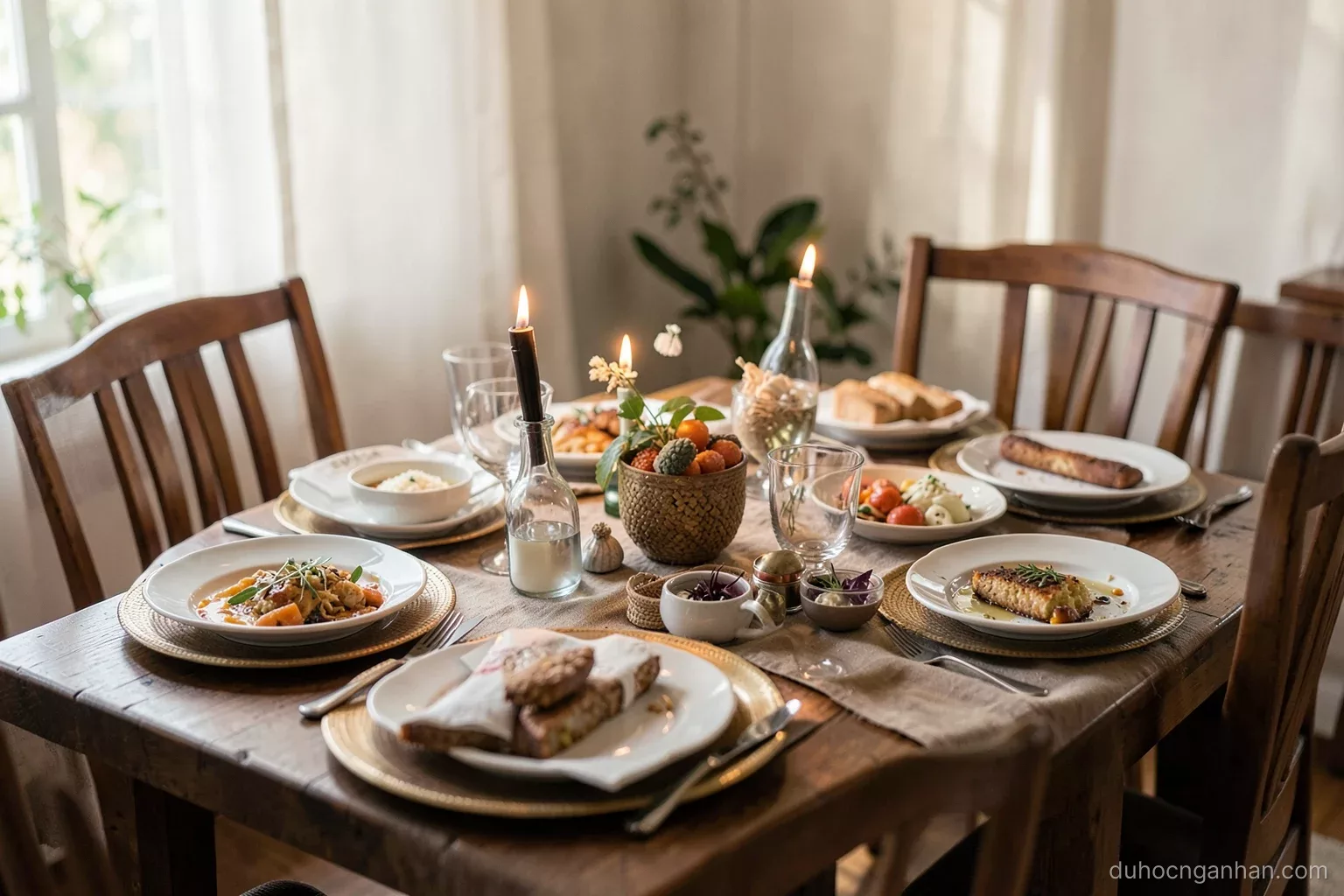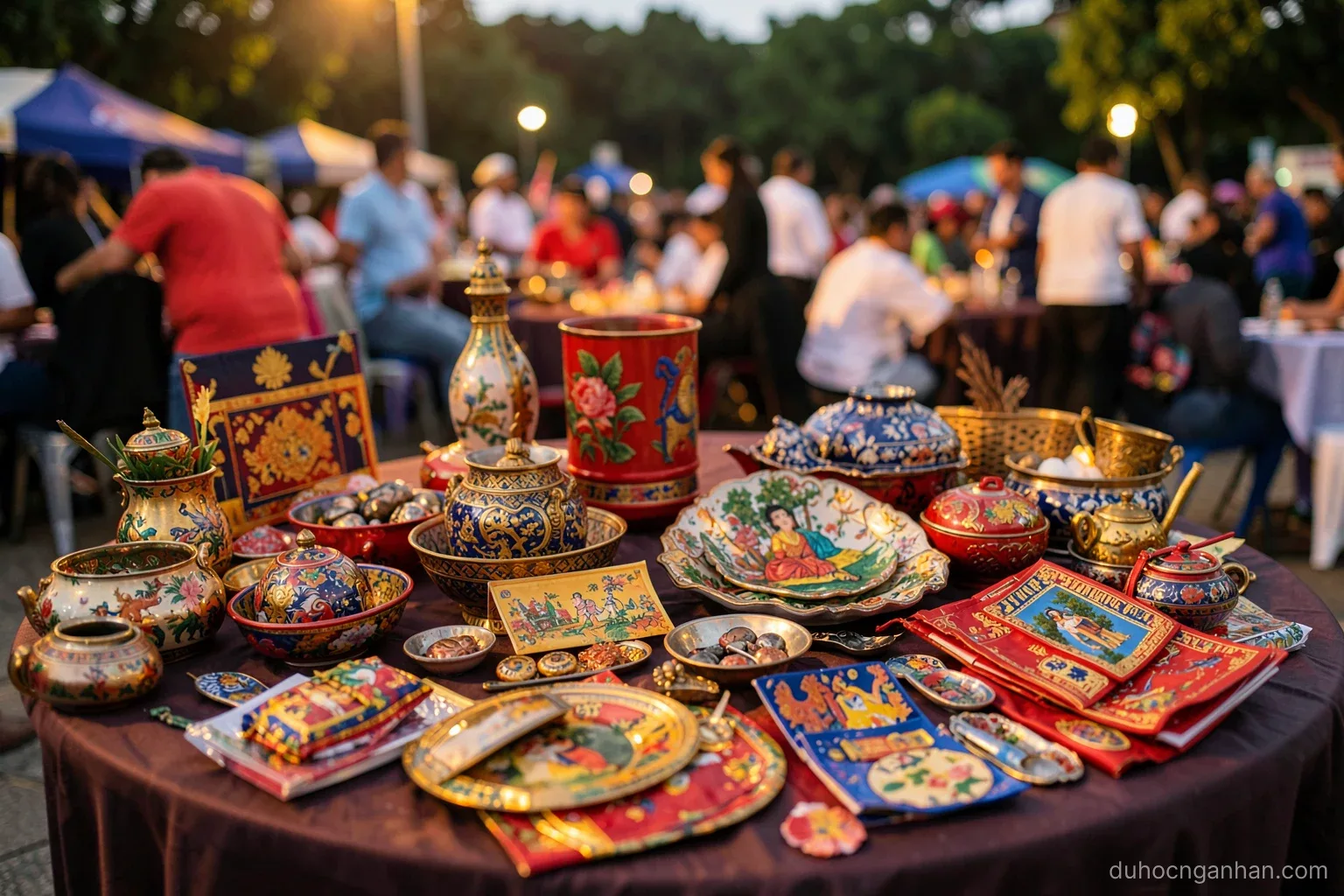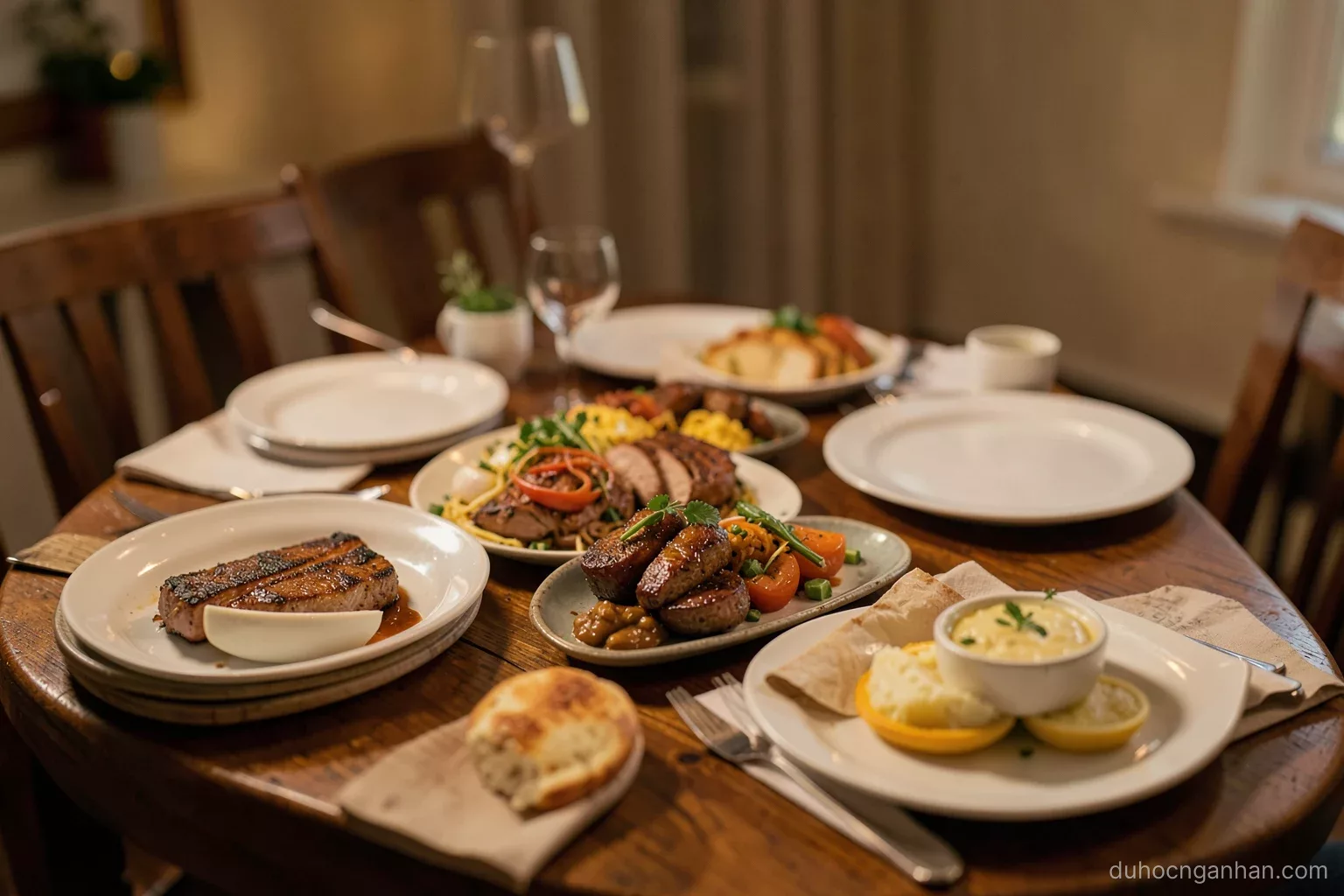
At an international camp, the dining table is where your child meets cultural differences most clearly: Muslim friends do not eat pork and fast during Ramadan, Hindu friends often avoid beef, some friends are vegetarian for family reasons, and some are so allergic to peanuts that they cannot sit nearby. Your child's job is not to understand every dietary rule, but to know how to show respect: no pressuring, no joking, no offering food without asking first, and paying attention to friends who are avoiding certain foods.
This article goes through the common dietary restrictions your child may meet, manners when eating at one table with many nationalities, how to share Vietnamese food brought from home, and your child's own dietary needs, which must be made clear to the camp.
Dietary restrictions your child may meet
Each person practises differently, even within the same religion or country. The table below shows general tendencies to help your child recognise them, not to guess on a friend's behalf — the surest way is still to ask.
| Group | Usually avoid | What your child should know |
|---|---|---|
| Muslim friends | Pork and anything made from pork (lard, pork rolls, sausages, pork gelatin), alcohol; many only eat meat slaughtered to halal standards | Do not share spoons or tongs that have touched pork; during Ramadan many friends fast from dawn to sunset |
| Hindu friends | Many avoid beef, some are fully vegetarian | The degree varies a lot between families |
| Vegetarian friends | Meat and fish; some also avoid eggs and dairy (vegans) | Stock, fish sauce and cakes made with animal fat can also be a problem |
| Jewish friends | Pork, shellfish, mixing meat and dairy in one meal (for those who keep kosher) | Rare at Asian camps but possible |
| Friends with allergies | Peanuts, tree nuts, seafood, milk, eggs, gluten… | With severe allergies, even a tiny cross-contamination is dangerous; do not share food with these friends without asking |
This table is not meant to label anyone by nationality. Some friends from Muslim-majority countries do not observe the restrictions; some Vietnamese friends are vegetarian too. The question "Is there anything you don't eat?" is always safer and more polite than any guess.
Manners at a table shared by many nationalities
Do not comment on a friend's food in a critical way. "Ew, what is that?" can embarrass a friend for the whole meal. Instead: "What is that? It looks interesting." Curiosity is fine; criticism is not.
Do not pressure or trick anyone into trying something. The game of "try it, it's delicious" while hiding that the dish contains pork or peanuts is not harmless fun; it may violate something a friend considers sacred or trigger a dangerous allergic reaction.
Pay attention to eating noises. In Vietnam and many Asian countries, slurping soup noisily is perfectly normal; for some friends from Europe or the Middle East, chewing with the mouth open or slurping loudly may be seen as impolite. Your child does not need to change all their habits, just to be aware when sitting at a table with many friends from other countries.
Do not take too much and leave it. Self-service canteens easily lead children to fill their trays. Take a reasonable amount, finish it, and go back if you want more — it respects the cooks and avoids giving an impression of waste.
Wait for the whole table at meals with a ritual. Parties and special dinners often start with a short speech or prayer before eating. Your child waits with everyone and does not pick up chopsticks or a spoon first.
Ramadan at camp: when friends in your group are fasting
If the camp session falls during Ramadan — the month moves every year according to the Islamic lunar calendar, so in some years it falls in summer — your child may have roommates or group mates fasting from dawn to sunset. Some camps organise an early breakfast before dawn and a late dinner for these friends; young children are often allowed by their families not to fast, or to fast partly.
Your child does not need to fast too, but can show respect through small things: not eating and drinking showily in front of a fasting friend on a hot afternoon, not inviting them for snacks, and understanding why they are more tired during sport. At sunset, if invited to share the meal that breaks the fast, it is a precious chance for your child to see a family ritual from another country.
For group leaders and parents, this is also a reminder: when asking the organiser about meals, ask whether the camp has Muslim pupils, and whether the canteen has a separate area or labels halal dishes. It shows the camp is used to welcoming diverse pupils, and such camps are usually thoughtful about other needs too.
Sharing Vietnamese food brought from home: doing it right
A packet of biscuits or a box of sweets from Vietnam is a very effective way to start a friendship. But sharing food in a multinational environment needs a few rules:
- Read the ingredients carefully before offering. Biscuits containing lard, gelatin, alcohol, peanuts or seafood need to be mentioned clearly when offering: "This has peanut", "This has pork".
- Offer by holding out the whole packet for friends to help themselves, rather than putting food straight into their hand or onto their tray.
- Do not bring very strong-smelling food such as fermented fish sauce, dried squid or durian into shared rooms or classrooms.
- Check the destination's and the camp's rules on bringing food. Some countries strictly control meat, eggs, dairy, fresh fruit and seeds; some camps do not allow food in rooms because of ants and mice.
- Bring sealed, packaged dry food with clear expiry dates, such as mung bean cakes, coconut candy, sesame rice crackers and tea bags.
- Tell a short story about the food: where it is made and when it is eaten. Food with a story is remembered longer.
If a friend declines, your child only needs to say "No problem" and not ask why. Declining food may be because of dietary rules, an allergy, or simply unfamiliarity — all of which are the friend's own business.
Your child's own dietary needs: state them clearly in the application
Vietnamese children have their own needs too: being vegetarian for family reasons, being allergic to seafood, not being able to drink cow's milk, needing rice to feel full. These must be stated on the registration form and the medical form, not mentioned only on arrival. The camp needs time to prepare the kitchen, and canteen staff can only pay attention once the information is on their list.
For severe allergies, parents need to talk directly with the organiser about how the kitchen keeps dishes separate, how they are labelled, and who at the camp knows what to do if your child has a reaction. Your child needs to be able to say in English the name of what they are allergic to and the signs of a reaction. Medication and specific instructions must come from your child's doctor.
For children who are simply fussy eaters, the first days may be hard. Your child should try one new dish at each meal in a small portion, eat enough of the rice, vegetables and fruit available, and tell the group leader if after a few days they are still eating too little. Many Asian camps have rice and soup every day, so Vietnamese children often adapt faster than parents fear.
Meals as a culture lesson
Many camps hold an international food night: each nationality group cooks or presents a dish from its country. It is a chance for your child both to try friends' dishes and to talk about Vietnamese food. Fresh spring rolls, fried spring rolls, chè and bánh mì are easy to make with ingredients found in many places; if cooking is not possible, a photo and an explanation of how it is eaten are enough.
Even everyday meals offer plenty to ask about: what do you eat for breakfast at home, who cooks, does the whole family eat together, are there dishes you only eat on holidays? Questions about food are usually easy to answer and rarely sensitive, and they open up deeper conversations about friends' families, holidays and home towns.
Parents can give their child a small "mission" before leaving: write down the names of three dishes from three different countries and the friend who introduced each one. When your child comes home, the family tries cooking one of them. That way the experience does not stop at camp but comes into your own kitchen.
Table habits in some countries your child will often meet
Beyond dietary restrictions, each country has small habits at the table. There is no need to learn them by heart; knowing in advance helps your child not be surprised and not accidentally make a friend uncomfortable.
| Place | Habit | Suggestion for your child |
|---|---|---|
| Japan | Saying "itadakimasu" before eating; lifting the rice bowl or soup bowl close to the mouth is normal | Do not stand chopsticks upright in a bowl of rice, and do not pass food from chopsticks to chopsticks |
| South Korea | Elders pick up their chopsticks first; the rice bowl usually stays on the table and rice is eaten with a spoon | At a meal with teachers, wait for the teacher to start |
| Middle East, South Asia | Many people eat and pass food with the right hand; some meals are eaten with the hands | Pass and receive food with the right hand |
| Europe | Knife in the right hand, fork in the left; each person eats from their own plate | Chew with the mouth closed, and do not talk with a full mouth |
| Philippines | Spoon and fork, with rice at almost every meal | Spoon in the right hand, using the fork to push food onto the spoon |
These are common habits, not rules everyone must follow. In the camp canteen, nobody expects your child to get everything right. What is appreciated is that your child notices and asks: "How do you usually eat this?"
When offered a dish your child avoids or cannot eat
Your child will also sometimes be the one declining: offered a dish too spicy to handle, a dish containing something they are allergic to, or a dish they are genuinely not used to. Declining politely is a skill, especially when the person offering is excitedly introducing food from their home country.
One short sentence is enough: "Thank you, but I'm allergic to shrimp" or "Thank you, it looks great, but I can't eat spicy food. Can you tell me about it?". The second both declines and gives the friend a chance to talk about the dish, so they do not feel rejected. With allergies, your child never "tries a bite to be polite".
When your child wants to try but feels hesitant, ask for a very small portion. If it does not suit them, they should not pull a face or spit it out in front of the friend; finish the small bite and say gently and honestly that the taste is new to them. The person offering usually values your child's courage to try more than whether they liked it.
Frequently asked questions
At an international camp, how can my child tell which dishes contain pork?
Many canteens label dishes with pork, vegetarian dishes and halal dishes. If not, your child can ask the canteen staff "Does this have pork?". With a friend at the table who avoids pork, your child should not share tongs or spoons that have touched pork dishes and should not offer food without knowing the ingredients.
My child's roommate is fasting for Ramadan. Does my child need to fast too?
No. Your child just needs to show respect: not eating and drinking showily in front of a fasting friend, not inviting them for snacks during the day, and understanding why they are more tired. If invited to share the evening meal after sunset, it is a good chance for your child to learn more about their friend.
My child is allergic to seafood. How do we inform the camp?
State it clearly on the registration form and the medical form, have the parents talk directly with the organiser about how the kitchen handles it, and teach your child to say in English the name of what they are allergic to and the signs of a reaction. Instructions for treatment and the medicine to carry must follow the advice of your child's treating doctor.
Will Vietnamese food brought to camp be confiscated?
It depends on the rules of the destination and the camp. Some countries strictly control meat, eggs, dairy, fruit and seeds; some camps do not allow food in rooms. Check with the organiser in advance, choose sealed, clearly labelled dry food, and declare it correctly at immigration if asked.
What should parents say if their child criticises a foreign friend's food?
Help your child distinguish between "I'm not used to it" and "that dish is bad". Every dish is tied to another person's climate, history and family. Suggest your child use curious questions instead of criticism, and ask the friend when the dish is usually eaten. This attitude matters more than whether your child likes the dish.
At the camp's international food night, what dish should my child present?
Choose a dish that is easy to make with local ingredients and suits many people: vegetable fresh spring rolls, vegetarian fried spring rolls, mung bean chè, bánh mì. Have a version without pork and without peanuts so friends with dietary restrictions can try it too. A short story about the dish makes the presentation livelier.