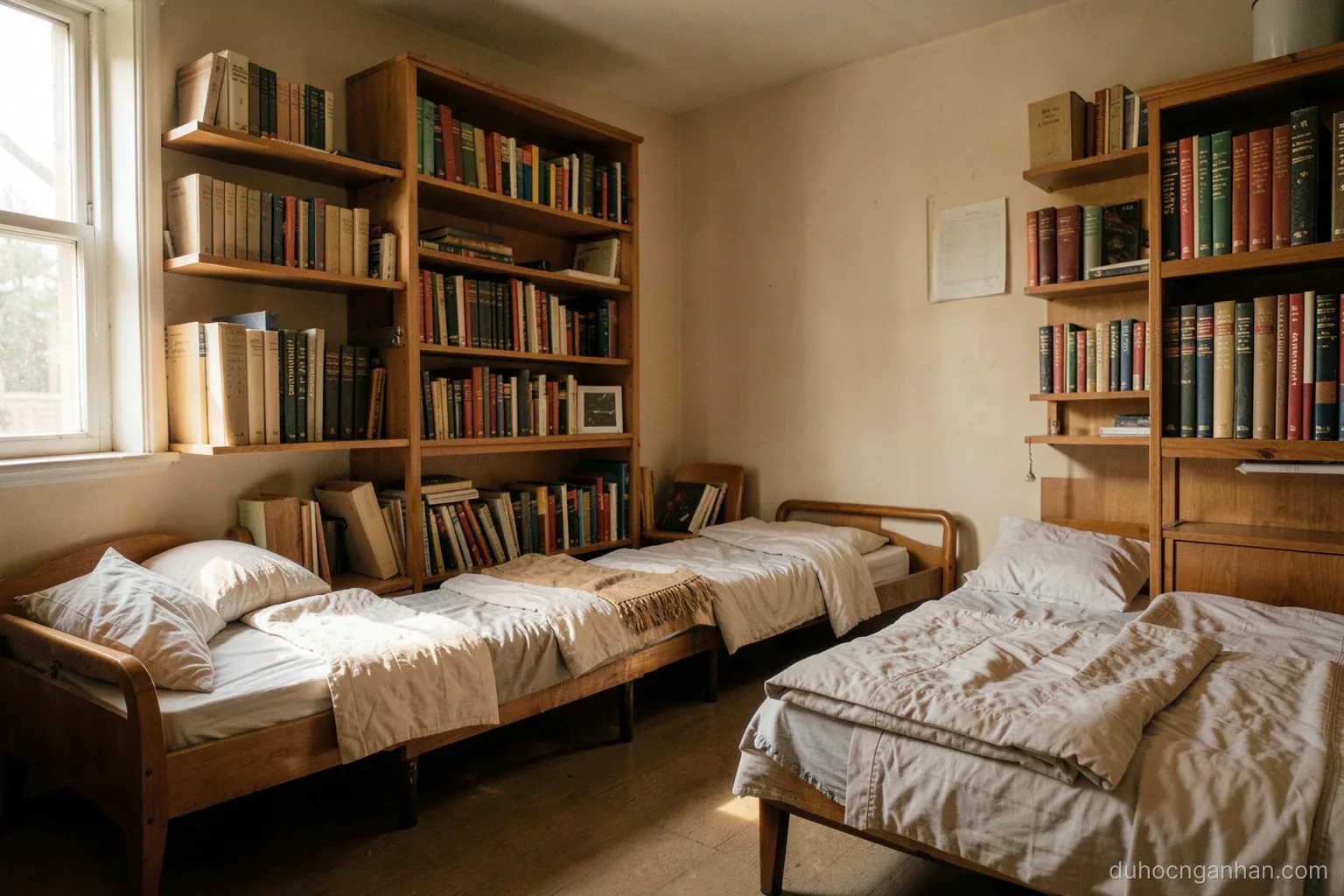
A summer camp at a boarding school abroad is a programme of a few weeks held on the campus of a boarding school during its summer holidays, where your child lives in a boarding house, eats in the school dining hall, studies in real classrooms in the mornings and follows the routine of boarding life: roll calls, prep time, lights out, with house staff looking after them. For many families, it is a way for their child to try boarding life before considering long-term study abroad.
The first thing to understand is that there are two kinds: the school runs the summer camp itself with its own teachers and house staff, or a camp organiser rents the school's campus for the summer. The two look alike in photos but differ in the people your child meets every day. This article explains that difference, a day in the boarding routine, the role of the house parents, and how to read a programme to know how your child will live.
Run by the school itself or by an organiser renting the campus
Both kinds can be good. What matters is knowing which one you are choosing so you set the right expectations.
| Point of comparison | Run by the school | Organiser renting the campus |
|---|---|---|
| Teachers | Usually include the school's teachers, sometimes with extra summer teachers | Teachers and staff recruited by the organiser for the summer |
| House parents, night staff | May be the school's house staff or summer staff | The organiser's summer staff, usually young people who have been trained |
| Daily routine | Close to the school's real academic year | Set by the organiser, sometimes different from the term-time routine |
| Fellow campers | May include the school's own pupils and international pupils | Mainly international pupils coming for the summer |
| Value when considering long-term study abroad | You see the atmosphere of a real school | You see boarding life in general, not a particular school |
Admissions materials do not always make this clear. The simplest question is: "Who recruits and manages the teachers and house staff for this summer programme?"
A day in the boarding routine
The boarding routine differs from an ordinary summer camp in having a fixed rhythm and an expectation of self-management. In the morning there is a wake-up time, making the bed, roll call and breakfast in the shared dining hall. The morning is spent in class, sometimes English, sometimes academic subjects such as science, history or art, depending on the programme. The afternoon is for sport and activities, making use of the school's pitches, swimming pool and theatre.
The evening has something few other camps have: prep time or quiet time in the boarding house, when the children read, write diaries or do set work, with house staff walking past the rooms. After that come house activities, another roll call and lights out by age group. At weekends there are excursions, interspersed with shared events between the houses.
For children used to being reminded of every task at home, this rhythm is quite demanding at first: nobody wakes you a second time, nobody does your laundry for you, and if you leave something in the classroom you go back for it yourself. By the second week, most children have settled into the routine. It is an experience of independence within a framework, different from the freedom of a holiday.
House parents and the boarding house: the people closest to your child
The boarding house is the unit of daily life. Pupils are divided into houses, each with bedrooms, a common room and sometimes a small kitchen. Children in a house eat at the same table and compete on the same team, so the house is where your child makes their first friends.
House parents are the adults responsible in the evening and at night. At many schools, this is a teacher or a married couple living right in the boarding house, with young assistants. At a summer camp, this role may be taken by summer staff.
Night duty must be clear. Ask: who sleeps in the building at night, which door does your child knock on if they are ill at two in the morning, is there a bell or an internal phone number?
Rooms are divided by age and gender. Schools usually have rooms for two to four, sometimes larger rooms for young children. Ask whether the camp puts children of the same nationality in the same room; many camps deliberately mix them so the children speak English.
There is a welfare officer. A good camp has a person dedicated to children who are sad or homesick or who have conflicts with roommates, separate from the teachers and the night staff. That is the person whose name parents should know.
Common boarding rules and why they exist
Boarding school rules are usually stricter than those of an ordinary summer camp. Understanding the reasons helps your child accept them more easily:
- Limited phone time, usually only in an evening slot, with phones collected at night, so that the children get enough sleep and spend time with each other rather than looking at screens.
- No entering other houses' rooms or the other gender's area, to keep every pupil safe and give them privacy.
- Leaving the campus requires an accompanying adult or an authorised group, depending on age; young children almost never go out alone.
- No food in bedrooms, because of insects and roommates' allergies.
- Uniform or dress rules at some schools, even in summer for ceremonies.
- Several roll calls a day, so the staff always know where each child is.
Read the rules with your child before leaving and let them ask about anything they do not understand. Children who understand the reasons usually keep the rules better than children who are just told "you must do as you're told".
Trying boarding life to decide on long-term study abroad
Many families choose a boarding school summer camp because they are considering secondary study abroad for their child. One summer gives real information that no advice session can replace: can your child sleep in a shared room, manage their own laundry and timekeeping, make friends, and do they want to stay longer?
Remember that a summer camp is not a school year. Summer is lighter academically, has more fun activities, and has more international pupils than local ones. A child who loves summer camp may still find it hard in a real school year with the pressure of schoolwork and a long winter. Summer camps are also usually short enough that small frictions with roommates do not have time to become problems, while a long school year forces children to learn how to resolve them. Conversely, a child who is homesick in the first week of summer camp may still suit boarding when they are a year or two older.
So treat a summer at a boarding school as one data point, not a test. Ask your child about specific details: which part of the day did you like, which part was hard, who are your friends, would you like to go back? If the family goes on to pursue long-term study abroad, those answers are valuable input for the adviser.
Meals, laundry and pocket money on the school campus
Meals at boarding schools are usually served cafeteria-style: a few main dishes, a salad bar, fruit, bread and milk. Children help themselves, and that is where parents often worry: will my child eat enough, or eat only chips for three weeks? A responsible camp usually has adults sitting at the table with the younger children, watching for any who skip meals, and has separate menus for children with allergies or who avoid certain foods. Declare these clearly on the health form and ask the camp how it marks these children's trays.
Laundry is a skill many children learn for the first time at boarding school. Some schools do the laundry on a schedule, with a named bag for each child; others let older pupils use shared washing machines in set time slots. Unlabelled clothes are the most easily lost, so write your child's name on every item, including socks.
As for pocket money, many schools keep younger pupils' cash in the boarding house "bank" and hand it out as needed for excursions or for the school shop. Older pupils may keep part of it. This reduces losses and helps children practise managing their spending. Ask the camp about its specific rules and the amount it recommends for weekend trips, so you can prepare just enough.
Questions to ask before choosing a boarding school camp
Besides the general questions for every camp, boarding school camps have a few of their own:
- Is the programme run by the school itself, or by another organiser renting the campus?
- Who lives in the boarding house at night, and what is the ratio of adults to pupils in the house?
- How are pupils assigned rooms: by age, gender, and are nationalities mixed?
- Are the morning lessons language lessons or academic subjects, and who teaches them?
- Which of the school's facilities can pupils use: the swimming pool, sports hall, library, music rooms?
- What are the rules on phones, leaving the campus and lights-out for each age group?
- Is there a dedicated welfare officer, and how can the family contact that person?
The answers to these questions tell you more about how your child will live for those few weeks than any photo of the campus.
Preparing your child for the boarding routine
A few weeks before departure, you can practise the small tasks of boarding life at home: setting their own alarm and getting up, making their own bed, sorting and machine-washing their own clothes, packing their school things for the next day. It sounds simple, but these are exactly the tasks that tire children most in the first week before they are used to them.
Talk with your child about sharing a room: respecting a roommate's own space, keeping quiet at bedtime, and speaking up when something is wrong rather than keeping it inside. If your child has never shared a room with someone outside the family, a camping trip or a short summer camp in Vietnam beforehand is a good stepping stone.
Finally, agree with your child on a schedule for calling home that follows the camp's rules. Parents who call too often in the first week often make their child more homesick; a regular schedule, spaced out enough, helps your child feel secure and focus on their new life.
Frequently asked questions
Are there local pupils at boarding school summer camps?
It depends on the programme. Camps run by the school itself sometimes have the school's own pupils staying on for summer study; camps run by organisers renting the campus are mainly international pupils. If your child wants to meet local friends, ask for the specific proportions in previous sessions.
Will my child study in the school's real classrooms?
Usually yes, because the programme uses the school's classrooms, laboratories and library. The content is written by the summer programme, not the school's term-time curriculum, so it does not count for credits or marks.
At what age can a child go to a boarding school camp?
Many programmes take children from about 8–10, with houses divided by age group. Young children need closer supervision by house staff and earlier bedtimes. Your child's readiness matters more than the age threshold printed in the materials.
Will going to a camp at a school help my child get accepted there?
You should not expect that. Admission for the school year has its own process. A summer camp lets the family see the school's atmosphere and boarding life; if you apply afterwards, it is a separate application.
Who helps if my child is homesick at a boarding school?
The house parents in the boarding house, the camp's welfare officer and the group leader if travelling with a group. Parents should know the name of, and how to contact, at least one of these people before their child leaves.
Can my child go out alone from a boarding school?
For young pupils, almost never. Older pupils may be allowed out in groups at set times, within permitted areas, and must sign out. Rules differ between schools, so read the rules beforehand.