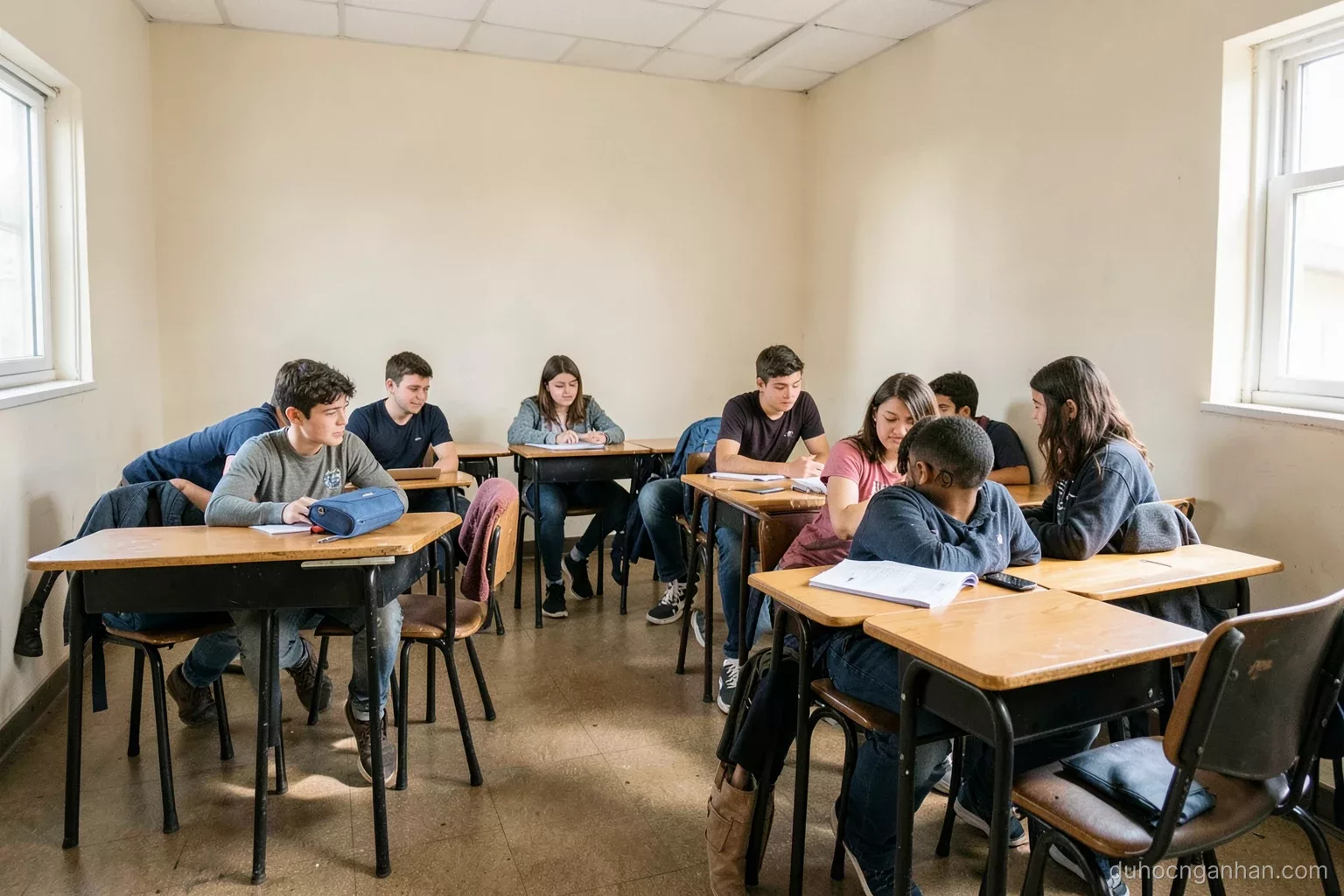
School immersion, or a classroom integration programme, lets foreign pupils study for a few weeks to a few months at a local school, sitting in the same classes as local pupils and following the school's actual timetable. Unlike a language course, where the class is made up entirely of foreigners and the curriculum is designed specially, here your child lives through a real school day of a local pupil: maths, science, PE, break time, after-school clubs.
This is the deepest form of short-term study abroad, and also the most demanding. Your child needs a language foundation strong enough to follow lessons, a high degree of independence and the initiative to make friends. In return, the experience is the closest to long-term study abroad, so many families choose this format when they are considering secondary school or university abroad for their child. This article explains how such programmes usually work and what to ask.
Where this format exists and who organises it
Not every school takes short-term immersion pupils. It is most common at state and private schools in countries with long-established systems for receiving international students, such as Australia, New Zealand, Canada, the United Kingdom, Ireland and some European countries. In these places, schools are used to foreign pupils, have staff in charge of international students and procedures for arranging accommodation.
There are three common routes. First, a school or school district has a short-term international student programme and accepts applications directly or through representatives. Second, an intermediary organisation in the host country gathers pupils from many countries and arranges schools and homestays. Third, a school in Vietnam has a twinning relationship with a school abroad and sends groups of pupils over in batches.
Each route has its own advantages. Enrolling directly with the school keeps the information clear but means the family has to do a lot itself. Going through an intermediary is more convenient, but you need to ask carefully who is responsible for caring for your child day to day. Going with a twinned school means familiar teachers travel along, but the group of Vietnamese pupils may stick together a lot.
Usual requirements and why schools set them
The requirements below are common practice, not universal rules. Each school and each country may differ; specific figures need to be asked about directly.
| Requirement | Usually required | The school's reason |
|---|---|---|
| Age | Mostly from 12–13 upwards | Younger pupils find it hard to follow lessons in a foreign language and need closer care |
| Language | A test, a short interview or a certificate result | So your child can keep up in class and is not isolated |
| Length | Usually from a few weeks to one term, matching the school's calendar | The school needs stable class sizes and places pupils by term |
| Accommodation | A homestay arranged by the school or organisation, sometimes boarding | To make sure an adult is responsible for the child outside school hours |
| Guardianship | A guardian or designated contact in the host country | Child protection law and the school's rules for pupils under 18 |
| Documents | The latest school report, a reference, a health form, parental consent | To place your child correctly and have medical information when needed |
Some countries have a dedicated legal framework for caring for international students. For example, New Zealand has a code of practice on the pastoral care of international learners issued in 2021, setting requirements for schools on accommodation, guardianship and support for students under 18. Families should ask which code or standard the school follows and request the summary written for parents.
A typical week for an immersion pupil
The first day. Most schools hold an orientation session: an introduction to the rules, a tour of the campus, receiving the timetable, meeting the international student staff and a classmate assigned as a "buddy" for the first few days.
Main lessons. Your child is placed in a class or follows the subjects of a year group. Some schools have your child take almost all subjects; others replace a few language-heavy subjects such as literature and history with supplementary language lessons.
Outside lessons. Clubs, sports teams, orchestras and debating teams are usually open to immersion pupils. This is the easiest place to make friends, because there is a shared activity to talk about instead of having to start with small talk.
Evenings and weekends. Your child lives with the homestay family, eats dinner with them, does homework and joins in family life. At weekends they may go out with the family or take part in activities arranged by the school or the intermediary organisation.
The end of the stay. Many schools send a short report from the form teacher or the staff member in charge, sometimes with comments for each subject. This is a document worth keeping, as it shows how your child was seen in a real classroom.
Who it suits, and who should choose another format
This format suits secondary school pupils best when they have a fairly good language foundation, have been away from home at least once, are proactive about making friends and can cope with the feeling of "not understanding everything" for the first few weeks. Children with clear interests such as sport, music or debating usually fit in faster, because they have a bridge to other pupils.
On the other hand, if your child has only just started learning the language, is shy about communicating, or this is their first time away from home, a summer camp or a short language course is a gentler first step. In a local class, teachers do not slow down for one immersion pupil, and local pupils already have their own groups of friends. A child who is not ready may spend weeks sitting silently in class and lonely at break time.
One point often overlooked is the school calendar. The school year in the southern hemisphere, in places such as Australia and New Zealand, starts around late January or early February; in the northern hemisphere it usually starts in August or September. The Vietnamese summer holiday falls in the middle of the school year in Australia and New Zealand, which is why many families choose this time for immersion: your child can join a real class without missing school at home.
Homestay and guardianship: what to ask carefully
Because immersion almost always comes with a homestay, the care outside school hours decides most of your child's experience. The following questions should be answered in writing before departure:
- How are homestay families selected: are homes visited, are background checks done on the adults in the household, and who does this?
- Will your child have their own room or share, are there other international students in the same house, and if so, from which countries?
- How far is it from the house to school, how will your child travel, and will anyone take them for the first few days?
- What are the rules on curfew in the evening, going out with friends at weekends, and using the phone and internet at home?
- Who is the guardian or emergency contact in the host country, what is their out-of-hours number, and how can the homestay be changed if it does not work out?
- What do meals consist of, and does the family take account of your child's diet or allergies?
A homestay means living in someone else's home, not staying in a hotel. Before leaving, talk with your child about basic manners: greeting people, asking before using shared things, tidying their own room, saying when they will be late, helping with small household chores. These habits help your child feel welcome and open up real conversations over dinner.
Academic preparation before joining the class
Many Vietnamese pupils who are good at maths and science at school at home still struggle in their first week of immersion, not because of knowledge but because of subject vocabulary and a different way of learning. Your child may know how to solve an equation but not yet know the English words "coefficient", "solution" or "simplify". Your child is used to copying down lessons, while a local class expects pupils to speak up, work in groups and present.
A few weeks before departure, the family can help your child become familiar with the vocabulary of the main subjects in the destination's language, read a few pages of a textbook or study materials for the same year group, and practise briefly presenting an opinion in front of others. If the school sends the timetable early, look at it with your child to see which subjects they will take and prepare in advance.
Just as important is emotional preparation: in the first week your child will not understand everything, and that is normal. Encourage your child to ask the teacher again after class, ask their buddy to explain, and note down words they do not understand to look up in the evening. After two to three weeks, most pupils with a fairly good language foundation keep up with the pace of the class.
What to ask about schooling in Vietnam
If the immersion period falls during the Vietnamese school year, the family needs to plan for your child's absence from school at home. Talk early with the form teacher and the school about the time away, how to catch up on lessons, and the periodic tests your child will miss. Many schools agree if they are told in advance and there is a clear catch-up plan.
Immersion study is usually not converted into marks at a Vietnamese school. The end-of-stay report and the confirmation letter from the school abroad are still worth keeping in your child's personal file, especially if they later apply for study abroad or scholarships that include international activities.
When they come home, your child may find the Vietnamese classroom very different: larger classes, less discussion, more copying. Feeling let down for the first few weeks is normal. Helping your child see the strengths of each environment, rather than ranking one above the other, makes the return easier.
If you are considering long-term secondary study at the same immersion school, tell the school. Some schools use the immersion period as a way for both sides to get to know each other before accepting a pupil long term, and can tell the family more clearly what your child needs to prepare.
Frequently asked questions
Does school immersion abroad need a student visa?
It depends on the country and the length of stay. Some countries allow short-term study on a visitor visa for a certain period; others require a student visa even for a few weeks of study. The receiving school or organisation usually advises on the right type of visa; the family should also check the official website of the destination's immigration authority.
What level of English does my child need for school immersion?
There is no common threshold. Many schools assess through a test or a short interview whether your child can follow lessons and communicate at a basic level. If your child can only read simple texts and cannot yet say long sentences, a short language course first will help them feel more confident when joining a local class.
How long does it take for my child to start fitting in?
Every child is different, but many pupils need about two to three weeks to get used to the timetable and the way of learning and to make a few friends. So a stay that is too short may end just as your child starts to feel comfortable. If circumstances allow, a stay of four weeks or more usually gives a fuller experience.
Can primary school pupils do school immersion?
Some schools accept them, but far fewer than at secondary level, and they usually require a parent to come along and stay near the school. For primary-age children, the family travelling together and the child joining a school near the temporary home for a few weeks is more common than sending the child alone.
What if my child does not get on with the homestay family?
Contact the guardian or the international student staff straight away and explain the specific problem. Well-run programmes have a procedure for changing homestays and usually want to know early. Before that, encourage your child to talk gently with the family about what is not working, because many difficulties are just misunderstandings caused by different habits.
Will school immersion help my child get accepted at that school long term?
Nothing is guaranteed. Even so, the immersion period helps the school know your child and your child know the school, and good comments from teachers are useful information if your child applies later. Long-term admission still follows the school's own process and requirements.