Reading the itinerary of a short study abroad programme means counting how many hours your child really spends on lessons, activities, travel, rest and free time in a typical week, then checking the special days: the flight day, arrival day, weekends and the day of return. A good itinerary shows a clear daily rhythm and who is in charge of each time slot; a vague one simply lists activity names and sights.
Parents often receive the itinerary as a very compact one-page summary. This article explains how to ask for the detailed version, how to recount the hours, which days are often "padded" in to make up the total, and how to read the small print such as "the itinerary may change".
What a summary itinerary says and does not say
A typical summary reads: "Day 1 fly out, check in. Days 2–26 lessons in the morning, activities in the afternoon, excursions at weekends. Day 27 closing ceremony. Day 28 fly home." It is accurate but almost useless for comparison. It does not tell you how long the morning is, which activities the afternoon includes, who leads them, what your child does in the evening, or where each weekend trip goes and by what transport.
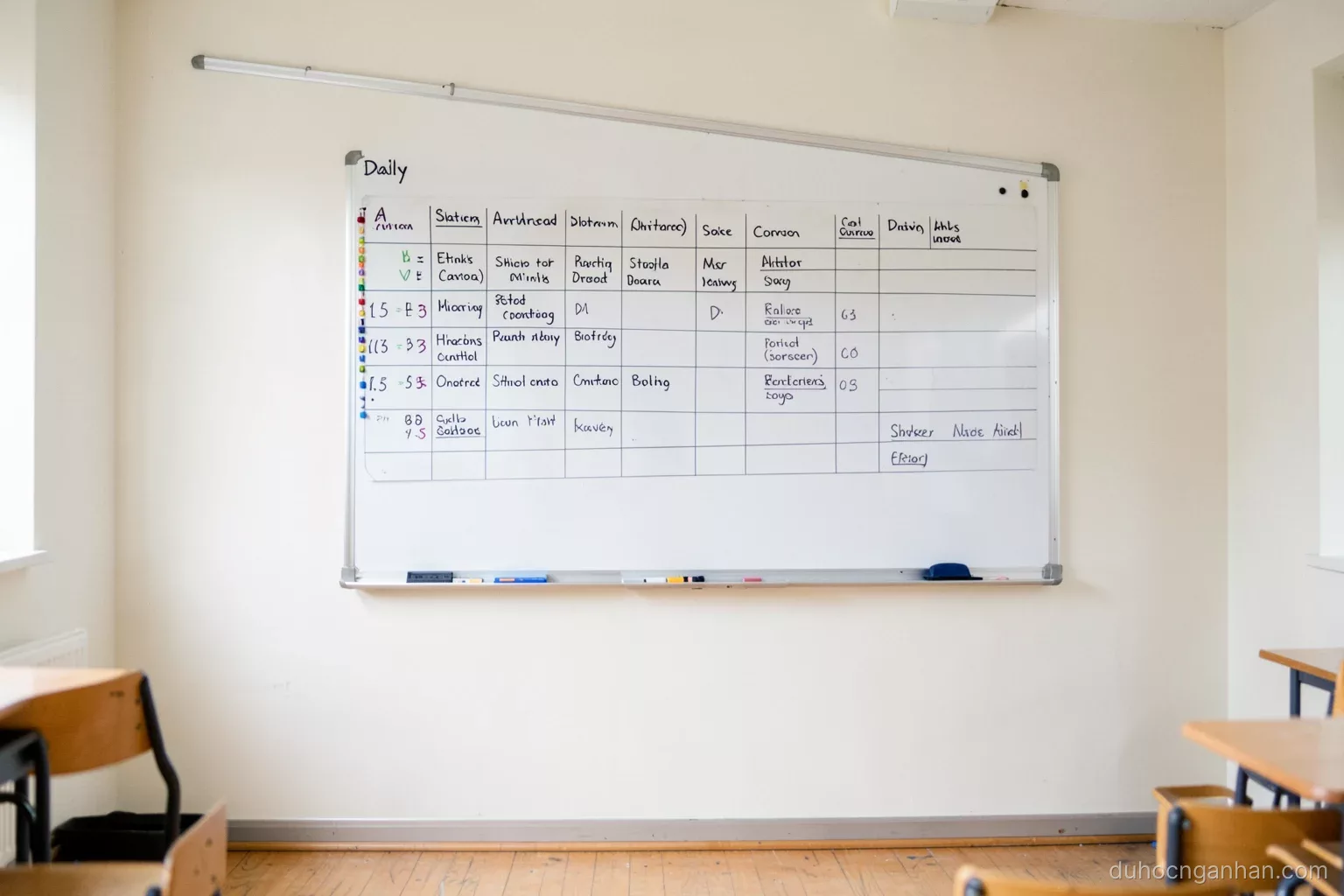
What you need to ask for is an hour-by-hour schedule for a typical week, usually called a sample weekly timetable, plus the schedules for the arrival and departure days. Most camps already have this document for their teachers and boarding staff. If the organiser says "the camp doesn't have one", there are two possibilities: they have not asked, or the camp genuinely does not run to a fixed schedule. The second is more worrying for young children, because children need a stable routine to settle in quickly.
Once you have the hourly version, read it three times with three different questions: what will your child learn, will they get enough rest, and who is with them in each time slot. Each reading reveals things the summary hides.
Recounting the hours of a typical week
The table below is a hypothetical example of how to break a six-day activity week into types of hours. Families can do the same with the schedule of the programme they are considering.
| Type of hours | Hypothetical example for the week | Question to ask when reading |
|---|---|---|
| Lessons with a teacher | 5 mornings × 3 hours = 15 hours | How many minutes is a "lesson", are breaks counted |
| Guided activities | 5 afternoons × 2.5 hours = 12.5 hours | Who leads them, how groups are formed, can your child choose |
| Evening activities | 6 evenings × 1.5 hours = 9 hours | Is an adult on duty, is attendance compulsory |
| Weekend trips | 1 full day, 1 half day | How long on the coach, who supervises, groups of how many |
| Free time | About 1–2 hours a day | Where is your child during this time, who knows where they are |
| Rest, meals, personal hygiene | The rest of the day | Is there enough sleep time for your child's age |
After breaking it down, families usually notice two things: the real number of class hours is lower than the first impression, and weekend travel takes up quite a lot of time. Neither is wrong, but both have to match the goal the family has set for the trip.
Flight day, arrival day and buffer days
The day you fly out is usually not a class day. A "four-week" programme may include the flight day, check-in day, a placement test day and an orientation session. Real lessons start on day three or four. That is normal; you just need to know so your expectations are right.
Jet lag days. When flying to a place several time zones away, children are usually tired for the first few days. A good itinerary keeps the first day light, without heavy physical activity or long trips straight after landing.
Closing day and departure day. The last day is usually for the closing ceremony, packing and checking out. If the return flight is early in the morning, the last day is really just the evening before. Count the days with a full programme, not the total number of days on the plane ticket.
Buffer days caused by flight schedules. When the group flies before the camp opens or returns after it closes, there may be a day or two when your child stays in a hotel or goes sightseeing with the group leader. Ask clearly who supervises, where your child sleeps, and whether these days are included in the package.
Public holidays at the destination. Some national holidays mean the camp closes lessons or changes its schedule. A good itinerary has already allowed for this and notes it; a rushed one discovers it once your child has arrived.
Free time and evenings: where itineraries tend to go quiet
Most itineraries describe mornings and afternoons in detail, then cover evenings with one line such as "evening activity" or "free time". For children, though, this is the most sensitive part of the day. After a day full of activities, when it gets dark and there is nothing left to do, homesickness easily surfaces; teasing and squabbles between children also tend to happen when supervision is loose.
Ask specifically: what the evening activities are on each day of the week, whether they are compulsory, and if your child does not want to take part, where they will be and with whom. Where on the campus free time takes place, and whether an adult is within sight. At what times your child can use their phone, and when it is convenient for both sides to call home given the time difference.
A balanced itinerary usually has light evenings, room for your child to write a diary, make a call or chat with roommates, and a clear bedtime. A schedule packed until late at night looks like "value for money", but it often exhausts children after the first week, and an exhausted child learns nothing.
Weekend trips and off-campus activities
Weekend trips are what children remember longest, and also the part with the most variables. When reading the schedule, check each point:
- Travel time compared with time at the destination. Four hours on the coach there and four back for two hours of sightseeing makes a tiring trip, especially for children who get travel sick.
- Who leads the group. Camp staff, the group leader, or a guide from a local tour company. If it is a third party, ask about the ratio of adults to children on the trip.
- Activities with their own risks. Sea swimming, boating, hiking and water parks need certified lifeguards or instructors, and often have their own conditions on age, height and swimming ability.
- Extra charges. Some weekend trips are optional and charged separately. If your child does not go, who stays with them at the camp.
- Bad weather plans. The rainy and typhoon season in the tropics can cancel a beach trip. A good itinerary has an indoor alternative ready.
None of this should put families off weekend trips. It simply turns a one-line "excursion" on paper into a concrete picture the family can assess.
"The itinerary may change": how to read the small print
Almost every itinerary includes the line "the itinerary may change according to actual conditions". That is reasonable, because weather, traffic, the group's health or decisions by local authorities can all force changes. The issue is the scope of change: swapping the order of two activities is very different from changing the camp, changing the city or cutting a week.
Ask the organiser to sort changes into two levels. Minor changes, such as moving an excursion to another day or replacing an activity with an equivalent one, the camp decides itself and reports afterwards. Major changes, such as changing the site, changing travel dates or dropping part of the programme, must be notified to the family in advance with options for the family to choose from. This classification should be in the contract or booking terms.
It is also worth asking what changed in last year's programme. An organiser that can say specifically "last year there was a storm, so the beach trip became a day at the museum and the indoor pool" shows it is used to handling situations and that its itinerary has some contingency built in.
Example: two "four-week" itineraries that are completely different
A hypothetical example: programme A says four weeks, flying out on Saturday morning, arriving at the camp the same evening, Sunday for rest and orientation, Monday a placement test, lessons from Tuesday. In the final week lessons run until Thursday, Friday is the closing ceremony, and the group flies home on Saturday morning. Counting again, your child has about nineteen full class days and three weekends with trips.
Programme B also says four weeks, but the group flies out two days early to see the capital before going to the camp, and returns a day late to go shopping. Real time at the camp is only about three and a half weeks, with around sixteen full class days. In return, your child gets three extra sightseeing days with the group leader, staying in a hotel.
Neither programme is wrong. If the goal is to study and live in a camp environment, A fits better; if the family wants their child to have more city experience, B fits better. What matters is spotting this difference in the itinerary before paying a deposit, instead of realising it once your child is back.
What a good itinerary looks like
After reading many itineraries, you can draw out a few features shared by the trustworthy ones. Use this list as a quick test:
- There is an hourly schedule for a typical week, not just a list of activities.
- It names the role responsible for each time slot: teacher, activity leader, boarding supervisor, group leader.
- The first and last days are described separately, with pick-up, check-in and check-out times.
- There is a rhythm of rest: at least one lighter session a week and a bedtime suited to the age group.
- Weekend trips state the travel time, the main activity, who leads and the bad-weather plan.
- It is clear which activities are compulsory, which are optional and which cost extra.
- There is a clause on itinerary changes, with minor and major levels.
The Du Học Ngắn Hạn advisory team usually sends families the camp's sample weekly timetable before the meeting, so the conversation can be spent on questions rather than reading documents.
Frequently asked questions
How many hours of lessons a day suit children aged 8–12?
There is no single standard, but for young children a common rhythm is about three hours of lessons in the morning with a break, then physical or creative activities in the afternoon. A full-day timetable like older students have usually leaves young children tired and bored after a few days, especially while they are still jet-lagged.
Is "city sightseeing" in the itinerary detailed enough?
No. Ask for the specific destinations, travel time, who leads, how many children per adult, and whether your child can move around freely at the site. The answers help the family judge both the value and the safety of the trip.
Can my child skip an activity in the schedule they do not like?
It depends on the camp. Some activities are compulsory because they relate to safety or group spirit; others are optional. Ask in advance and tell your child, so they are not surprised. If your child has a health reason, notify the camp in writing beforehand so it can make arrangements.
Are arrival and departure days counted as class days?
They are usually included in the programme's total number of days, but they are not full class days. When comparing two programmes, count the days with a full programme rather than the total number of days from flying out to flying home.
Should we choose a programme with a schedule packed from morning to night?
A packed schedule suits some energetic children who are used to camps. For young children or first-timers, a schedule with rest periods is usually better, because they need time to process everything new and enough rest to avoid falling ill.
Is this year's itinerary the same as last year's?
The framework is usually the same, but details may differ because of new excursion partners, new teachers or lessons learned. Ask for the schedule of your child's session once it is available, and ask what has changed from last year and why.